

Pediatric Dermatologist: What They Treat and When Your Child Needs One
Quick answer: A pediatric dermatologist is a medical doctor who specializes in skin, hair and nail conditions in babies, children and teens. After medical school and a dermatology residency, they complete a pediatric dermatology fellowship and can become board certified in pediatric dermatology by the American Board of Dermatology. They treat conditions such as eczema that won’t calm down, birthmarks and infantile hemangiomas, acne, warts, molluscum, psoriasis, vitiligo, hair loss and rare genetic skin disorders. Most children start with their pediatrician, who refers them when a skin problem is severe, unusual or not improving. Some birthmarks can’t wait: the American Academy of Pediatrics (AAP) recommends that higher-risk infantile hemangiomas be seen by a specialist ideally by 1 month of age.
What is a pediatric dermatologist?
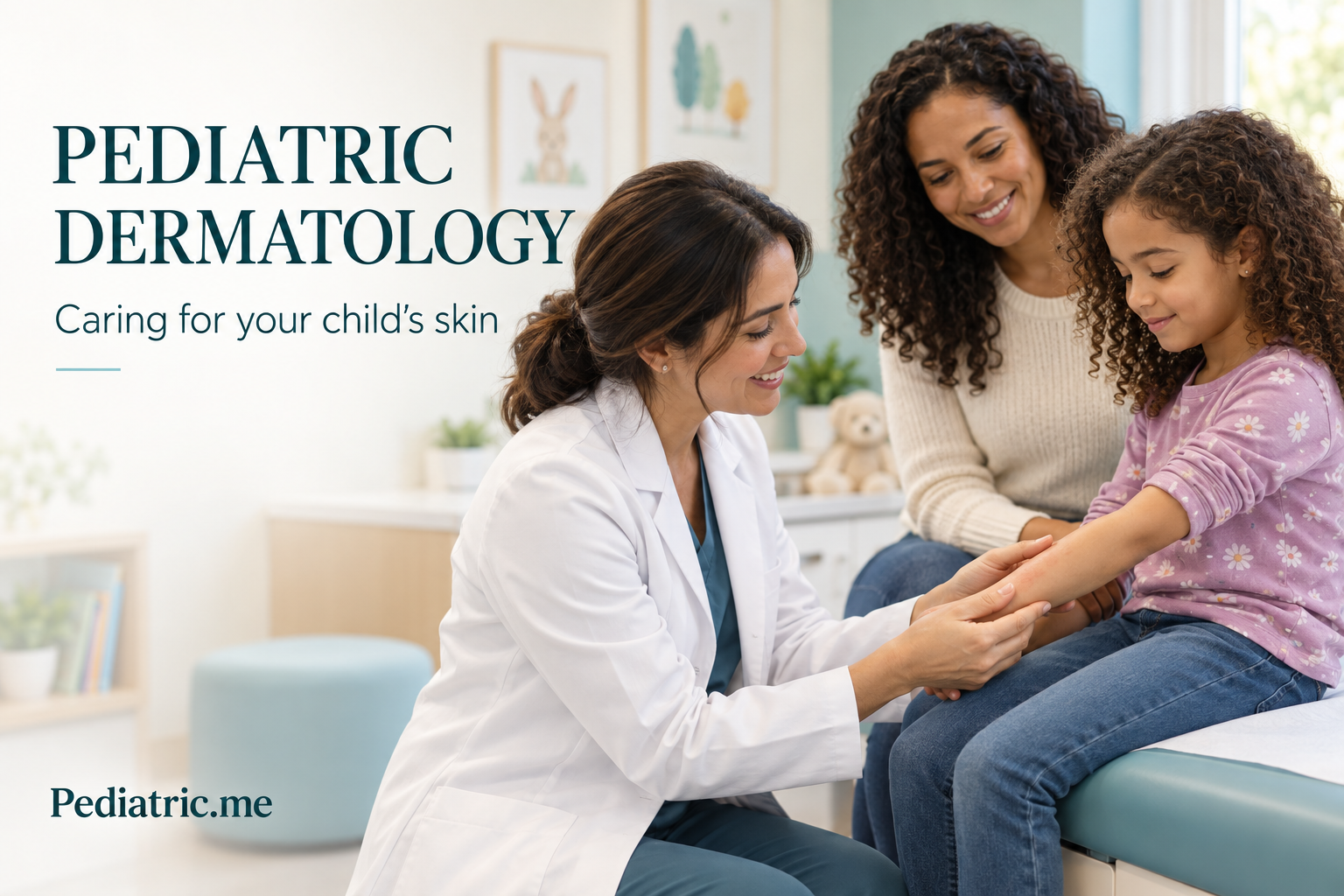
A pediatric dermatologist is a skin doctor for kids. They diagnose and treat conditions of the skin, hair, nails and mucous membranes (like the inside of the mouth) from birth through adolescence, using both medical treatment and minor procedures.
Children aren’t just small adults. Some conditions, such as infantile hemangiomas, only happen in childhood, and common conditions like psoriasis can look different in kids. Medicines and doses also have to fit a growing child. Pediatric dermatologists are trained to know what’s normal for a child’s age, when to worry, and how to examine and treat young patients in a way that keeps them calm.
Pediatric dermatologist vs. pediatrician vs. dermatologist
| Pediatrician | General dermatologist | Pediatric dermatologist | |
|---|---|---|---|
| Focus | Overall health of children | Skin, hair and nails, mostly adults | Skin, hair and nails in children |
| Training after medical school | 3-year pediatrics residency | Internship plus 3-year dermatology residency | Dermatology residency plus a pediatric dermatology fellowship (usually 1 year) |
| Best for | First stop for rashes and most everyday skin problems | Many routine skin issues in older kids and teens, such as acne and warts | Severe, rare, persistent or complex skin conditions, birthmarks in babies, and conditions that need specialized medicines |
| Do you need a referral? | No | Depends on insurance | Often, depending on your insurance plan and the practice |
What does a pediatric dermatologist treat?
According to the AAP Section on Dermatology, pediatric dermatologists diagnose and treat a wide range of conditions, including:
- Eczema (atopic dermatitis), especially moderate to severe or hard-to-control eczema. See our guides to what eczema is and winter eczema and dry skin in kids.
- Birthmarks, including infantile hemangiomas, port-wine stains and other vascular birthmarks, and large or unusual moles. See birthmark issues in children.
- Acne in preteens and teens, and acne that appears unusually early. See acne in children.
- Warts and molluscum contagiosum. See warts in children.
- Psoriasis, vitiligo and hives
- Contact dermatitis and other allergic or irritant rashes. See types of contact dermatitis.
- Hair and nail problems, such as alopecia areata, scalp ringworm and nail infections. See hair and nail disorders in children and alopecia areata in children.
- Skin infections like impetigo when they keep coming back or don’t respond to treatment
- Genetic and congenital skin disorders, such as epidermolysis bullosa, ichthyosis and neurofibromatosis skin findings
- Skin signs of whole-body diseases, such as autoimmune conditions like juvenile dermatomyositis, often working alongside other specialists
They also perform minor procedures, such as skin biopsies, removal of cysts and other growths, and laser treatment of vascular birthmarks. For a closer look at the most common conditions, see common issues treated by a pediatric dermatologist.
When should your child see a pediatric dermatologist?
Start with your pediatrician for most rashes and skin concerns. Ask about a referral to a pediatric dermatologist if your child has:
- Eczema that keeps flaring, disrupts sleep, gets infected often or isn’t controlled with the treatment plan from your pediatrician
- A birthmark on a baby that is growing quickly, is on the face, or is near the eye, lip, nose, ear or diaper area
- A mole that is changing in size, shape or color, bleeds, or is large and present from birth
- Acne that leaves scars or dark marks, is painful and deep, or is affecting your child’s confidence
- Warts or molluscum that are spreading or haven’t responded to treatment
- Patchy hair loss, white patches on the skin, or thick scaly plaques
- A rash that is unusual, keeps coming back, or that your pediatrician isn’t sure about
- A known genetic skin condition that needs ongoing specialist care
Why some birthmarks need a specialist early
Infantile hemangiomas, sometimes called strawberry marks, affect up to 5% of babies. Most are harmless and fade on their own. They grow fastest between 1 and 3 months of age and usually stop growing by about 5 months, which means there’s a short window to treat the ones that could cause problems.


The AAP’s 2019 guideline recommends early evaluation, ideally by 1 month of age, for higher-risk hemangiomas. These include hemangiomas near the eye, on the lip, nose or ear, large ones on the face, those on the lower back or diaper area, those that break open (ulcerate), and babies with five or more hemangiomas. When treatment is needed, an oral medicine called propranolol is the first choice. If your baby has a red or bluish mark that appears in the first weeks and is growing, call your pediatrician promptly instead of waiting for the next checkup.
When a skin problem is an emergency
Some rashes need urgent care, not a dermatology appointment. Call 911 or go to the ER if your child has:
- A rash with fever where the spots look like tiny red or purple dots or bruises that don’t fade when you press on them
- Blistering or peeling skin, especially with fever, sores in the mouth or red eyes
- Hives with swelling of the lips, tongue or face, trouble breathing, or vomiting after a new food or medicine
- Red, hot, painful skin that is spreading quickly, especially with fever
How pediatric dermatologists are trained
According to the AAP, pediatric dermatologists are medical doctors who complete:
- Four years of medical school
- One year of internship
- Three years of dermatology residency (or two years of pediatrics residency followed by three years of dermatology residency)
- A pediatric dermatology fellowship, usually one year, in a program accredited for this training
After fellowship, they can earn subspecialty board certification in pediatric dermatology from the American Board of Dermatology, which requires first being board certified in general dermatology. In total, it takes about 9 to 10 years of training after college.
Pediatric dermatologists are in short supply. A 2020 analysis presented at the Society for Pediatric Dermatology meeting found that nine U.S. states had no board-certified pediatric dermatologist at all, and only about 4% of U.S. counties had one. That’s why wait times can be long and why many general dermatologists also care for children.
What to expect at the first visit
The dermatologist will ask about your child’s symptoms, when they started, what you’ve tried and your family’s history of skin conditions. They usually examine the skin from head to toe, even if only one spot is bothering your child, because other areas can give clues to the diagnosis.
Most skin conditions can be diagnosed by looking at the skin. Sometimes the doctor may scrape a small sample, take a culture, or do a quick biopsy (removing a tiny piece of skin after numbing it). Treatment may include prescription creams or ointments, oral medicines, light therapy, freezing or removing a growth, or laser treatment.
How to prepare:
- Take clear photos of the skin when it’s at its worst, since rashes can look different on appointment day.
- Bring a list (or the actual containers) of all creams, soaps, medicines and supplements you’ve used.
- Write down when the problem started, what makes it better or worse, and any patterns, such as foods, seasons or activities.
- Bring your referral, insurance card and any previous test results.
- Tell your child what will happen in simple, honest words, and bring a comfort item for younger kids.
How to find a pediatric dermatologist
- Ask your pediatrician for a referral. They often know who has shorter wait times and can mark the referral as urgent when needed, such as for a baby with a high-risk hemangioma.
- Use the Society for Pediatric Dermatology’s “Find a Pediatric Dermatologist” tool at pedsderm.net, which the AAP recommends.
- Check children’s hospitals and university medical centers, where many pediatric dermatologists practice.
- Confirm board certification through the American Board of Dermatology or the ABMS Certification Matters website.
- Ask about teledermatology if there isn’t a pediatric dermatologist near you. Many practices can review photos or do video visits, especially for follow-ups.
- Browse our pediatrician directory and our overview of types of pediatricians.
While you wait for an appointment, gentle daily skin care helps many conditions. Use lukewarm baths, fragrance-free cleansers and a thick moisturizer, and see our tips on caring for children with skin disorders. Looking for products? Shop gentle skin care for kids (affiliate link).
Frequently Asked Questions
What does a pediatric dermatologist do?
A pediatric dermatologist diagnoses and treats skin, hair and nail conditions in babies, children and teens. This includes eczema, birthmarks and hemangiomas, acne, warts, molluscum, psoriasis, vitiligo, hair loss and rare genetic skin disorders. They prescribe medicines and perform minor procedures such as biopsies, growth removal and laser treatment of vascular birthmarks.
What is the difference between a dermatologist and a pediatric dermatologist?
Both are skin doctors who completed a dermatology residency. A pediatric dermatologist has also completed a pediatric dermatology fellowship, usually one year, and can be board certified in pediatric dermatology. That extra training focuses on conditions that mainly affect children, such as infantile hemangiomas, and on medicines and doses that are safe for kids.
Do I need a referral to see a pediatric dermatologist?
Often, yes. Many insurance plans and pediatric dermatology practices require a referral from your child’s pediatrician. Even when it isn’t required, a referral helps the specialist understand your child’s history and can speed up urgent appointments.
At what age can a child see a pediatric dermatologist?
At any age, from newborn through the teen years. Some babies need to be seen very early: the AAP recommends that higher-risk infantile hemangiomas be evaluated by a specialist ideally by 1 month of age, because they grow fastest in the first few months.
Can a regular dermatologist treat my child?
Yes, for many conditions. General dermatologists often treat acne, warts and mild eczema in older children and teens. A pediatric dermatologist is especially helpful for babies and young children, birthmarks, severe or unusual rashes, genetic skin conditions, and conditions that need specialized medicines.
Why is it hard to get an appointment with a pediatric dermatologist?
There are relatively few pediatric dermatologists in the U.S., and many states and counties have none. Ask your pediatrician to mark urgent concerns, check children’s hospitals and university clinics, consider a general dermatologist for routine problems, and ask whether teledermatology visits are available.
When is a child’s rash an emergency?
Go to the ER or call 911 for a rash with fever and spots that don’t fade when pressed, blistering or peeling skin with fever or mouth sores, hives with swelling of the face or trouble breathing, or red, painful skin that is spreading fast. These need emergency care, not a dermatology appointment.
Related guides
- Common Issues Treated by a Pediatric Dermatologist
- Breakthroughs in Pediatric Dermatology
- What Is Eczema?
- Birthmark Issues in Children
- Pediatric Allergist
- Pediatric Rheumatologist
Sources
- AAP (HealthyChildren.org): What Is a Pediatric Dermatologist?
- American Board of Dermatology: Pediatric Dermatology Certification
- AAP (HealthyChildren.org): Preventing Problems From a Common Baby Birthmark
- American Family Physician: AAP Guideline for Management of Infantile Hemangiomas
- MDedge: Nine States Have No Board-Certified Pediatric Dermatologist
- Society for Pediatric Dermatology
This article is for general information and is not a substitute for advice from your child’s doctor.