

Winter Eczema and Dry Skin in Kids: A Parent’s Guide to Soothing Itchy Skin
Quick answer: Cold air outside and dry heat inside pull moisture from children’s skin, which often makes eczema flare in winter. The most effective routine is simple: short, lukewarm baths, then a thick fragrance-free moisturizer applied within a few minutes, at least once or twice a day. Call your pediatrician if the skin looks infected, is keeping your child up at night, or isn’t improving with good home care.
Why eczema gets worse in winter
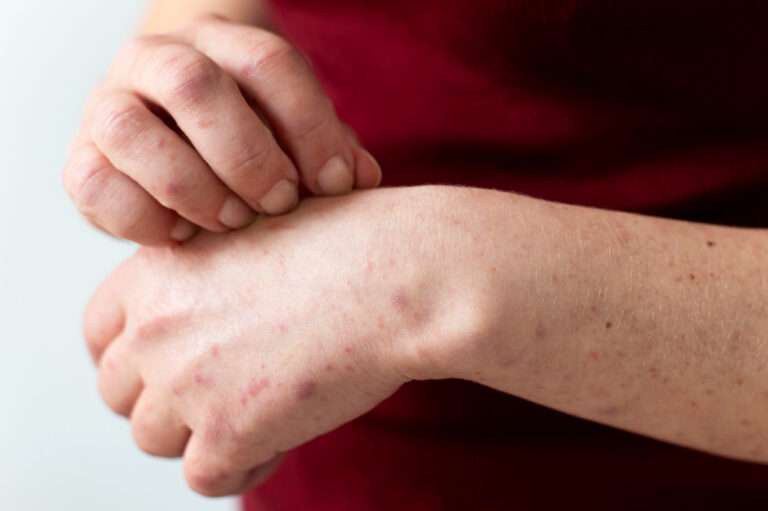
Eczema (atopic dermatitis) involves a skin barrier that has trouble holding in moisture. In winter, low humidity outdoors, indoor heating, hot baths, and scratchy layers like wool all dry the skin further. Dry skin itches, scratching damages the skin, and the cycle continues.
A simple winter skin routine
- Bathe short and lukewarm. Keep baths to about 5 to 10 minutes in warm (not hot) water.
- Use a gentle cleanser sparingly. Choose a mild, fragrance-free cleanser only where needed, and skip bubble baths.
- Pat, don’t rub. Gently pat skin partly dry with a soft towel, leaving it slightly damp.
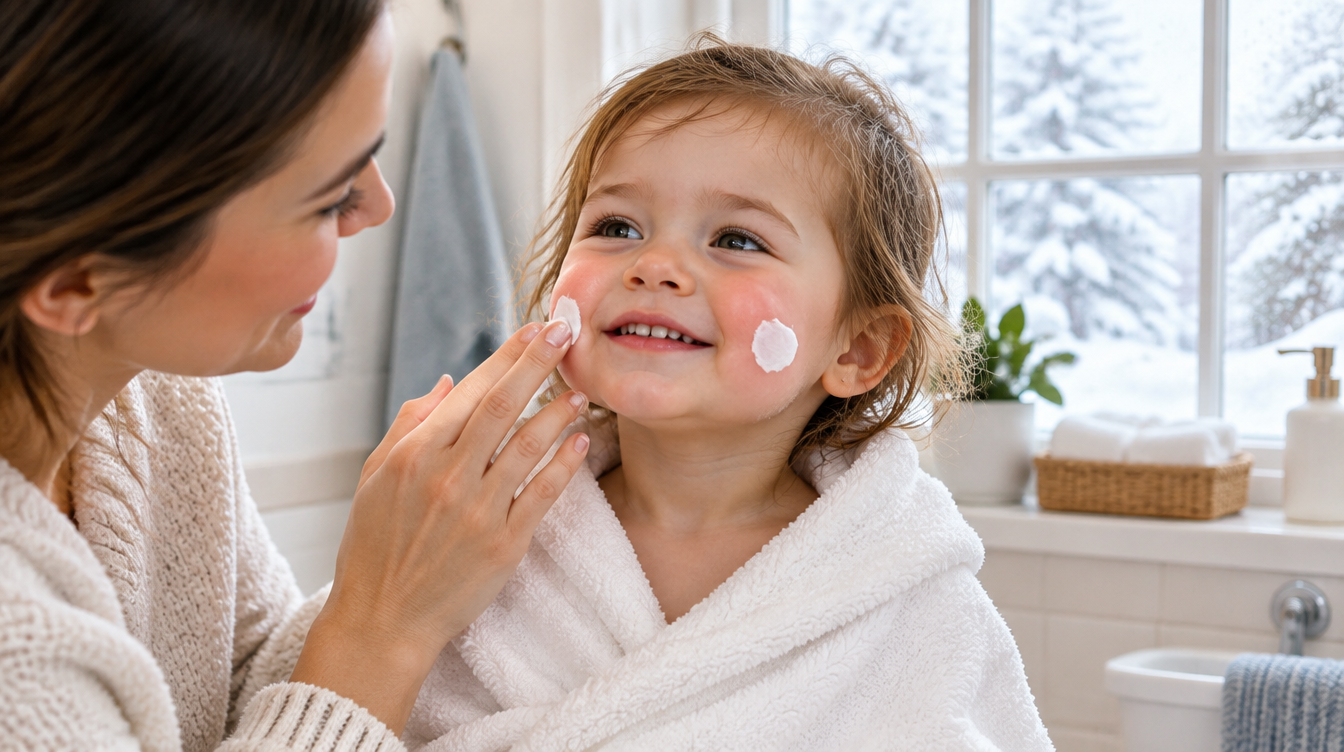
- Moisturize within 3 minutes. Apply a thick, fragrance-free cream or ointment all over to seal in water. Ointments (like petroleum jelly) and thick creams usually work better than lotions.
- Moisturize again at least once more during the day, especially on hands and cheeks that are exposed to cold air.
Everyday tips that help
- Dress your child in soft, breathable layers like cotton next to the skin. Avoid wool directly on the skin.
- Use fragrance-free, dye-free laundry detergent.
- Run a cool-mist humidifier in your child’s bedroom and clean it regularly.
- Keep fingernails short and consider soft cotton mittens at night for babies who scratch.
- Protect cheeks and hands outdoors with a thick moisturizer, mittens, and a scarf.
- Give water often; winter air is drying for everyone.
When to call your pediatrician
- Skin that is oozing, crusting (especially with yellow crusts), very red and warm, or has pus-filled bumps, which can be signs of infection
- Painful clusters of blisters or punched-out sores, especially with fever, which need prompt care
- Itching that is disrupting sleep or daily life
- A rash that isn’t improving after 1 to 2 weeks of consistent moisturizing
- Any rash in a young infant that you’re unsure about
Your pediatrician may recommend prescription treatments or refer your child to a pediatric dermatologist. Use any medicated creams exactly as directed.
Frequently Asked Questions
Why does my child’s eczema get worse in winter?
Cold, dry outdoor air and indoor heating both pull moisture out of the skin. Children with eczema already have a skin barrier that struggles to hold in water, so winter dryness leads to more itching, scratching, and flares.
How often should I moisturize my child’s skin in winter?
At least once or twice a day, including within about 3 minutes after every bath. Reapply to hands and cheeks, which are exposed to cold air, whenever they look dry.
What kind of moisturizer works best for kids with eczema?
Thick, fragrance-free creams or ointments, such as petroleum jelly, usually work better than thin lotions because they seal in more moisture.
Should kids with eczema take fewer baths in winter?
Baths are fine, but keep them short (about 5 to 10 minutes) and lukewarm, use a gentle fragrance-free cleanser only where needed, skip bubble baths, and moisturize right afterward.
When should I call the pediatrician about my child’s eczema?
Call if the skin is oozing, crusting, very red and warm, or has pus-filled bumps; if there are painful clusters of blisters or sores, especially with fever; if itching disrupts sleep; or if the rash isn’t improving after 1 to 2 weeks of consistent moisturizing.
Related guides
Sources
This article is for general information and is not a substitute for advice from your child’s doctor.