

When Should I Worry About My Child’s Symptoms? A Red-Flag Guide for Parents
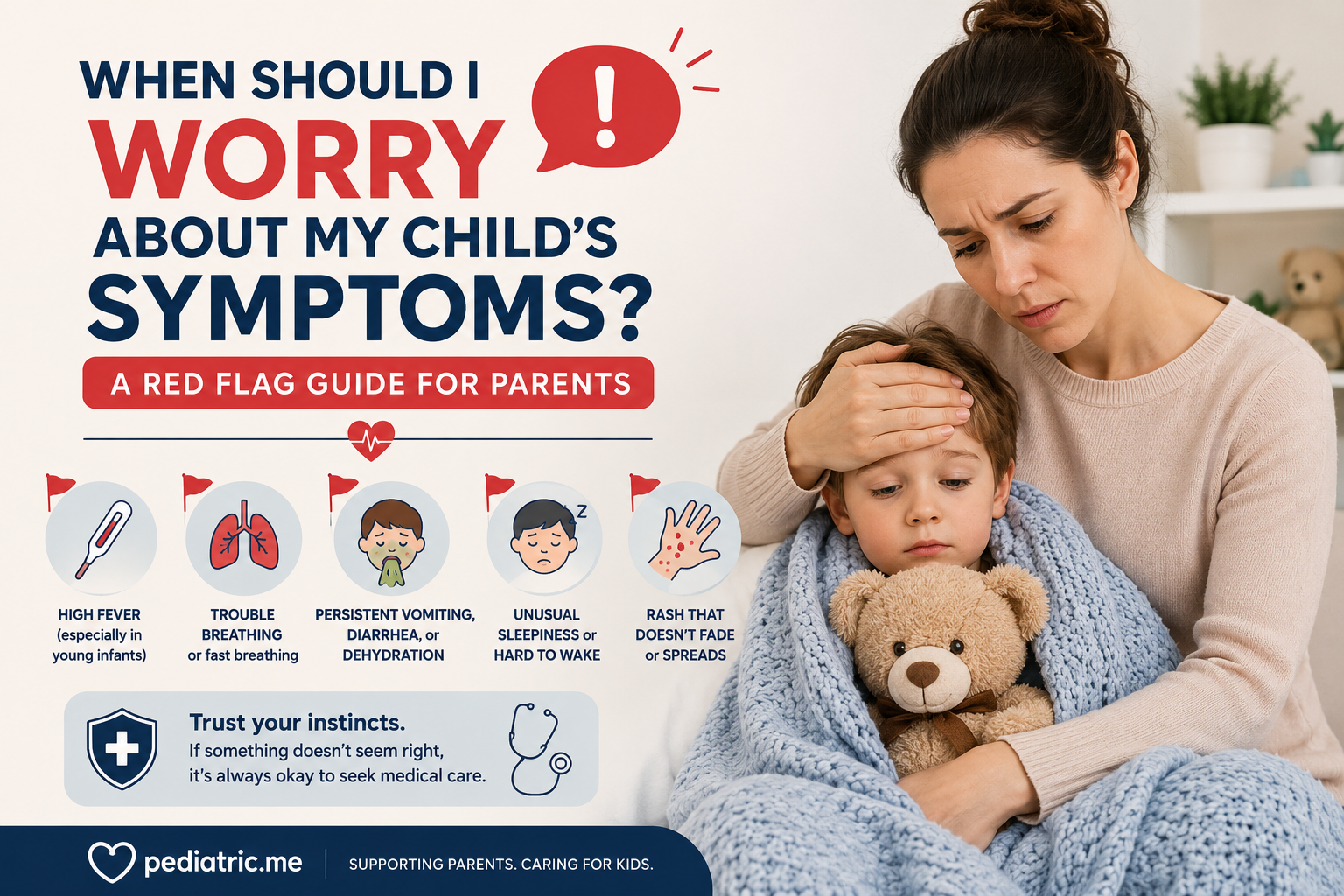
Quick answer: Call your pediatrician right away — or go to the ER — if your child has trouble breathing, is unusually hard to wake or console, has a fever over 100.4°F under 3 months old, shows signs of dehydration, has a stiff neck or non-blanching rash, or simply “doesn’t seem like themselves.” Most childhood symptoms are ordinary and manageable at home, but a short list of red flags means it’s time to act, not wait.
Every parent has stood over a crib at 2 a.m. wondering the same thing: is this normal, or is this the symptom I shouldn’t ignore? The truth is that most fevers, coughs, and rashes are the body doing exactly what it’s supposed to do. But a small number of warning signs separate “watch and wait” from “go now.” Here’s how to tell the difference, symptom by symptom.
Call 911 or Go to the ER Immediately If Your Child Has:
- Trouble breathing — fast, labored, or noisy breathing; chest pulling in with each breath (retractions)
- Blue, gray, or purple lips, face, or fingertips
- A seizure, especially one lasting more than 5 minutes, or any seizure in an infant
- Is unresponsive, extremely difficult to wake, or limp
- A stiff neck combined with fever, severe headache, or light sensitivity
- A new rash of purple or red spots that doesn’t fade (blanch) when you press on it
- Severe abdominal pain, especially with a rigid or swollen belly
- Heavy bleeding that won’t stop, or a major head injury with confusion or vomiting
- Signs of severe dehydration — no wet diaper in 8+ hours, sunken eyes, no tears when crying, dry mouth
If you’re seeing any of these, don’t wait for a callback — call 911 or head to the nearest emergency room.
When to Call the Pediatrician Same-Day (Not an Emergency, But Don’t Wait)
Fever
Age matters more than the number on the thermometer. Any fever of 100.4°F (38°C) or higher in a baby under 3 months old needs same-day medical attention — their immune systems are still developing, and even a mild-looking fever can signal something more serious. For babies 3–6 months, a temperature above 102°F, or a lower fever paired with unusual fussiness or lethargy, also warrants a call. In older toddlers and kids, watch the whole picture: a fever lasting more than three days, one that keeps spiking above 104°F, or one paired with a rash, persistent vomiting, or a stiff neck all deserve a same-day evaluation.
Breathing changes
A cold with a stuffy nose is common; whistling (wheezing), grunting with each breath, or breathing noticeably faster than usual is not. If you’re ever unsure whether your child’s breathing looks abnormal, that uncertainty alone is reason enough to get them checked. For a deeper look at cough and congestion season, see our complete guide to pediatric respiratory illness.
Vomiting or diarrhea
Occasional spit-up or a loose stool isn’t cause for alarm. Call same-day if your child can’t keep any fluids down for 8+ hours, vomiting is forceful or persistent, there’s blood or a dark “coffee-ground” appearance, or you notice fewer wet diapers, a dry mouth, or unusual sleepiness — all signs of dehydration setting in.
Rash
Most childhood rashes are viral and harmless. Get same-day guidance for a rash that appears suddenly, spreads quickly, blisters, looks infected (warm, swollen, oozing), or shows up alongside a fever.
Behavior and energy changes
This is the red flag parents talk themselves out of most often — and it shouldn’t be. A child who is unusually sluggish, hard to console, refusing to eat or drink for an extended stretch, or “just not acting like themselves” is telling you something, even without a classic symptom attached. Pediatricians consistently say this instinct is worth trusting. We cover the subtler versions of this in the early illness signs parents most often miss.
Symptoms That Are Usually Fine to Manage at Home
- A low-grade fever in a child over 6 months who is drinking, playing, and acting mostly like themselves
- A runny nose and mild cough without breathing difficulty
- A mild, non-spreading rash with no fever
- One or two loose stools without dehydration signs
- Mild fussiness that responds to comfort, feeding, or a nap
Keep your child comfortable, offer fluids often, and dress them lightly. If anything changes for the worse, move up to the same-day list above.
[flx-widget id=1]
A Simple Way to Decide: Ask Yourself Three Questions
- Is my child breathing normally and drinking fluids? If either answer is no, call today.
- Is my child responsive and acting somewhat like themselves? Unusual drowsiness or a limp, floppy baby is never “wait and see.”
- How old is my child, and how high or how long has the fever been? The younger the baby, the lower the threshold for calling — especially under 3 months.
Still unsure which bucket your child’s symptom falls into? Our interactive Child Symptom Checker walks you through the most common symptoms — fever, cough, rash, stomach pain, and more — and tells you whether it’s a home-care, same-day, or emergency situation.
Helpful Products for Monitoring Symptoms at Home
Having reliable tools on hand makes it easier to catch changes early and describe them accurately to your pediatrician. A few parent- and pediatrician-recommended options:
- Digital rectal thermometer (for infants under 3 months): the most accurate method for the age group where every fever matters most. See options on Amazon
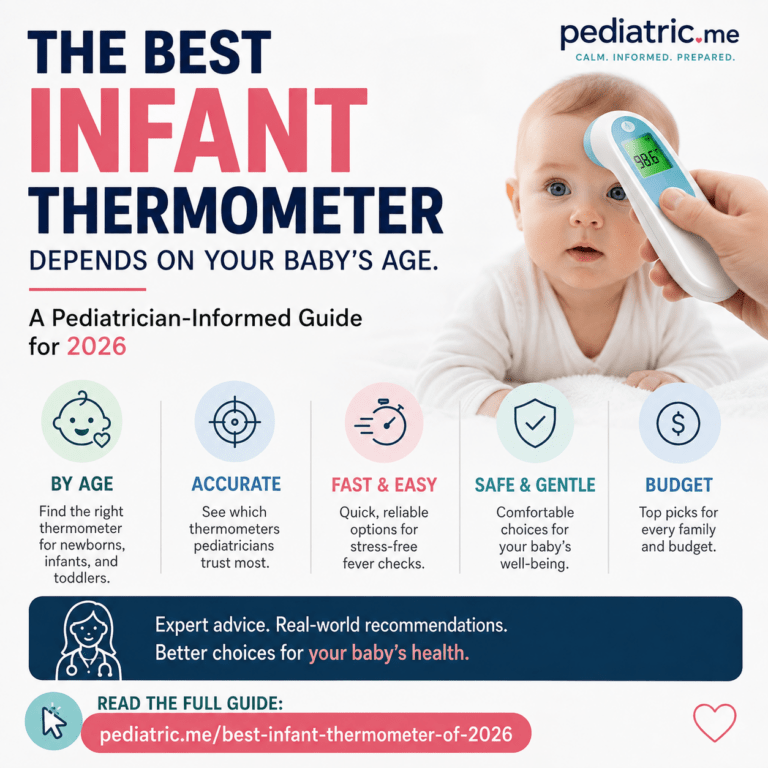
- No-touch forehead / ear thermometer (for older babies and kids): fast, gentle readings without waking a sleeping child. See options on Amazon
- Nasal aspirator: clears congestion in babies too young to blow their nose, making breathing and feeding easier. See options on Amazon
- Infant/child pulse oximeter: useful for parents managing asthma, RSV recovery, or a doctor-recommended breathing check at home (not a substitute for medical evaluation). See options on Amazon
- Kids’ first-aid and fever kit: a stocked kit with a fever reducer, dosing syringe, and basics means you’re not searching the cabinet at 3 a.m. See options on Amazon
As an informational resource, Pediatric.me may earn a commission from qualifying purchases made through Amazon links above, at no extra cost to you.
Frequently Asked Questions
At what temperature should I worry about my child’s fever?
For babies under 3 months, any temperature of 100.4°F (38°C) or higher needs same-day medical attention. For babies 3–6 months, call for anything above 102°F. For children over 6 months, focus less on the exact number and more on how they’re acting — a fever paired with lethargy, breathing trouble, or dehydration matters more than the reading itself.
How do I know if my child’s breathing is a real problem?
Warning signs include breathing that’s noticeably faster than normal, the skin between or below the ribs pulling in with each breath, grunting, wheezing, or blue-tinged lips or face. Any of these call for immediate medical care.
Should I trust my gut if nothing seems “textbook” wrong?
Yes. Parents often notice subtle changes — poor eye contact, unusual quietness, refusing favorite foods — before a clear symptom appears. Pediatricians routinely say that a parent’s instinct that “something is off” is a valid reason to seek care.
What’s the difference between urgent care and the ER for kids?
Urgent care is appropriate for same-day, non-life-threatening concerns like an ongoing fever, a minor injury, or a worsening rash. The ER (or 911) is for anything on the emergency list above — breathing difficulty, unresponsiveness, seizures, a non-blanching rash, or severe dehydration.
The Bottom Line
You don’t need to memorize every symptom in pediatric medicine — you need to recognize the short list of red flags that mean “act now,” and trust that everything else usually has room to breathe. When in doubt, a quick call to your pediatrician’s after-hours line costs you nothing and can offer real peace of mind.
This article is for general educational purposes and is not a substitute for professional medical advice, diagnosis, or treatment. Always consult your child’s pediatrician or seek emergency care for any symptom that concerns you.