

Halloween Safety Tips for Kids: A Parent’s Checklist for Costumes, Candy and Trick-or-Treating
Quick answer: The biggest Halloween risk for kids isn’t candy, it’s cars. Make your child visible with reflective tape and a flashlight, have an adult go along with children under about 12, choose face paint over masks that block vision, and check candy at home before eating, removing choking hazards for young children.
Staying safe around traffic
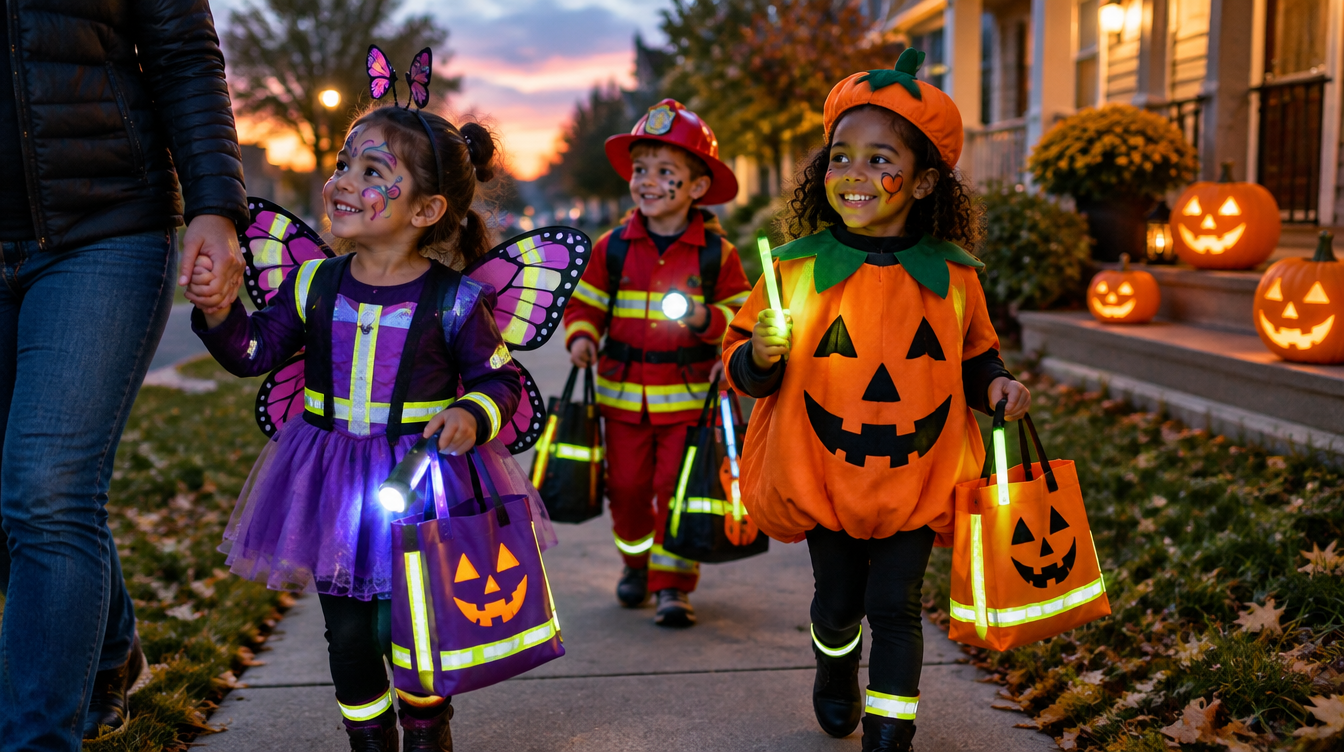
- Add reflective tape to costumes and treat bags, and give each child a flashlight or glow stick.
- Walk on sidewalks, cross at corners, and look both ways. Never dart out between parked cars.
- An adult should accompany young children. Older kids going with friends should stick to a planned, familiar route and check in at set times.
- If you’re driving that evening, go slowly through neighborhoods and watch for children crossing.
Choosing a safe costume
- Pick bright colors and a length that won’t cause tripping. Have kids wear comfortable, well-fitting shoes.
- Choose face paint or makeup instead of masks that limit vision. Test makeup on a small patch of skin first.
- Look for costumes, wigs, and accessories labeled flame-resistant.
- Make sure props like swords or wands are short, soft, and flexible.
- Avoid decorative colored contact lenses unless prescribed by an eye doctor. Non-prescription lenses can cause serious eye injuries.
Candy safety
- Feed kids a meal before heading out so they’re less tempted to snack along the way.
- Check all treats at home. Throw away anything unwrapped, torn, or homemade by someone you don’t know.
- For children under 4, remove choking hazards such as hard candy, gum, nuts, and small toys.
- If your child has a food allergy, read every label and consider a “trade-in” of allergen-containing candy for safe treats or small toys. Carry prescribed epinephrine if your child has one.
- Keep candy, especially anything that may contain cannabis, out of reach of young children. If you think your child ate something harmful, call Poison Control at 1-800-222-1222.
Safety at home
- Use battery-operated lights instead of candles in jack-o’-lanterns.
- Clear walkways and porches of tripping hazards and keep them well lit.
- Let younger children draw faces on pumpkins while an adult does the carving.
Frequently Asked Questions
What is the biggest Halloween safety risk for kids?
Traffic. Make children visible with reflective tape and a flashlight or glow stick, walk on sidewalks, cross at corners, and have an adult accompany younger children.
At what age can kids trick-or-treat without an adult?
An adult should go along with children under about 12. Older kids going with friends should stick to a planned, familiar route and check in at set times.
Is face paint safer than a Halloween mask?
Yes. Masks can block vision, so face paint or makeup is the safer choice. Test it on a small patch of skin first.
How should I check my child’s Halloween candy?
Check all treats at home before eating. Throw away anything unwrapped, torn, or homemade by someone you don’t know, and remove choking hazards like hard candy, gum, nuts, and small toys for children under 4.
Are colored costume contact lenses safe for kids?
No. Avoid decorative colored contact lenses unless they’re prescribed by an eye doctor, because non-prescription lenses can cause serious eye injuries.
Related guides
Sources
- American Academy of Pediatrics: Halloween Safety Tips (HealthyChildren.org)
- Poison Control (National Capital Poison Center)
This article is for general information and is not a substitute for advice from your child’s doctor.