
Cold vs. Flu vs. RSV vs. COVID in Kids: How to Tell the Difference and When to Worry
Quick answer: Colds usually come on gradually with a runny nose and mild symptoms. Flu tends to hit suddenly with high fever, body aches, and exhaustion. RSV often starts like a cold but can cause wheezing and fast or labored breathing, especially in babies. COVID-19 can look like any of these. Because symptoms overlap, a test from your pediatrician is the only way to know for sure, but how your child is breathing, drinking, and acting matters more than the name of the virus.
Get help right away if your child:
- Is struggling to breathe, breathing very fast, or you can see the skin pulling in between the ribs or at the neck
- Has blue or gray lips, face, or nails
- Is very hard to wake, unusually limp, or not responding normally
- Shows signs of dehydration: no urine in 8 or more hours, a dry mouth, or no tears when crying
- Is under 3 months old with a temperature of 100.4°F (38°C) or higher
Call 911 or go to the ER for severe breathing trouble or if your child is hard to wake.
How the symptoms compare
Common cold: Gradual start. Runny or stuffy nose, sneezing, sore throat, mild cough, and a low or no fever. Kids usually keep playing and eating fairly normally. Most colds improve within 7 to 10 days.
Flu (influenza): Sudden start. Fever that is often high, chills, body aches, headache, tiredness, and cough. Some children have vomiting or diarrhea. Kids often look and feel very unwell for several days.
RSV: Often begins with a runny nose, reduced appetite, and cough, then may progress to wheezing and faster breathing a few days later. Infants and young babies are at highest risk of serious breathing problems. In very young infants, the only signs may be irritability, poor feeding, or pauses in breathing.
COVID-19: Can cause fever, cough, sore throat, congestion, tiredness, and stomach upset, and can closely resemble a cold or flu.
Caring for your child at home
- Fluids first. Offer breast milk, formula, or water often. Small, frequent sips are fine.
- Clear the nose. Saline drops and gentle suction help babies breathe and feed.
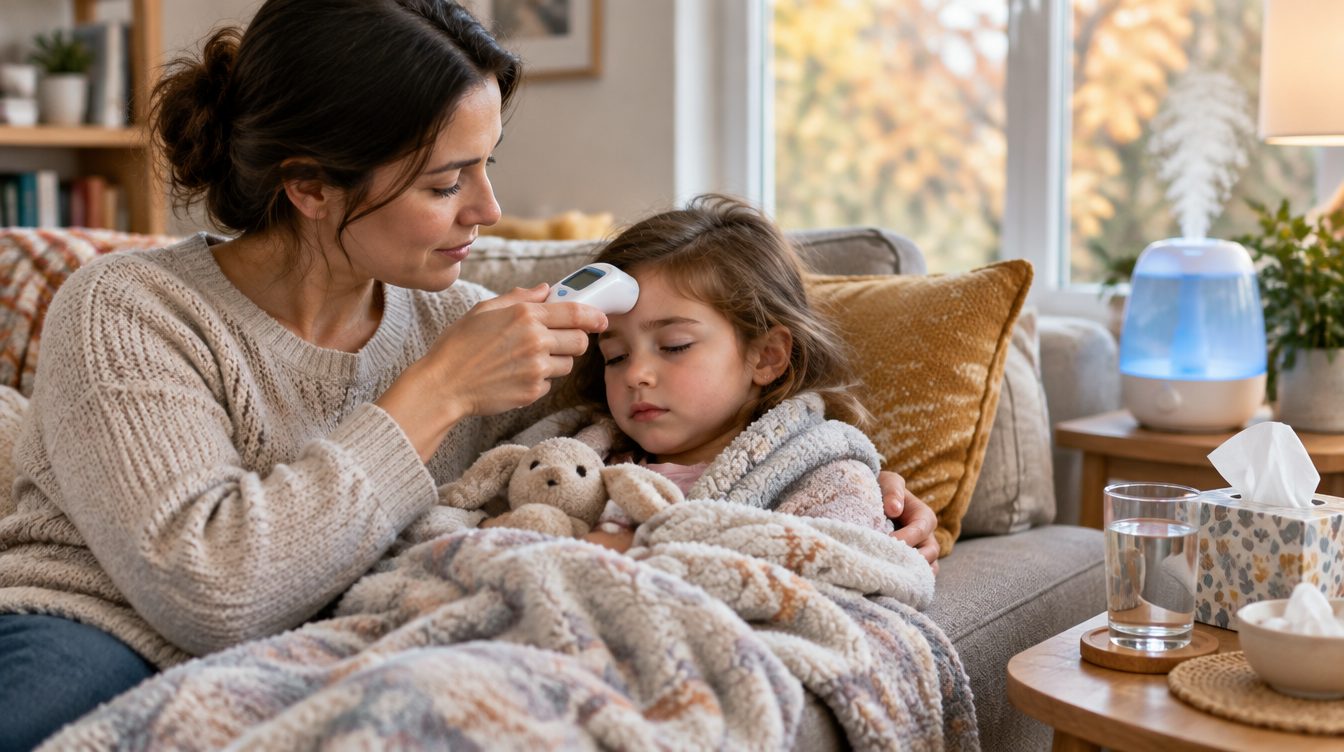
- Use a cool-mist humidifier to ease congestion.
- Treat discomfort, not the number. Ask your pediatrician about the right fever reducer and dose for your child’s age and weight. Never give aspirin to children, and don’t give cough and cold medicines to young children unless your doctor recommends them.
- Rest and keep your child home from school or daycare until they are fever-free and feeling better, following your school’s policy.
Prevention
Handwashing, covering coughs, and keeping sick children home all help. The American Academy of Pediatrics recommends a yearly flu vaccine for children 6 months and older. Ask your pediatrician which flu, COVID-19, and RSV protection options are right for your child this season, including options available for newborns and infants.
Frequently Asked Questions
How can I tell if my child has a cold or the flu?
Colds usually come on gradually with a runny nose, sneezing, and mild symptoms, and kids often keep playing. Flu tends to start suddenly with a high fever, body aches, chills, and exhaustion. Because symptoms overlap, a test from your pediatrician is the only way to know for sure.
What are the signs of RSV in babies?
RSV often starts like a cold with a runny nose, cough, and reduced appetite, then may progress to wheezing and fast or labored breathing. In very young infants, the only signs may be irritability, poor feeding, or pauses in breathing.
When should I take my sick child to the ER?
Get help right away if your child is struggling to breathe or breathing very fast, has blue or gray lips or face, is very hard to wake, shows signs of dehydration, or is under 3 months old with a temperature of 100.4°F (38°C) or higher.
Can I give my child cough and cold medicine?
Don’t give cough and cold medicines to young children unless your doctor recommends them, and never give aspirin to children. Ask your pediatrician about the right fever reducer and dose for your child’s age and weight.
How long does a cold last in kids?
Most colds improve within 7 to 10 days.
Related guides
- Sick Child Guide: Fever, Colds and When to Call
- When to Call the Pediatrician About a Fever
- A Parent’s Guide to Virus Season
Sources
- American Academy of Pediatrics (HealthyChildren.org)
- CDC: Influenza (Flu)
- CDC: Respiratory Syncytial Virus (RSV)
This article is for general information and is not a substitute for advice from your child’s doctor.