

Whooping Cough in Babies and Kids: Symptoms, Treatment and Vaccines
Quick answer: Whooping cough (pertussis) in babies and kids is a contagious bacterial infection that starts like a cold, with a runny nose, mild cough and little or no fever. After 1 to 2 weeks it can turn into violent coughing fits, sometimes ending in a “whoop,” vomiting or exhaustion, and the cough can last for weeks or months. Babies under 1 year are at the greatest risk: many don’t cough at all and instead have pauses in breathing or turn blue, and about 1 in 3 who catch it need hospital care. Call your pediatrician if your child has a worsening cough or was exposed, and get emergency care right away for any trouble breathing or blue or gray skin. Vaccines during pregnancy and on schedule for your child are the best protection.
What is whooping cough?
Whooping cough is a lung and airway infection caused by the bacteria Bordetella pertussis. It spreads through the air when someone who has it coughs or sneezes, and it passes most easily between people who spend a lot of time together. The CDC notes that many babies catch it from an older brother or sister, a parent or a caregiver who has only mild symptoms and doesn’t realize they’re sick.
Whooping cough can happen any time of year, but the American Academy of Pediatrics (AAP) says it is generally seen more in late summer and fall. Its nickname, the “100-day cough,” comes from how long the cough can hang on.
Why whooping cough is a concern right now
Whooping cough is always present in the U.S., and cases rise and fall in cycles every few years. The AAP says at least five U.S. infants died in outbreaks in 2025. It points to a few reasons cases have climbed: many young children fell behind on vaccines during the pandemic and rates haven’t fully recovered, vaccine protection fades over time, and the bacteria may be changing in ways that make vaccines work less well. Reported numbers for 2026 vary by source and by state, so check your local health department for what’s happening in your area.
Whooping cough in babies and kids: symptoms stage by stage
Symptoms usually start 5 to 10 days after exposure, but it can take up to 3 weeks, according to the CDC.
- Early stage (about 1 to 2 weeks): Runny or stuffy nose, a low fever (under 100.4°F) or none at all, and a mild cough now and then. It looks like a common cold, so it’s often not suspected yet.
- Coughing-fit stage (usually 1 to 6 weeks, sometimes up to 10): The cough gets stronger and more frequent. Children can have long fits of rapid coughs, followed by a high-pitched “whoop” as they gasp for air. They may vomit, drool, tear up, struggle to breathe or have bluish or gray color around the mouth during a fit. Fits are often worse at night. Between fits, many children look fairly well but are worn out.
- Recovery stage: The cough slowly becomes milder and less frequent. Coughing fits can come back with a later cold, even months afterward.
Not every child “whoops.” Babies and vaccinated older kids often don’t, so a cough that keeps getting worse is reason enough to call the doctor.
Whooping cough in babies looks different
This is the most important part for parents of infants. According to the CDC and AAP, babies with whooping cough:
- May not cough at all
- May have apnea, which means pauses in breathing, or may simply stop breathing
- May turn blue or gray, or struggle to breathe
- May vomit after coughing, feed poorly or seem unusually tired
- Sometimes show only cold-like symptoms the whole time
The CDC reports that about 1 in 3 babies under 1 year who get whooping cough need hospital care, and the younger the baby, the higher the risk. Among babies treated in the hospital, about 2 in 3 have breathing pauses, about 1 in 5 get pneumonia, about 1 in 50 have seizures, and about 1 in 100 die. Babies who haven’t had all their recommended vaccines are more likely to have serious problems.
How whooping cough is treated
Whooping cough is treated with antibiotics prescribed by your child’s doctor. The CDC and AAP stress that antibiotics work best when started early, ideally before coughing fits begin. They help stop the infection from spreading, but they don’t make the cough go away faster once it has set in. Young babies with serious symptoms are often treated in the hospital, where they can be watched for breathing pauses.
Because the infection spreads so easily, your pediatrician or health department may also recommend preventive antibiotics for others in your home, even people who are vaccinated. Only some contacts need them, so follow your doctor’s advice.
Home care for a child with whooping cough
- Give every dose of the antibiotic exactly as prescribed, even if your child seems better.
- Offer fluids often and small, frequent meals, especially if coughing fits cause vomiting. Watch for fewer wet diapers or less pee, a dry mouth or no tears.
- Let your child rest in a calm, quiet space, since activity and excitement can set off coughing fits.
- Skip cough medicine. The AAP says cough medicines don’t relieve whooping cough spells. Ask your pediatrician what else may help.
- For fever or discomfort, use a fever reducer only as directed on the package or by your pediatrician for your child’s age and weight. Never give aspirin to children.
- Keep your child away from babies, pregnant people and anyone with a weak immune system until your doctor says they are no longer contagious.
- Stay close during coughing fits and watch your child’s color and breathing.
How long is whooping cough contagious?
The CDC says people can spread whooping cough from the start of symptoms through at least 2 weeks after the coughing begins, and the NHS says it can be up to 3 weeks. Early antibiotics shorten that time. Advice on when to return differs: the AAP says children should stay home from school or child care until they have finished 5 days of antibiotics, while the NHS uses 48 hours after starting antibiotics. Follow your pediatrician’s and your school’s rules.
Preventing whooping cough: vaccines for babies, kids and families
Vaccination is the best way to prevent whooping cough. The pertussis vaccine schedule for children is the same in both the AAP and CDC 2026 schedules, even though the two groups differ on some other vaccines.
- During pregnancy: The CDC recommends a Tdap shot between 27 and 36 weeks of every pregnancy, ideally early in that window. The mother’s antibodies pass to the baby. The CDC says this lowers the risk of whooping cough in babies under 2 months by 78% and protects about 9 in 10 babies from cases serious enough to need hospital care. (Timing differs in other countries. In the UK, for example, it’s usually offered around 20 weeks.)
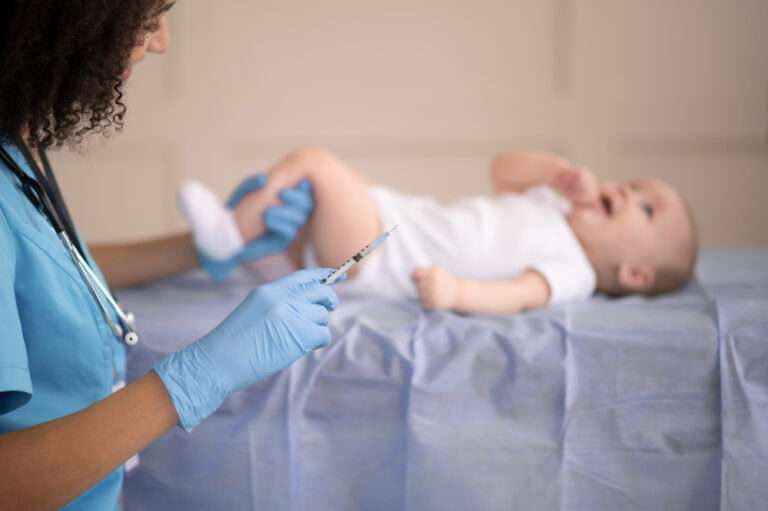
- Babies: DTaP at 2, 4 and 6 months. Babies don’t start building their own protection until that first dose at 2 months, which is why pregnancy vaccination matters.
- Toddlers and young kids: DTaP boosters at 15 to 18 months and at 4 to 6 years.
- Preteens: One Tdap at age 11 to 12. Teens who missed it should get it at their next visit.
- Adults and caregivers: Any adult who has never had Tdap should get one. The AAP recommends the vaccine for anyone in close contact with babies under 1 year. This “cocooning” helps protect babies too young to be fully vaccinated.
Protection from the vaccine fades over time, and a past infection doesn’t give lifelong protection either. That’s why boosters matter. For more on the vaccine itself, see our DTaP vaccine overview and what vaccines kids should have. To limit germs around a newborn, read whether it’s safe to let others hold your newborn.
When to call the doctor
- Your child has a cough that keeps getting worse or more frequent, or comes in violent fits
- Your baby is younger than 6 months and has possible whooping cough symptoms
- Your child isn’t fully vaccinated and has been around someone with whooping cough or a long-lasting cough
- Your child is exhausted after coughing, vomits after coughing, eats or drinks poorly, or looks sick
- You’re pregnant and have been around someone with whooping cough
- Your child shows signs of dehydration
Call ahead before going to a clinic so staff can keep other patients, especially babies, from being exposed.
When to go to the ER or call 911
Get emergency care right away if your child:
- Stops breathing or has pauses in breathing
- Has lips, face, skin or nail beds that look blue, gray or pale
- Is struggling to breathe or breathing very hard
- Has a seizure
- Is very hard to wake, limp or unresponsive
Young babies can get worse quickly, so don’t wait. For other breathing illnesses that look similar, see our guides to RSV in babies, bronchiolitis vs. asthma and croup, or use our child symptom checker.
Frequently Asked Questions
What are the first signs of whooping cough in a child?
Whooping cough usually starts like a cold, with a runny or stuffy nose, a mild cough and a low fever or none at all. After 1 to 2 weeks the cough gets worse and can turn into long coughing fits, sometimes followed by a “whoop,” vomiting or exhaustion.
Do babies with whooping cough always cough?
No. Many babies with whooping cough don’t cough at all. Instead, they may have pauses in breathing, turn blue or gray, or struggle to breathe. Any of these signs in a baby needs emergency care right away.
How long does whooping cough last?
Whooping cough can last many weeks, which is why it’s called the “100-day cough.” Coughing fits typically last 1 to 6 weeks and sometimes up to 10, then fade slowly. Fits can return with later colds, even months afterward.
Is whooping cough contagious?
Yes, very. It spreads through coughs and sneezes. The CDC says people can spread it from the start of symptoms through at least 2 weeks after coughing begins. Antibiotics started early shorten the time someone is contagious.
When can my child go back to school after whooping cough?
The AAP says children should stay home from school or child care until they have finished 5 days of antibiotics. Rules can differ by school and country, so check with your pediatrician and your child’s school before they return.
When do babies get the whooping cough vaccine?
Babies get the DTaP vaccine at 2, 4 and 6 months, with boosters at 15 to 18 months and 4 to 6 years. A Tdap shot during weeks 27 to 36 of pregnancy protects newborns before they can be vaccinated themselves.
Can a vaccinated child still get whooping cough?
Yes. Vaccine protection fades over time, so vaccinated children and adults can still catch it. Vaccinated people usually have a milder illness, and staying up to date on boosters gives the best protection.
Related guides
- RSV in Babies: Symptoms, Home Care and Immunization Options
- Measles in Kids: Symptoms, MMR Vaccine and What to Do If Exposed
- Cold vs. Flu vs. RSV vs. COVID in Kids
- Sick Child Guide: When to Call the Doctor
Sources
- CDC: Symptoms of Whooping Cough
- CDC: About Whooping Cough
- CDC: Whooping Cough Vaccine Recommendations
- CDC: Tdap Vaccination During Pregnancy
- AAP (HealthyChildren.org): Whooping Cough (Pertussis)
- NHS: Whooping Cough
This article is for general information and is not a substitute for advice from your child’s doctor. If your child seems seriously ill, call 911 or go to the nearest emergency department.