
RSV in Babies: Symptoms, Home Care and Infant RSV Immunization Options
Quick answer: RSV in babies usually starts like a cold, with a runny nose, cough, sneezing and sometimes fever, but in young infants it can spread to the small airways of the lungs and cause wheezing and hard, fast breathing. Most babies recover at home in one to two weeks with fluids, nose suctioning and rest. RSV is the most common reason babies under 1 are hospitalized, so the AAP and CDC recommend protecting every baby for their first RSV season, either with an RSV vaccine during pregnancy (given at 32 to 36 weeks) or with an RSV antibody shot for the baby (nirsevimab or clesrovimab). Most babies need only one of the two.
What is RSV?
RSV (respiratory syncytial virus) is a very common virus that infects the nose, throat and lungs. In older kids and adults it usually feels like a cold. Babies are different: their airways are tiny, so swelling and mucus can make breathing hard. RSV is a common cause of bronchiolitis (inflammation of the smallest airways) and pneumonia in infants. The CDC estimates RSV sends about 50,000 to 80,000 U.S. children under 5 to the hospital each year.
In most of the U.S., RSV season starts in the fall and peaks in winter, though timing varies by year and region. That’s why October is when pediatricians start talking about RSV protection.
RSV symptoms in babies
Symptoms usually appear 4 to 6 days after exposure and tend to show up in stages rather than all at once:
- Early signs: runny or stuffy nose, sneezing, coughing, a lower appetite and sometimes fever
- Later signs (if it moves into the lungs): wheezing, fast breathing, flaring nostrils, grunting, or skin pulling in between the ribs or at the base of the neck with each breath (called retractions)
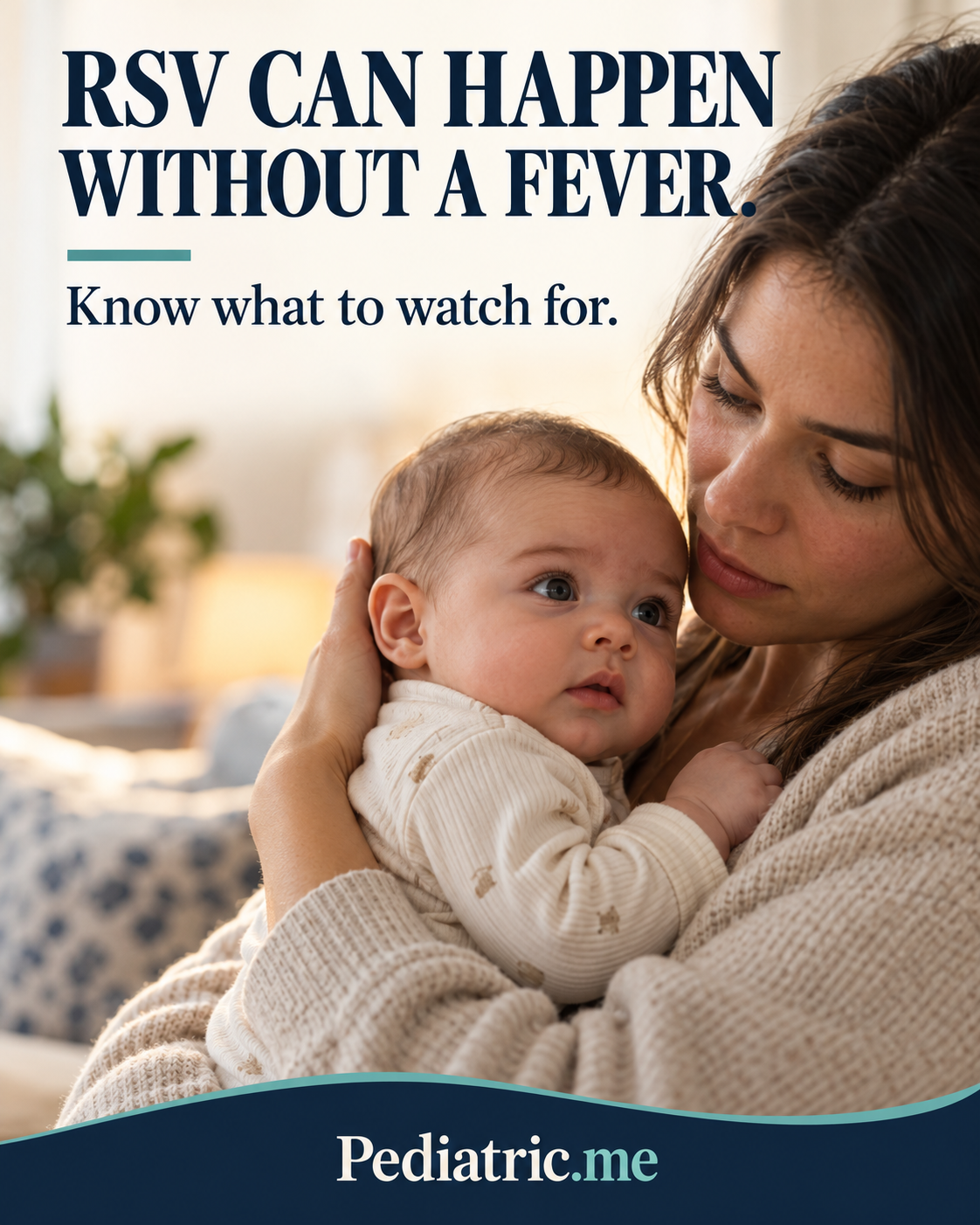
- In very young infants: the only signs may be fussiness, being less active than usual, and trouble breathing. Not every baby with RSV has a fever.
Symptoms are often worst around days 3 to 5. Most babies get better within 7 to 14 days, though a cough can linger for a few weeks. Because RSV looks so much like other winter viruses, see our guide to cold vs. flu vs. RSV vs. COVID in kids for how they compare.
How RSV spreads
RSV spreads through coughs and sneezes, close contact like kissing a baby’s face, and touching a contaminated surface and then your eyes, nose or mouth. It can live for hours on hard surfaces such as tables and crib rails. People are usually contagious for 3 to 8 days, starting a day or two before they feel sick. Some infants and people with weak immune systems can spread it for 4 weeks or longer, even after they seem better. Older siblings are a common source, so keep kids with colds away from a young baby when you can.
Home care for a baby with RSV
There’s no medicine that cures RSV, and antibiotics and steroids don’t help because it’s a virus. Care is about keeping your baby comfortable, breathing as easily as possible and drinking enough:


- Clear the nose. Use saline drops and gently suction with a bulb syringe or nasal aspirator, especially before feeds. A clearer nose makes drinking easier.
- Keep fluids going. Offer the breast or bottle more often, in smaller amounts. Breastfed babies don’t need extra water or formula.
- Use a cool-mist humidifier. Don’t use hot-water or steam types, and clean it every day.
- Treat fever for comfort, not the number. Acetaminophen can help. Ibuprofen is only for babies older than 6 months. Ask your pediatrician which medicine and dose is right for your baby’s age and weight, and follow the package directions. Never give aspirin to a child.
- Skip cough and cold medicines. They aren’t recommended for young children.
- Keep the air smoke-free around your baby.
RSV immunization options for babies
Babies can now be protected from severe RSV in two ways. Both give the baby antibodies against RSV, either passed from the mother during pregnancy or by a shot. The AAP and CDC say most babies need only one of these options.
Option 1: RSV vaccine during pregnancy
- One dose of the Pfizer RSV vaccine (Abrysvo) is given at 32 to 36 weeks of pregnancy.
- Protection passes to the baby and lasts for about the first 6 months of life.
- It’s given in the months leading up to and during RSV season. Note: sources list slightly different windows. The CDC’s parent page says September through January in most of the U.S., while the American College of Obstetricians and Gynecologists (ACOG) and HealthyChildren.org say September 1 through March 1. Your obstetrician can tell you what applies where you live.
- If you got this vaccine in an earlier pregnancy, another dose isn’t currently recommended. Your new baby should get an antibody shot instead.
- Common side effects for the mother include pain where the shot was given, headache and nausea. Hypertensive disorders of pregnancy, including pre-eclampsia, are possible risks that are still being studied.
Option 2: An RSV antibody shot for the baby
- Two long-acting antibody products are available: nirsevimab (Beyfortus) and clesrovimab (Enflonsia). Each is a single shot. The CDC doesn’t rank one above the other for a first season; your pediatrician can talk through the options with you.
- They’re recommended for babies under 8 months who are born during or entering their first RSV season if the mother didn’t get the RSV vaccine during pregnancy, her vaccine status is unknown, or the baby was born less than 14 days after she got it.
- Timing: in most of the continental U.S., the shot is given October through March. Babies born in those months should ideally get it in their first week, often before leaving the hospital. Babies born April through September should get it shortly before RSV season starts, around October or November.
- Protection starts right away and lasts at least 5 months. In clinical trials, both products lowered the risk of being hospitalized for an RSV lung infection by roughly 80% to 90%.
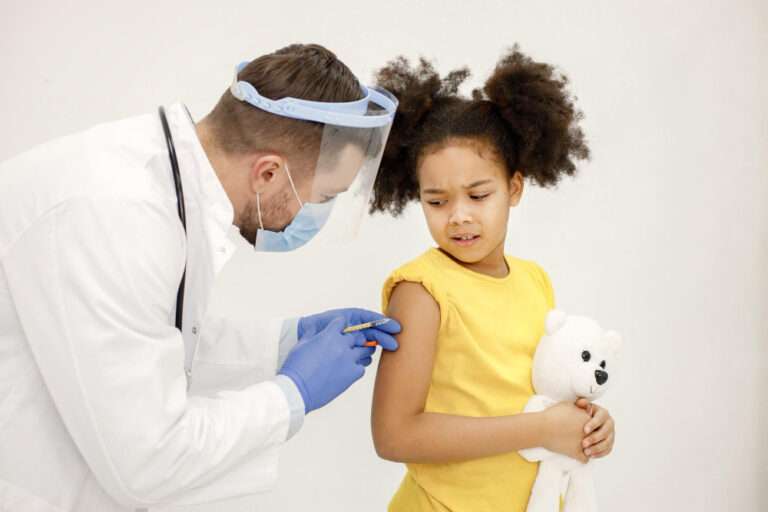
- Side effects are usually mild, such as pain, redness or swelling where the shot was given. Allergic reactions are uncommon. The shot can be given at the same visit as routine vaccines.
- The older RSV antibody, palivizumab, is no longer available after December 31, 2025, according to the CDC.
Second RSV season for higher-risk toddlers
Most children 8 months and older don’t need RSV protection. Some children 8 to 19 months at higher risk should get nirsevimab before their second season. Clesrovimab isn’t recommended for this age group.
Where the AAP and CDC differ: In September 2026 the AAP broadened its list of who counts as high risk for the 2026–2027 season. The AAP list includes children born before 32 weeks of pregnancy, children with significant congenital heart disease, children with lung structure problems or neuromuscular disorders, and children with Down syndrome or other chromosomal differences. The CDC’s guidance, last updated in 2025, names a narrower group: children with chronic lung disease of prematurity who needed medical support in the past 6 months, severe immune problems, severe cystic fibrosis, and American Indian and Alaska Native children. If your child has a chronic condition, ask your pediatrician whether they qualify.
When to call the doctor
Call your pediatrician if your baby:
- Is younger than 3 months and has a rectal temperature of 100.4°F (38°C) or higher
- Is wheezing, breathing faster than usual or seems to be working harder to breathe
- Shows signs of dehydration, such as fewer wet diapers (less than one every 8 hours)
- Is refusing to breastfeed or take a bottle, or is unusually cranky
- Has a fever above 104°F at any age, or a fever that starts after a cold
- Has symptoms that get worse or don’t improve after about 7 days
- Is tugging at an ear or has ear drainage, which can mean a bacterial infection such as an ear infection
For more on fever thresholds by age, read when to call the pediatrician about a fever.
When to go to the ER or call 911
Get emergency care right away if your baby:
- Is struggling to breathe, with the skin pulling in deeply between the ribs or at the neck, or is grunting with each breath
- Has pauses in breathing
- Has pale, gray or blue skin, lips or nail beds
- Is very drowsy, hard to wake or much less alert than usual
Trust your instincts. If your baby “just doesn’t look right,” it’s always OK to get checked. Our red-flag symptom guide for parents covers other warning signs.
How to lower your baby’s risk
- Get your baby protected with either the pregnancy vaccine or an infant antibody shot.
- Wash hands often, and ask visitors to wash before holding the baby.
- Keep sick people, including older siblings, away from your baby when possible.
- Clean toys and frequently touched surfaces.
- Avoid smoke exposure, and breastfeed if you can.
- Keep the whole family up to date on vaccines, including the yearly flu shot.
Frequently Asked Questions
What are the first signs of RSV in a baby?
RSV in babies usually starts like a cold: a runny or stuffy nose, sneezing, coughing and a lower appetite, sometimes with fever. In very young infants the only signs may be fussiness, low energy and trouble breathing.
How long does RSV last in babies?
Most babies with RSV get better in 7 to 14 days. Symptoms are often worst around days 3 to 5, and a cough can last a few weeks after the other symptoms clear.
Does my baby need the RSV shot if I got the RSV vaccine while pregnant?
Usually not. If the RSV vaccine was given at least 14 days before birth, most babies don’t need the infant antibody shot. Your pediatrician may still recommend it in rare cases, such as when the baby has a serious heart condition or the mother has a condition that limits antibody transfer.
What is the difference between nirsevimab and clesrovimab?
Nirsevimab (Beyfortus) and clesrovimab (Enflonsia) are both single-shot RSV antibodies for babies under 8 months in their first RSV season. The CDC doesn’t rank one above the other for the first season. Only nirsevimab is recommended for higher-risk children 8 to 19 months in their second season.
When should my baby get the RSV antibody shot?
In most of the U.S., the RSV antibody shot is given October through March. Babies born in those months should get it in their first week of life, ideally before leaving the hospital. Babies born April through September should get it shortly before RSV season, around October or November.
Do antibiotics help RSV?
No. RSV is a virus, so antibiotics don’t treat it, and steroids don’t help either. Your pediatrician may prescribe antibiotics only if a separate bacterial infection, such as an ear infection, develops.
How long is a baby with RSV contagious?
People with RSV are usually contagious for 3 to 8 days, starting a day or two before symptoms appear. Some infants and people with weakened immune systems can spread RSV for 4 weeks or longer, even after symptoms stop.
Related guides
- Cold vs. Flu vs. RSV vs. COVID in Kids
- Croup in Kids: Barking Cough at Night
- Flu Shot for Kids 2026–27
- Sick Child Guide: When to Call the Doctor
Sources
- AAP: RSV Immunization Recommendations for the 2026–2027 Season (HealthyChildren.org)
- AAP: RSV: When It’s More Than Just a Cold (HealthyChildren.org)
- CDC: RSV Immunization Guidance for Infants and Young Children
- CDC: Protecting Infants From RSV
- CDC: RSV Symptoms and How RSV Spreads
- Children’s Minnesota: Respiratory Syncytial Virus (RSV)
This article is for general information and is not a substitute for advice from your child’s doctor.