


Baby-Led Weaning: How to Start, First Foods and Gagging vs. Choking
Quick answer: Baby-led weaning (BLW) is a way to start solid foods in which your baby feeds themselves soft, finger-shaped pieces of real food instead of being spoon-fed purées. Most babies are ready around 6 months, once they can sit up with good head control, bring things to their mouth and swallow food rather than push it back out. Start with soft foods your baby can mash with their gums, such as ripe banana, avocado, well-steamed vegetables, shredded meat and egg, and include iron-rich foods every day. Gagging is normal and common while babies learn; choking is silent and is an emergency. Always stay with your baby, seated upright, while they eat.
What is baby-led weaning?
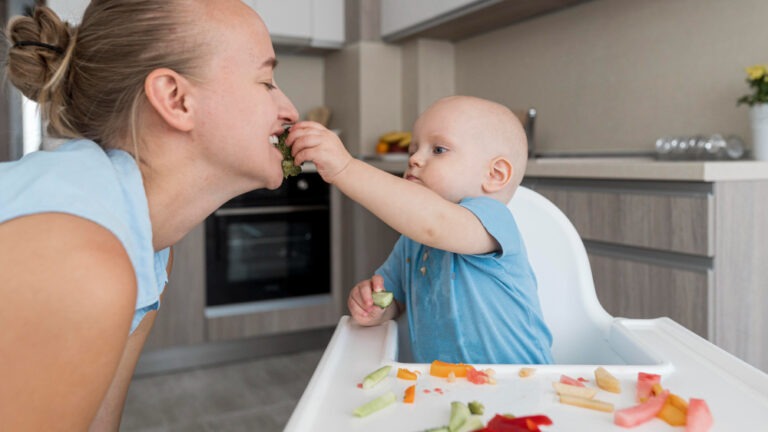
“Weaning” here means moving from breast milk or formula alone to a mix of milk and solid foods. It doesn’t mean stopping breastfeeding. With baby-led weaning, you skip the spoon-fed purée stage (or keep it short) and offer your baby small portions of soft family foods they can pick up and eat on their own. Your baby decides how much to eat, and ideally eats with the rest of the family.
BLW doesn’t have to be all or nothing. The American Academy of Pediatrics (AAP) notes that purées are nutritious and that offering them some of the time is fine, for example when you’re traveling or short on time. Many families do a mix of finger foods and spoon-feeding, and the NHS says there’s no right or wrong way as long as your baby gets a wide variety of foods.
When to start baby-led weaning: signs your baby is ready
Most babies are ready for solids around 6 months. The AAP says a few may be ready a bit earlier, and the CDC advises against starting any solids before 4 months. For baby-led weaning in particular, waiting until your baby has the skills to sit and grab makes self-feeding safer. Look for these signs together, not just one:
- Sits up well, with or without a little support, and holds their head steady
- Brings toys and objects to their mouth and tries to grab things
- Opens their mouth when food comes near and seems interested in what you’re eating
- Swallows food rather than pushing it straight back out with their tongue
Waking more at night, chewing on fists or wanting extra milk are not reliable signs of readiness. Talk with your pediatrician before starting if your baby was born early, can’t sit up on their own yet, has trouble chewing and swallowing soft foods, or has any developmental or feeding concerns.
How to start: a simple first-week plan
- Set up a safe seat. Use a high chair with the harness buckled, with your baby sitting upright. Never feed a baby who is lying back, in a car seat or stroller, crawling or walking.
- Pick a calm time. Choose a time when your baby is alert and not overly hungry or tired. Early on, many parents offer a milk feed first so baby is relaxed and curious rather than frantic.
- Offer two or three pieces. Put a few soft, finger-shaped pieces on the tray or hand one to your baby. Let them explore, squish and taste. Much of it will end up on the floor, and that’s part of learning.
- Let your baby lead. Don’t put food into your baby’s mouth for them or push them to finish. Babies may need 10 or more tries before they accept a new food.
- Eat together. Babies learn by watching you chew and swallow. You can also preload a baby-safe spoon with soft foods like yogurt or mashed potato and let your baby bring it to their mouth.
Breast milk or formula still provides most of your baby’s nutrition in the first months of solids, so keep offering milk feeds as usual.
Best first foods for baby-led weaning
Good first foods are soft enough to squish between your thumb and finger, and cut into strips about the size and shape of an adult finger, so your baby can grip one end in a fist and chew the other. Ideas include:
- Soft fruit: ripe banana, ripe avocado, soft ripe pear or peach, cooked apple
- Well-cooked vegetables: steamed broccoli florets with a stalk to hold, carrot or sweet potato sticks cooked until very soft, roasted squash
- Iron-rich protein: shredded or very tender slow-cooked meat, strips of omelet or hard-boiled egg, flaked boneless fish, mashed beans or lentils on toast strips
- Grains and starches: well-cooked pasta, toast strips, iron-fortified infant cereal mixed with milk and offered on a preloaded spoon
- Dairy: plain whole-milk yogurt and pasteurized cheese, grated or in thin strips (avoid chunks)
Don’t skip iron
The AAP points out that babies doing BLW often favor fruit and vegetables and may eat little of the higher-calorie, iron-rich foods like meat, eggs and fortified cereal. Offer an iron-rich food at most meals, and ask your pediatrician about iron and vitamin D needs during the first year.
Common food allergens
Current guidance is that most babies should try common allergens like peanut, egg and dairy around 6 months, because there’s no evidence that waiting prevents food allergy and early introduction may help. Peanut must never be given as whole nuts or thick spoonfuls of peanut butter; thin smooth peanut butter and spread it lightly on toast strips, or stir it into a food your baby already eats. If your baby has severe eczema or an egg allergy, talk to your pediatrician before introducing peanut.
Foods to avoid in the first year
- Choking hazards: whole nuts and seeds, popcorn, chips, pretzels, whole grapes, cherry tomatoes and berries that aren’t cut up, raw carrot or apple chunks, whole corn kernels, raisins and other dried fruit, hot dogs and sausages, chunks of meat or cheese, string cheese, marshmallows, gummy or hard candy, and chunks of nut butter
- Round “coin” slices: cut round foods like grapes and cherry tomatoes lengthwise into quarters, and cut hot dogs or sausages into thin strips rather than circles (better yet, skip them)
- Honey in any form, including baked into foods, until after age 1, because of the risk of infant botulism
- Cow’s milk as a drink before 12 months (yogurt and cheese are fine)
- Juice before 12 months
- Added salt and sugar, including salty stock cubes and gravies
Also remove pits, seeds, skin, bones and gristle, and let hot food cool fully before serving.
Gagging vs. choking: how to tell the difference
This is the number one worry parents have about baby-led weaning. Both the AAP and the NHS note that studies so far suggest self-feeding does not carry a higher choking risk than spoon-feeding, as long as foods are prepared safely and babies are supervised. Research on BLW is still limited, though, so safe food prep matters.
Gagging (normal, usually noisy)
- Your baby coughs, sputters, retches or makes gagging sounds
- Their tongue pushes forward and their eyes may water
- They may spit food out or bring it back up
- Their face may redden, but they keep breathing
Gagging is a reflex that helps keep food away from the airway while babies learn to move it around their mouth. It usually becomes less frequent with practice. Stay calm and let your baby work it out; a big reaction from you can make gagging worse.
Choking (an emergency, often silent)
- Your baby can’t cry, cough or make much sound, or has only a weak cough
- Struggling or labored breathing, with the chest and ribs pulling in
- Soft or high-pitched noises when trying to breathe in
- Blue or gray color around the lips, face or nails
- Becoming limp or unresponsive
If your baby is coughing hard or crying strongly, don’t reach in or slap their back; stay close and let them cough. If their cough or cry is weak or silent, start infant choking first aid right away. It’s worth taking an infant CPR and choking first-aid class before you start solids.
When to call the doctor
Call your pediatrician if:
- Your baby choked and the object came out, even if they seem fine now
- Gagging is constant, leads to vomiting at most meals, or doesn’t improve after a few weeks of practice
- Your baby refuses most solids for a long time, or you’re worried they aren’t eating enough or gaining weight
- You notice a possible food reaction, such as hives, a new rash, vomiting or diarrhea after a new food
- Your baby was born premature or has developmental, muscle-tone or feeding concerns and you’d like help deciding if BLW is right for them
- Your baby has severe eczema or an egg allergy and you haven’t yet introduced peanut
When to go to the ER / call 911
Call 911 right away if your baby:
- Is choking and can’t cry, cough or breathe, or has a weak, ineffective cough (start infant choking first aid while someone else calls)
- Turns blue or gray, goes limp or becomes unresponsive (begin infant CPR)
- Has swelling of the lips, tongue or face, trouble breathing, wheezing, repeated vomiting or sudden floppiness after eating a food, which can be signs of a severe allergic reaction
Frequently Asked Questions
What age can you start baby-led weaning?
Most babies are ready for baby-led weaning around 6 months, when they can sit up with good head control, bring food to their mouth and swallow rather than push food out. Solids are not recommended before 4 months. Check with your pediatrician if your baby was premature or has feeding concerns.
Is baby-led weaning safe?
Baby-led weaning can be safe when foods are soft, cut into finger-shaped strips, and your baby is seated upright and watched closely. Studies so far suggest self-feeding doesn’t raise choking risk compared with spoon-feeding, but research is limited, so avoid known choking hazards and never leave your baby alone while eating.
How can I tell if my baby is gagging or choking?
A gagging baby is usually noisy: coughing, sputtering, retching, with watery eyes and the tongue pushed forward, but still breathing. A choking baby is often silent: unable to cry or cough, struggling to breathe, possibly turning blue. Gagging is normal; choking needs infant first aid and a 911 call.
What are the best first foods for baby-led weaning?
Good first foods are soft enough to squash between your fingers and cut into finger-sized strips, such as ripe banana, avocado, well-steamed broccoli or sweet potato, strips of egg omelet, and shredded tender meat. Offer an iron-rich food such as meat, egg or iron-fortified cereal at most meals.
Can I combine baby-led weaning with purées?
Yes. Many families mix finger foods with spoon-fed or preloaded-spoon purées. The AAP says purées are nutritious and fine to offer, and the NHS says there’s no right or wrong approach as long as your baby gets a wide variety of foods.
Do babies get enough iron with baby-led weaning?
They can, but it takes planning. Babies doing baby-led weaning often prefer fruit and vegetables and may eat little meat or fortified cereal. Offer iron-rich foods every day and ask your pediatrician whether your baby needs an iron or vitamin D supplement.
Can babies have peanut butter with baby-led weaning?
Most babies can try peanut around 6 months, but never as whole nuts or thick spoonfuls of peanut butter, which are choking hazards. Thin smooth peanut butter and spread it lightly on toast strips. If your baby has severe eczema or an egg allergy, talk to your pediatrician first.
Related guides
- When to Start Solid Foods: The Ultimate Guide for Parents
- The Viral Baby Food Mistakes Millions of Parents Are Making
- Baby & Child Feeding Guide: Breastfeeding, Formula, Solids & Picky Eating
- How Much and How Often Should I Feed My Baby?
- Teething in Babies: Signs, Timeline and Safe Relief
Sources
- AAP (HealthyChildren.org): Baby-Led Weaning: Is It Safe?
- AAP (HealthyChildren.org): Starting Solid Foods
- CDC: Choking Hazards for Infants and Toddlers
- CDC: When, What, and How to Introduce Solid Foods
- CDC: Preventing Botulism (honey and infants)
- NHS: Your Baby’s First Solid Foods
- MedlinePlus (NIH): Choking, Infant Under 1 Year
This article is for general information and is not a substitute for advice from your child’s doctor.