

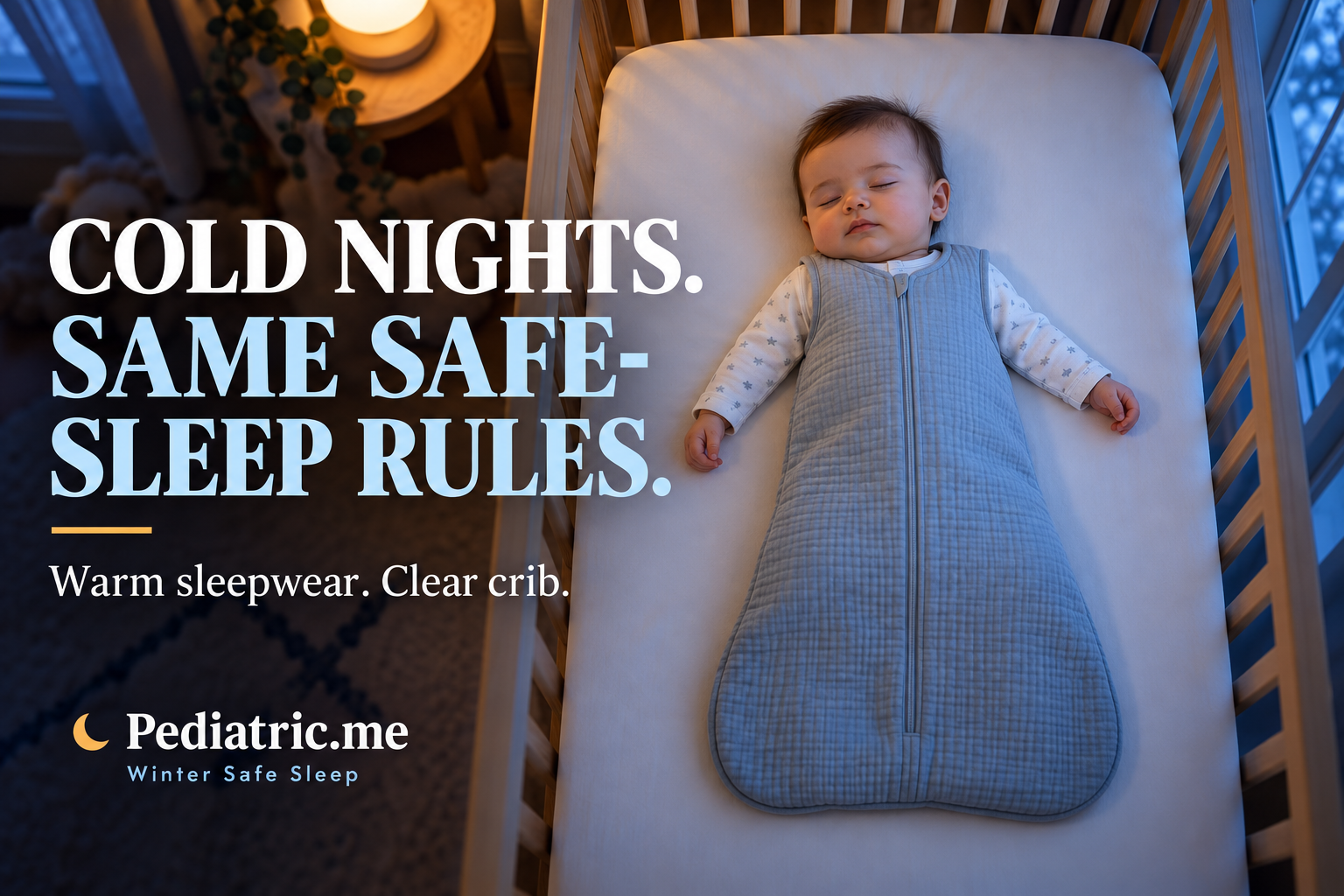
Winter Safe Sleep for Babies: Blankets, Room Temperature and Sleep Sacks
Quick answer: Winter safe sleep for babies follows the same rules as the rest of the year, with one extra job: keep your baby warm without letting them get too hot. Put your baby to sleep on their back, on a firm, flat crib or bassinet surface with only a fitted sheet. Keep blankets, quilts, pillows and bumpers out of the sleep space. For warmth, dress your baby in one more layer than you’re wearing, or use a wearable blanket (sleep sack). Skip indoor hats and weighted sleep products, keep the room at a temperature that feels comfortable to you, and check your baby’s chest or the back of the neck (not the hands) to see if they’re too warm.
Why winter is a tricky time for baby sleep
When it’s cold outside, it’s natural to want to pile on blankets and thick pajamas. But babies can’t regulate their body temperature as well as older children and adults. The National Institutes of Health (NIH) has warned that sudden infant death syndrome (SIDS) risk is higher in colder months, partly because parents tend to over-bundle babies at bedtime. Research the NIH cites links several layers, heavy clothing, heavy blankets and warm rooms with a higher risk of SIDS.
Extra bedding is a second problem. Soft items like blankets and comforters can cover a baby’s face and block breathing. The good news: you can keep your baby cozy all winter without any of them.
Winter safe sleep for babies: the basics that don’t change
The American Academy of Pediatrics (AAP) recommends these steps for every sleep, day or night, until your baby’s first birthday:
- Back to sleep, every time. Place your baby on their back for naps and at night. Side sleeping is just as risky as tummy sleeping. Once your baby can roll both ways on their own, you don’t need to flip them back.
- Firm, flat surface. Use a crib, bassinet, portable crib or play yard that meets Consumer Product Safety Commission (CPSC) standards. The AAP says any surface inclined more than 10 degrees isn’t safe for sleep.
- Fitted sheet only. No pillows, quilts, comforters, loose or non-fitted sheets, blankets, bumper pads or stuffed toys.
- Room share, don’t bed share. Keep your baby’s crib or bassinet in your room for at least the first 6 months. The AAP advises against sharing a bed with your baby.
- Move sleeping babies. If your baby falls asleep in a car seat, swing, stroller or carrier, move them to a firm, flat sleep surface on their back as soon as you can.
- Offer a pacifier at naps and bedtime. If you’re breastfeeding, wait until feeding is going well first. Don’t attach it to clothing or hang it around the neck.
- Keep the air smoke-free. No smoking or vaping around your baby, in your home or in the car.
Our newborn sleep and safe sleep guide covers these basics in more detail.
How to dress your baby for sleep in winter
The AAP’s rule of thumb is simple: your baby needs only one more layer than you would wear to be comfortable in the same room. In practice, that might mean:
- A long-sleeved bodysuit or footed sleeper, plus a wearable blanket on colder nights
- Or a warmer one-piece sleeper alone, if your home is on the warm side
A few winter-specific tips:
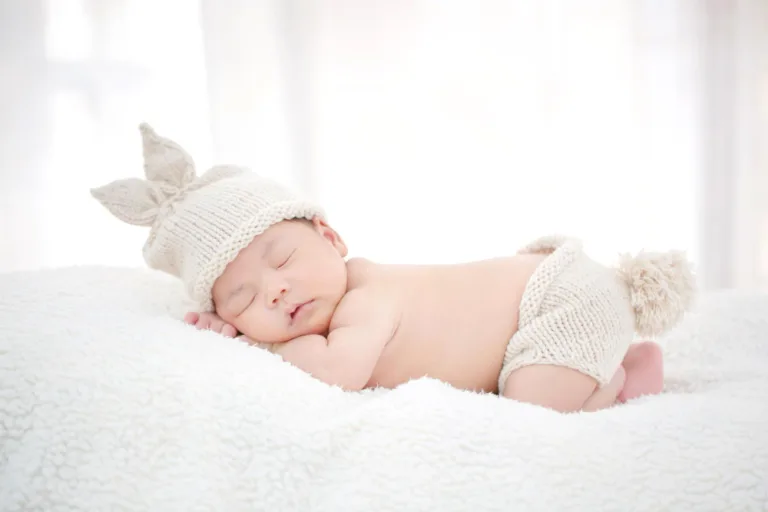
- No hats indoors. The AAP says not to put a hat on your baby indoors once you’re home from the hospital. Babies release a lot of heat through their heads, and the NHS notes that a hat or hood worn to sleep can cause overheating.
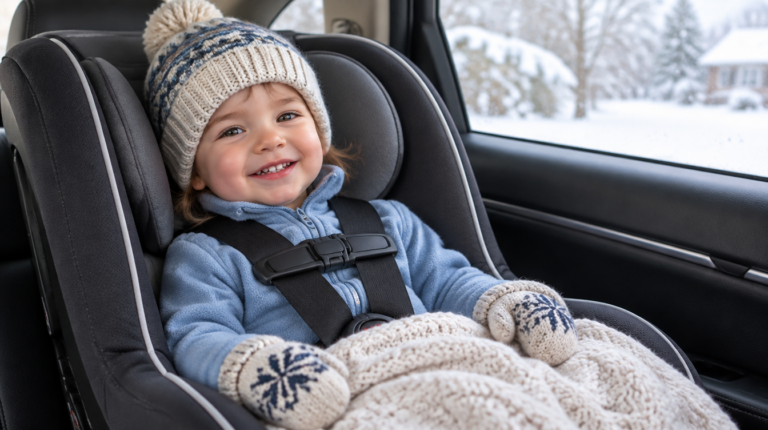
- Take off outdoor clothes. If your baby dozes off in a snowsuit or coat after an outing, remove it before you put them down. For car rides, see our guide to winter coats and car seats.
- Cool hands are normal. A baby’s hands and feet often feel cooler than the rest of the body. That doesn’t mean they need another layer.
Sleep sacks and wearable blankets
A wearable blanket, often called a sleep sack, is the easiest way to keep a baby warm without loose bedding. It zips or snaps over your baby’s sleepwear, stays in place all night and leaves the head and face uncovered. Children’s hospitals and the UK’s National Health Service (NHS) both point to sleep sacks as a safe, warm alternative to blankets.
When choosing and using one:
- Pick the right size. Follow the maker’s size guide, which is often based on your baby’s weight rather than age.
- Know the warmth rating. Some sleep sacks list a “TOG” rating. A higher TOG means a warmer bag. On cold nights, you can add a layer of clothing underneath or choose a warmer bag instead of adding a blanket.
- Don’t add a blanket on top. A sleep sack replaces blankets. It doesn’t go under one.
- Avoid hoods or anything that could cover your baby’s head during sleep.
- Never use weighted versions. The AAP says not to use weighted blankets, sleepers, swaddles or other weighted objects on or near a sleeping baby, and not to tuck items like rice bags inside a swaddle.
Swaddling note: Swaddling doesn’t lower SIDS risk. If you swaddle, always place your baby on their back, don’t wrap too tightly, and stop as soon as your baby looks like they’re trying to roll. That usually happens around 3 to 4 months, but it can be earlier. Read more in our 4-month sleep regression guide.
What about blankets? The advice has changed
If you’re getting tips from grandparents or older handouts, you may hear that a thin blanket is fine as long as it’s tucked tightly under the mattress at chest level. That was common advice years ago, including in a 2010 NIH winter alert. Current AAP guidance is clearer and stricter: keep all blankets out of the sleep space during the first year. If your baby needs more warmth, add a clothing layer or use a wearable blanket instead.
What room temperature is best for a sleeping baby?
U.S. guidance doesn’t give one exact number. The NIH advises keeping your baby’s room at a temperature that’s comfortable for an adult. The NHS gives a more specific range of 16 to 20°C, which is about 61 to 68°F. Either way, avoid making the nursery hot, even on the coldest nights.
How to tell if your baby is too hot or too cold
- Check the chest or back of the neck. It should feel warm, not hot or sweaty.
- Signs of overheating: sweating, damp or clammy skin, a hot chest or flushed skin. Remove a layer if you notice these.
- Signs your baby may be cold: a cool chest or back of the neck. Add a light layer or switch to a warmer sleep sack.
Space heaters and home heating safety
- Keep space heaters away from the crib. The CPSC advises keeping portable heaters at least 3 feet from bedding, curtains, furniture and anything else that can burn, and turning them off before you go to sleep. Children’s hospitals also recommend keeping a 3-foot child-free zone around heaters and never leaving them running unattended.
- Install carbon monoxide (CO) alarms. The CPSC recommends CO alarms on every level of the home and outside sleeping areas, with battery backup. Test them monthly.
Winter illness and sleep
Winter brings colds, flu and RSV, and a congested baby may sleep poorly. Even when your baby is sick, the safe sleep rules still apply: back to sleep, a flat surface and no pillows or wedges to prop them up. Don’t bundle a sick baby in extra layers; the same overheating advice still applies. Our guide to RSV in babies explains which breathing symptoms need attention.
When to call the doctor
Call your pediatrician if:
- Your baby is younger than 3 months and has a temperature of 100.4°F (38°C) or higher
- Your baby has a fever and looks very ill, is unusually drowsy or is very fussy
- You have questions about sleep products, swaddling or how to set up a safe sleep space
For fever guidance at every age, see when to call the pediatrician about a fever.
When to go to the ER or call 911
Call 911 right away if your baby:
- Is having trouble breathing
- Has skin or lips that look blue, purple or gray
- Is unresponsive, very hard to wake or becoming less responsive
- Has a seizure (rhythmic jerking with loss of responsiveness)
- Shows signs of a heat or cold injury, such as heat exhaustion
Frequently Asked Questions
Can my baby sleep with a blanket in winter?
No. The AAP recommends keeping blankets, quilts and comforters out of a baby’s sleep space for the first year, even in winter. To keep a baby warm safely, dress them in one more layer than an adult would wear or use a wearable blanket (sleep sack).
What should a baby wear to sleep in winter?
Dress your baby in one more layer than you’re wearing in the same room. That’s often a long-sleeved bodysuit or footed sleeper plus a sleep sack on colder nights. Skip hats and hoods for sleep, and remove coats or snowsuits before sleep.
What room temperature is safe for a sleeping baby?
The NIH advises keeping a baby’s room at a temperature comfortable for an adult. The UK’s NHS suggests 16 to 20°C (about 61 to 68°F). Avoid making the room hot, since overheating is linked to a higher risk of SIDS.
How do I know if my baby is too hot while sleeping?
Feel your baby’s chest or the back of the neck. Sweating, damp or clammy skin, flushed skin or a hot chest are signs of overheating, so remove a layer. Cool hands and feet are normal and don’t mean a baby is cold.
Are sleep sacks safe for babies?
Yes, a well-fitting sleep sack is a safe alternative to loose blankets. Choose the right size using the maker’s guide, avoid hoods, don’t put a blanket over it and never use weighted sleep sacks or swaddles.
Can my baby wear a hat to sleep?
No. The AAP says not to put a hat on a baby indoors once you’re home from the hospital. Hats and hoods worn to sleep can cause a baby to overheat.
Is it safe to use a space heater in the nursery?
If you use one, keep it at least 3 feet from the crib, bedding and curtains, never leave it running unattended and turn it off before you go to sleep, as the CPSC advises. Make sure your home has working carbon monoxide alarms.
Related guides
- Newborn Sleep Tips: Safe Sleep and Schedule Guide
- How Much Sleep Do Kids Need? A Sleep Chart by Age
- The 4-Month Sleep Regression
- Winter Coats and Car Seats
- RSV in Babies: Symptoms and Home Care
Sources
- AAP (HealthyChildren.org): A Parent’s Guide to Safe Sleep
- NIH (NICHD): Increase in SIDS Risk During Cold Weather
- NHS (Just One Norfolk): Keeping Babies the Right Temperature
- CPSC: Keep Warm and Safe This Winter (2026)
- AAP (HealthyChildren.org): Fever, When to Call the Pediatrician
- AAP (HealthyChildren.org): When to Call Emergency Medical Services
- Le Bonheur Children’s Hospital: Winter Weather Safety Tips
This article is for general information and is not a substitute for advice from your child’s doctor.