


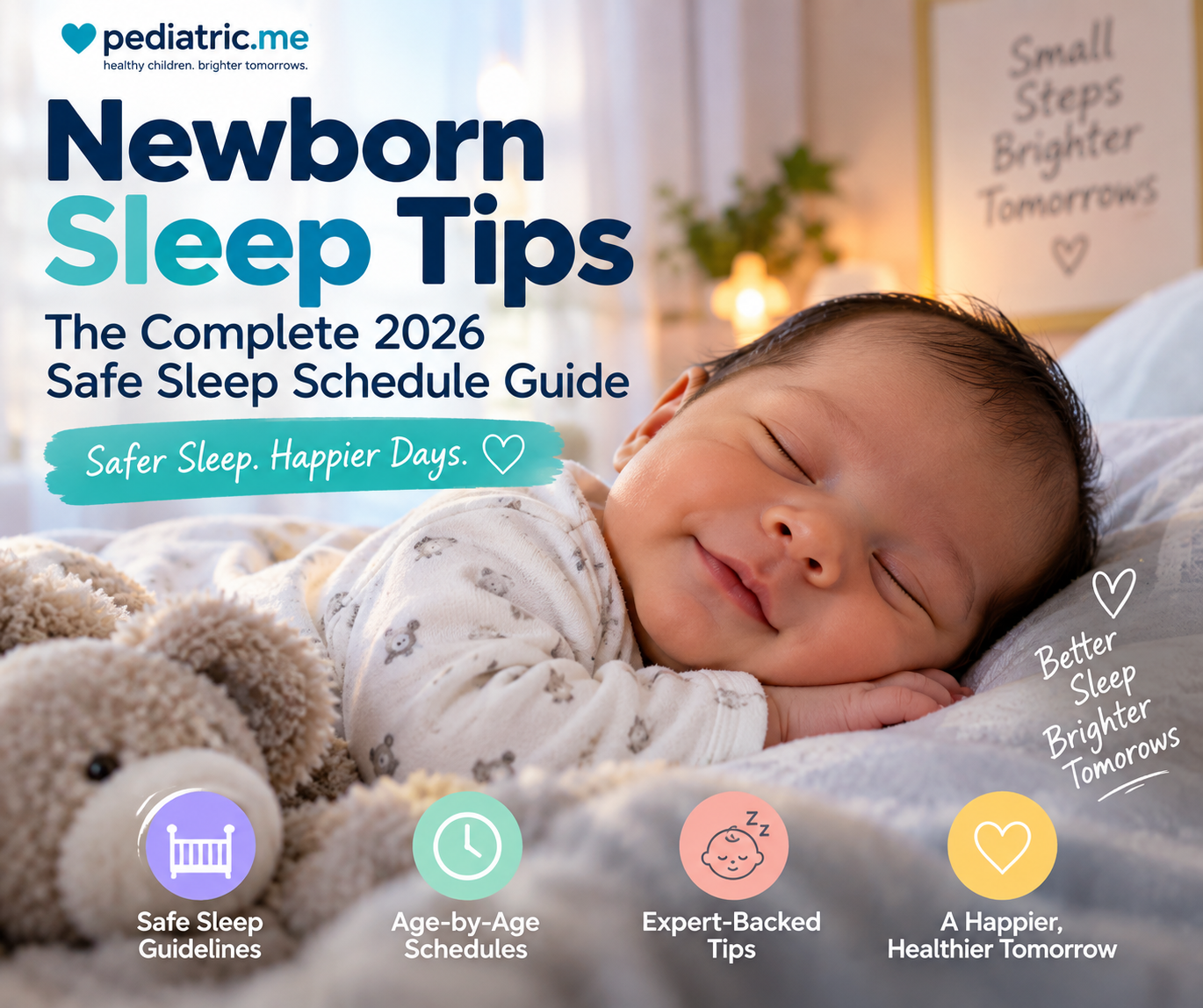
Newborn Sleep Tips: The Complete 2026 Safe Sleep & Schedule Guide
Quick answer: Newborns need 14–17 hours of sleep in a 24-hour period, but it comes in short, unpredictable chunks — not one long stretch. The safest way to get there is the AAP’s “ABC” rule (Alone, on their Back, in a Crib or bassinet), a dark and quiet room, a simple wind-down routine, and patience with day-night confusion, which usually resolves by 8–12 weeks. Below is a full breakdown of sleep schedules by week, a safe sleep checklist, product picks, and answers to the questions parents ask most.
How Much Sleep Do Newborns Actually Need?
In the first three months, healthy babies typically sleep 14 to 17 hours in a 24-hour period, though anywhere from 11 to 19 hours can be normal. What surprises most new parents isn’t the total number — it’s how fragmented it is. A newborn’s internal clock (circadian rhythm) hasn’t matured yet, so sleep is split fairly evenly between day and night rather than concentrated overnight.
Newborn Sleep & Wake Windows by Age
| Age | Total sleep (24 hrs) | Awake time between naps | Typical night stretch |
|---|---|---|---|
| 0–4 weeks | 14–17 hrs | 35–60 minutes | 2–4 hrs before waking to feed |
| 1–2 months | 14–17 hrs | 60–90 minutes | 3–4 hrs before waking to feed |
| 3 months | 14–16 hrs | 75–110 minutes | 4–6 hrs (sleep “regression” can start here) |
A short nap here or a long one there is completely normal at this stage. Instead of chasing an exact schedule, watch your baby’s tired cues (rubbing eyes, fussing, staring off) and aim for a consistent routine rather than a fixed clock time.
Safe Sleep Guidelines: The AAP’s “ABC” Rule
Every year, the American Academy of Pediatrics (AAP) safe sleep recommendations remain the single most important thing to get right, since they’re directly tied to reducing the risk of SIDS and other sleep-related infant deaths. The core of the guidance is easy to remember as the ABCs:
- A — Alone: Baby sleeps in their own space, not in bed with parents or siblings. Room-sharing (baby’s crib or bassinet in your room) for at least the first 6 months is recommended and lowers SIDS risk.
- B — Back: Always place baby on their back for every nap and every night, even after a rolling milestone begins — just keep placing them on their back to start.
- C — Crib: A firm, flat, non-inclined surface (no more than a 10-degree incline) that meets current federal safety standards — a bare crib, bassinet, or playard with a fitted sheet and nothing else.
A few specific do’s and don’ts worth calling out because they trip up a lot of new parents:
- No loose bedding: no pillows, blankets, bumpers, or stuffed animals in the sleep space.
- Skip weighted products: the AAP advises against weighted swaddles, sleepers, or blankets — they don’t have proven sleep benefits and raise suffocation/overheating risk.
- No sitting devices for sleep: car seats, swings, strollers, and carriers aren’t safe for routine sleep at home, especially under 4 months.
- Stop swaddling at the first rolling attempt (often 2–4 months) — a swaddled baby who rolls onto their stomach can’t push back over.
- Offer a pacifier at nap and bedtime once breastfeeding is well established — it’s associated with a lower SIDS risk.
If you’re still assembling the nursery, our nursery checklist walks through exactly what a safe sleep setup needs (and what to skip).
Why Newborns Confuse Day and Night — and How to Fix It
Many babies are more alert at 2 a.m. than at 2 p.m. for the first several weeks. This “day-night confusion” happens because their circadian rhythm hasn’t kicked in yet — melatonin production typically doesn’t ramp up until around 8–12 weeks. You can gently nudge things along:
- Daytime: keep the house bright and normal-noise during naps; don’t tiptoe around or blackout the room.
- Nighttime: keep lights low and voices quiet during feeds and diaper changes — treat overnight wake-ups as boring on purpose.
- Get morning light exposure soon after waking — natural light is one of the strongest cues for setting a circadian clock.
- Start a short, repeatable wind-down routine before bedtime (dim lights, a feed, a swaddle, a few minutes of quiet) so baby starts associating those steps with sleep.
This period overlaps with the biggest adjustment of new parenthood — if you’re still in the thick of the first days home, our first week home with baby survival guide covers what to expect hour by hour.
Building a Simple Newborn Bedtime Routine
Newborns don’t need an elaborate routine — they need a consistent, short one, repeated at roughly the same steps every time so their body starts to recognize the pattern:
- Dim the lights 20–30 minutes before the target bedtime.
- Final feed of the “day” portion (feeds will still happen overnight — that’s expected).
- Diaper change, sleep sack or swaddle, white noise on.
- A brief calming activity — a few minutes of rocking, a lullaby, or gentle patting — then into the crib or bassinet drowsy but ideally still awake.
Consistency matters more than any single ingredient. A 10-minute routine done the same way every night, from week two onward, pays off later when sleep training or schedule-building becomes relevant around 4–6 months.
Common Newborn Sleep Problems
Short naps (“catnapping”)
30–45 minute naps are developmentally normal in the newborn stage because sleep cycles are short. Don’t panic if naps aren’t lengthening yet — that typically improves closer to 3–4 months as sleep architecture matures.
The 3–4 month sleep regression
Around 12–16 weeks, babies’ sleep cycles shift from a simple 2-stage newborn pattern to a more adult-like 4-stage cycle. Night waking can temporarily increase during this transition — it’s a developmental leap, not a sign you’re doing something wrong.
Fussiness at bedtime or evening crying
If evening crying spells are intense, prolonged, and hard to console, it may be colic rather than typical fussiness. Our guide to colic and soothing techniques breaks down the difference and what actually helps.
Overtiredness
Counterintuitively, an overtired newborn often fights sleep harder and wakes more, not less. Watching wake windows (see the table above) and getting baby down at the first tired cue — rather than waiting for a meltdown — usually helps more than any gadget.
Setting Up a Sleep-Friendly Nursery
The environment does a lot of the work for you. A few evidence-backed basics:
- Keep it dark: blackout curtains for daytime naps help reinforce the day/night distinction once you’re actively working on it (past the first few weeks).
- White noise, kept safe: continuous white noise can help mask household sounds; the AAP-referenced safety guidance is to keep volume under 50 decibels and place the machine at least 7 feet from the crib.
- Room temperature: aim for around 68–72°F (20–22°C) — a room that feels comfortably cool for a lightly dressed adult.
- A well-fitted sleep sack instead of loose blankets once swaddling ends, so baby stays warm without loose fabric near the face.
- A baby monitor for peace of mind, especially with room-sharing in a bassinet — our 2026 baby monitor guide compares audio-only vs. video vs. wearable options.
Recommended Products for Better, Safer Newborn Sleep
A few categories genuinely help — not because they’re magic, but because they support the safe sleep basics above. As always, check that any product meets current federal safety standards for infant sleep before buying.
- Bassinet or bedside sleeper for room-sharing — look for a firm, flat mattress and breathable mesh sides. Browse bassinets on Amazon, or see our crib and bassinet buying guide for tested picks.
- Wearable sleep sack (non-weighted, hip-healthy fit) as a swaddle alternative once rolling starts. Browse infant sleep sacks on Amazon.
- White noise machine with adjustable, capped volume rather than a phone app running all night. Browse white noise machines on Amazon.
- Two-way or video baby monitor so you can check on baby without fully waking yourself. Browse baby monitors on Amazon.
- Room thermometer to keep the nursery in the 68–72°F comfort range without guessing. Browse nursery thermometers on Amazon.
As an Amazon Associate, pediatric.me may earn from qualifying purchases made through the links above, at no extra cost to you.
When to Call Your Pediatrician About Sleep
Most newborn sleep struggles are developmentally normal, but check in with your pediatrician if you notice: very difficult-to-wake baby, breathing pauses or unusual noisy breathing during sleep, a fever in a baby under 3 months, or a baby who seems unusually lethargic rather than simply sleepy. For a broader rundown of red-flag symptoms at any age, see our red-flag symptom guide for parents.
Frequently Asked Questions
How many hours of sleep does a newborn need per day?
Most newborns need 14–17 hours of sleep across a 24-hour period, though the normal range spans 11–19 hours. This sleep comes in multiple naps and night stretches rather than one continuous block.
Is it safe to let a newborn sleep on their side or stomach?
No. The AAP recommends back-sleeping for every nap and every night through the first year. Side sleeping increases the chance a baby rolls onto their stomach, and stomach sleeping is linked to a higher SIDS risk.
When can I stop swaddling my newborn?
Stop swaddling as soon as your baby shows any early signs of trying to roll, which often happens between 2 and 4 months — sometimes earlier. At that point, switch to a non-weighted, arm-free sleep sack.
Why does my newborn only nap for 30–45 minutes?
Short naps are typical in the newborn stage because sleep cycles are brief. Nap length usually starts to stretch out around 3–4 months as your baby’s sleep architecture matures — it’s rarely something you need to “fix.”
Can I use a white noise machine safely for my newborn’s sleep?
Yes, with two precautions: keep the volume under roughly 50 decibels (about as loud as a quiet shower) and place the machine at least 7 feet from the crib or bassinet rather than clipped to it.
How long should a newborn room-share with parents?
The AAP recommends room-sharing — baby in their own crib or bassinet in the parents’ room, not in the bed — for at least the first 6 months, and ideally up to a year, since it’s associated with a lower risk of sleep-related infant death.
What is the 3-month sleep regression?
Around 12–16 weeks, a baby’s sleep transitions from the simple newborn pattern to a more mature, multi-stage sleep cycle similar to an adult’s. This shift can temporarily cause more night waking and is a normal developmental milestone, not a setback.
This article is for general informational purposes and isn’t a substitute for individualized medical advice. Always follow your pediatrician’s guidance for your baby’s specific situation, and talk to them before changing your baby’s sleep setup or routine.
Related reading: New Mom Checklist: Postpartum & Newborn Essentials · Nursery Checklist · First Week Home With Baby · Best Baby Monitors of 2026 · Understanding Colic · Top 10 Cribs Buying Guide