


Halloween With Food Allergies: Candy Labels, Teal Pumpkins and Safety Tips
Quick answer: Halloween with food allergies is doable with a plan. Have your child hold off on eating any candy until you can read every label at home, and know that fun-size candy can have different ingredients than the full-size version of the same brand. Set aside anything without an ingredient list, anything homemade, and anything unwrapped. Carry two doses of your child’s prescribed epinephrine the whole night, and make sure any adult going along knows the allergy plan. Look for houses with teal pumpkins, which signal non-food treats. If your child has trouble breathing, throat tightness, swelling of the lips or tongue, repeated vomiting, or turns pale or floppy after eating something, give epinephrine right away and call 911.
Why Halloween is tricky for kids with food allergies
Most Halloween treats are candy, and candy often contains the foods children are most commonly allergic to. Peanuts, tree nuts, milk, egg, wheat and soy all show up regularly in chocolate bars, chewy candies and baked goods. Children’s Hospital of Philadelphia (CHOP) points out a few surprises: licorice can contain wheat, and the nougat inside chewy candy bars can contain egg.
The other problem is the dark. Labels are hard to read on a doorstep, kids are excited, and it only takes one bite for a child with a severe allergy to have a dangerous reaction. That’s why the most important rule is simple: nothing gets eaten until it has been checked at home.
For general costume, traffic and candy tips for every child, see our Halloween safety checklist for kids.
How to read candy labels for food allergies
Under U.S. law, packaged foods must clearly name the source of any major food allergen they contain. According to the FDA, there are now nine: milk, egg, fish, crustacean shellfish, tree nuts, peanuts, wheat, soybeans and sesame. Sesame became the ninth on January 1, 2023, so you may still see older articles and handouts that list only eight.
The FDA says allergens can appear on a label in two ways:
- In the ingredient list, often in parentheses, such as “whey (milk)”
- In a “Contains” statement after the ingredients, such as “Contains milk, soy”
Not every package has a “Contains” line, so read the full ingredient list too. A few more label tips from the FDA and children’s hospitals:
- Fun-size isn’t the same as full-size. CHOP advises against assuming a mini or fun-size candy matches the regular version your child has eaten safely, because the small versions can be made differently. Texas Children’s Hospital notes that some fun-size and mini candies aren’t fully labeled at all.
- No label means no. If a small wrapper doesn’t list ingredients, set it aside, or look it up on the manufacturer’s website before your child eats it.
- “May contain” warnings are voluntary. Statements like “may contain peanuts” or “made in a facility with tree nuts” warn about possible cross-contact from shared equipment. The FDA notes these statements are not required, so a missing warning doesn’t guarantee the candy is free of an allergen. Ask your child’s allergist how to treat these labels for your child.
- Recipes change. The FDA recommends checking the label every time, even on a candy your child has had before.
- Skip homemade and unwrapped treats. There’s no reliable way to know what’s in them.
A trick-or-treat plan for kids with food allergies
- Carry epinephrine the whole time. The American Academy of Pediatrics (AAP) recommends that children at risk for anaphylaxis have at least two doses of epinephrine with them at all times, since a second dose is sometimes needed. Keep them on you, not at home on the counter.
- Brief every adult. If a grandparent, neighbor or friend’s parent is taking your child out, make sure they know the allergy, the symptoms to watch for and how to use the epinephrine. Share a copy of your child’s Allergy and Anaphylaxis Emergency Plan if they have one.
- Agree on a “no eating” rule. Teach your child to collect, not snack, and to politely say no thanks to homemade treats. Feeding kids a meal before heading out makes waiting easier.
- Sort at home in good light. Make three piles: safe, not safe and unsure. The “unsure” pile goes away until you can confirm the ingredients.
- Plan a swap. CHOP suggests a “switch witch” or trade-in, where unsafe candy is exchanged for a toy, a book or treats you know are safe. Siblings and friends are usually happy to take the rest.
- Bring safe snacks along. A few treats you’ve already checked help your child enjoy the night without feeling left out.
Teal pumpkins and non-food treats
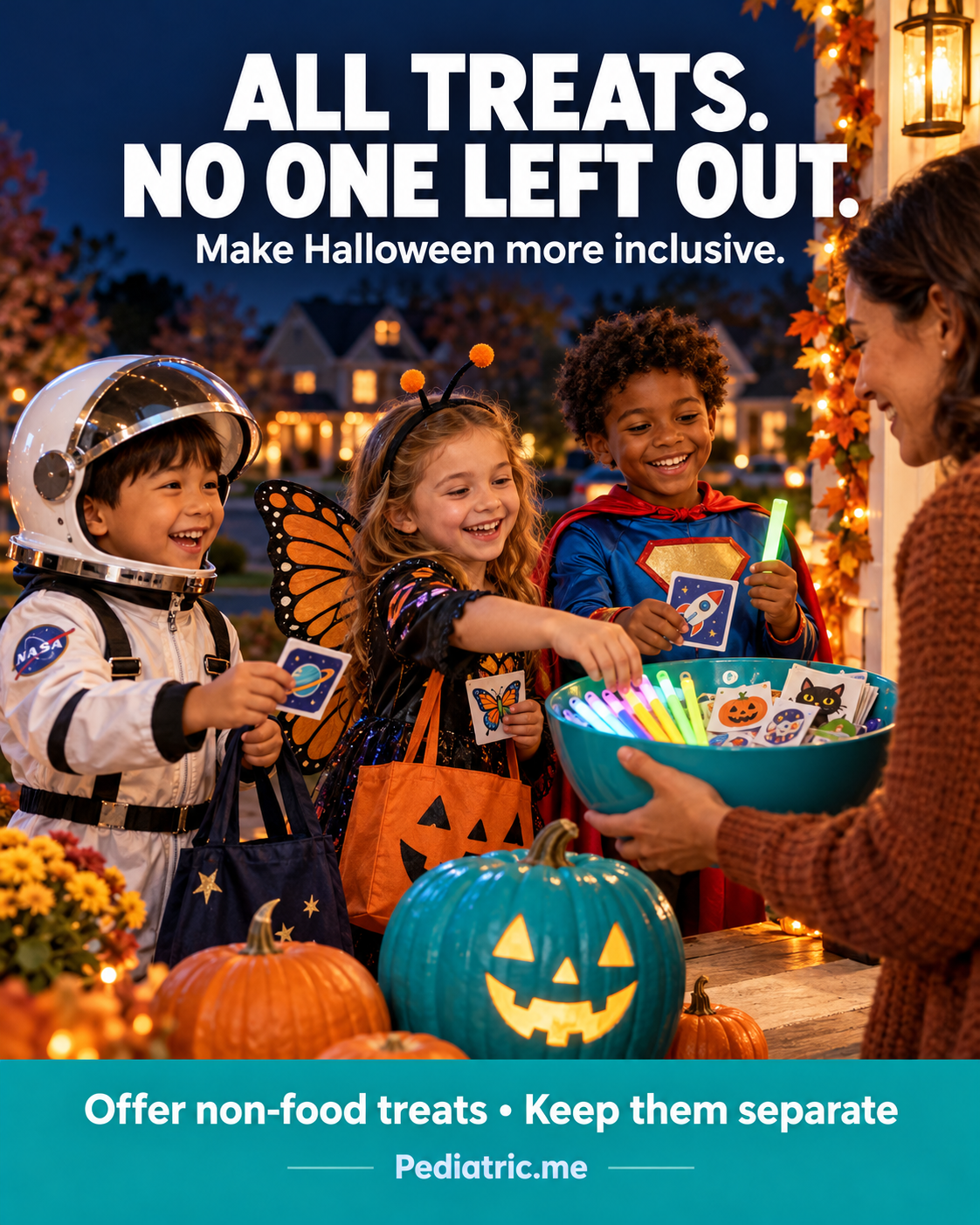
A teal pumpkin on a porch is a signal that the house offers non-food treats. The idea comes from the Teal Pumpkin Project, a national effort to give children with food allergies safe houses to visit. CHOP encourages families without food allergies to take part too, and Texas Children’s and Lurie Children’s Hospital also suggest putting a teal pumpkin on your own doorstep if you offer non-food treats.
Good non-food treats include glow sticks, stickers, pencils, crayons, erasers, bubbles and finger puppets. Texas Children’s suggests keeping them in a separate bowl from any candy you hand out so the two don’t mix.
One caution: very small toys, like tiny balls, erasers or anything with small parts, can be a choking hazard for babies and toddlers. Pick age-appropriate items, and check your young child’s bag for these too. Our guide to choking hazards for toddlers covers what to watch for.
Signs of an allergic reaction to watch for
According to the AAP, signs of a severe allergic reaction (anaphylaxis) can include:
- Breathing: coughing, wheezing, shortness of breath, chest tightness, a tight throat, hoarse voice, or trouble breathing or swallowing
- Skin and face: hives, rash, redness, or swelling of the lips or tongue
- Stomach: vomiting or diarrhea, especially if it’s severe or happens along with other symptoms
- Circulation: pale or bluish skin, a weak pulse, dizziness or fainting
- Behavior: confusion, unusual sleepiness, agitation, or saying something feels very wrong
Babies and toddlers can’t explain how they feel. The AAP says to watch for crying that can’t be soothed, sudden drooling and unusual sleepiness. For more on how reactions look in young children, read how to spot food allergies in your baby and what anaphylaxis is.
When to go to the ER / call 911
Treat these as an emergency. If your child has prescribed epinephrine, use it first, then call 911:
- Trouble breathing, wheezing, repeated coughing, or a tight or hoarse throat
- Swelling of the lips, tongue or throat, or trouble swallowing
- Pale or bluish skin, fainting, dizziness, or being floppy or hard to wake
- Severe vomiting or diarrhea, or vomiting together with other symptoms such as hives or coughing, after eating a possible allergen
- Confusion, agitation, or saying something feels very wrong
The AAP’s steps for a severe reaction:
- Give epinephrine right away, following the device instructions and your child’s emergency plan.
- Call 911 and ask for an ambulance that carries epinephrine.
- Note the time you gave the epinephrine and tell the paramedics.
- Stay with your child. Give the second dose if symptoms get worse, continue or don’t improve within 5 minutes.
- Have your child lie on their back. If they’re vomiting or having trouble breathing, put them on their side.
Even if your child feels better after epinephrine, the AAP says they still need to go to the emergency department. Antihistamines or an inhaler may be part of your child’s plan, but the AAP is clear that they never replace epinephrine for a severe reaction. Some hospital allergy programs suggest carrying an antihistamine too, which is fine as long as it’s an add-on, not a substitute.
When to call the doctor
Call your pediatrician or your child’s allergist if:
- Your child had a mild reaction, such as a few hives or an itchy mouth, that went away on its own. They’ll want to know, and they may update your plan.
- You think your child reacted to a food you didn’t know they were allergic to
- Your child doesn’t have an Allergy and Anaphylaxis Emergency Plan yet, or it’s out of date
- Your child’s epinephrine is expired, or you have only one dose at home
- You’re not sure how to use your child’s epinephrine device, or which candies are safe to try
If a symptom is getting worse or involves breathing, don’t wait for a call back. Follow the emergency steps above.
Other Halloween hazards for kids with allergies
Food isn’t the only concern on Halloween night. Candy is also tempting to younger siblings, so keep it up high. Keep any adult products out of reach as well: some cannabis edibles look exactly like ordinary gummies and chocolates. Our guide to cannabis edibles and kids explains what to do if a child eats one. If you think your child swallowed something harmful, call Poison Control at 1-800-222-1222.
Frequently Asked Questions
Can kids with food allergies go trick-or-treating?
Yes. Most children with food allergies can trick-or-treat safely with a plan: no eating until candy is checked at home, at least two doses of prescribed epinephrine carried at all times, and an adult along who knows the allergy plan.
Is fun-size candy safe if my child eats the full-size version?
Not always. Children’s hospitals warn that fun-size and mini candies can be made differently from the full-size version and are sometimes not fully labeled. Read every small wrapper, and set aside any candy without an ingredient list.
What does a teal pumpkin mean on Halloween?
A teal pumpkin means the house offers non-food treats, such as stickers, glow sticks or pencils, so children with food allergies can join in. It’s part of the national Teal Pumpkin Project.
What are the 9 major food allergens on labels?
According to the FDA, the nine major food allergens are milk, egg, fish, crustacean shellfish, tree nuts, peanuts, wheat, soybeans and sesame. Sesame was added on January 1, 2023, so older lists show only eight.
Are “may contain” labels on candy required?
No. The FDA says “may contain” and “made in a shared facility” statements are voluntary. A candy without one may still have cross-contact with an allergen. Ask your child’s allergist how to handle these labels.
What should I do if my child has an allergic reaction to Halloween candy?
For signs of a severe reaction, such as trouble breathing, throat tightness, lip or tongue swelling, or repeated vomiting, give prescribed epinephrine right away and call 911. Give a second dose if symptoms don’t improve within 5 minutes, and go to the ER even if your child feels better.
Is Benadryl enough for a food allergy reaction?
Not for a severe reaction. The American Academy of Pediatrics says antihistamines like diphenhydramine may be part of a child’s plan, but they never replace epinephrine for anaphylaxis. For mild symptoms, follow your child’s allergy plan or call your pediatrician.
Related guides
- Halloween Safety Tips for Kids
- What Is Anaphylaxis?
- How to Identify Food Allergies in Your Baby
- Cannabis Edibles and Kids
- Thanksgiving Food Safety for Toddlers
Sources
- AAP (HealthyChildren.org): Anaphylaxis in Infants and Children
- FDA: Have Food Allergies? Read the Label
- Children’s Hospital of Philadelphia: Making Halloween Safe and Fun for Kids with Allergies
- Texas Children’s Hospital: How to Make Halloween Safe for Children with Food Allergies
- Lurie Children’s Hospital: Halloween and Food Allergies
This article is for general information and is not a substitute for advice from your child’s doctor or allergist.