

Head Lice in Kids: Signs, Treatment and When to Call the Doctor
Quick answer: Head lice in kids are tiny, wingless insects that live on the scalp and feed on small amounts of blood. They are common — an estimated 6 to 12 million school-age children get them each year in the United States — and they do not spread disease or cause serious illness. If your child has head lice, there are safe and effective treatments available over the counter and by prescription. The American Academy of Pediatrics (AAP) says children should not miss school because of head lice, and “no-nit” policies that keep kids home are not supported by evidence.
What are head lice?
Head lice (Pediculus humanus capitis) are tiny insects about the size of a sesame seed. They live only on human heads and cannot jump or fly — they move by crawling. Lice need a blood meal every few hours to survive; without a human host, an adult louse dies within two days.
You may also spot nits, which are the eggs lice lay. Nits are tiny, teardrop-shaped specks glued firmly to individual hair shafts close to the scalp. They are often yellow-brown before hatching and white or empty-looking after. Unlike dandruff or dirt, nits do not brush off. Adult female lice lay about six eggs per day, and nits hatch in about 6 to 9 days into nymphs, which mature into adults within roughly a week.
Head lice do not transmit disease and are not a sign of poor hygiene. Any child can get lice, regardless of how clean their hair is.
How head lice spread
The main way lice spread is through direct, prolonged head-to-head contact — the kind that happens when children play close together, share sleeping space, or lean in for a group photo. This is why lice travel so efficiently through classrooms, sleepovers, and sports teams.
Sharing certain personal items carries a much smaller risk but is still worth avoiding: hats, scarves, sports helmets, hair accessories, combs, brushes, towels, and pillowcases. Lice begin to die quickly once off a human scalp because they need body heat and a blood meal to survive.
Pets do not carry or spread human head lice. And while lice are more common in children, adults in the household can get them too through close contact with an infested child.
Signs your child may have head lice
Itching is the most common symptom, usually behind the ears or at the back of the neck. The itch comes from an allergic reaction to louse bites — but here’s the important part: it can take 4 to 6 weeks after the first lice arrive before the itching begins. Some children, especially those with a light infestation, never itch at all. That means your child could have lice for weeks without obvious signs.
Other things to look for include:
- A tickling or crawling sensation in the hair
- Irritability or trouble sleeping (lice are more active at night)
- Small red bumps or sores on the scalp, neck, or shoulders from scratching
- Visible nits (tiny specks firmly stuck to individual hairs close to the scalp)
Finding live lice or fresh nits is the only way to confirm an infestation.
How to check your child for head lice
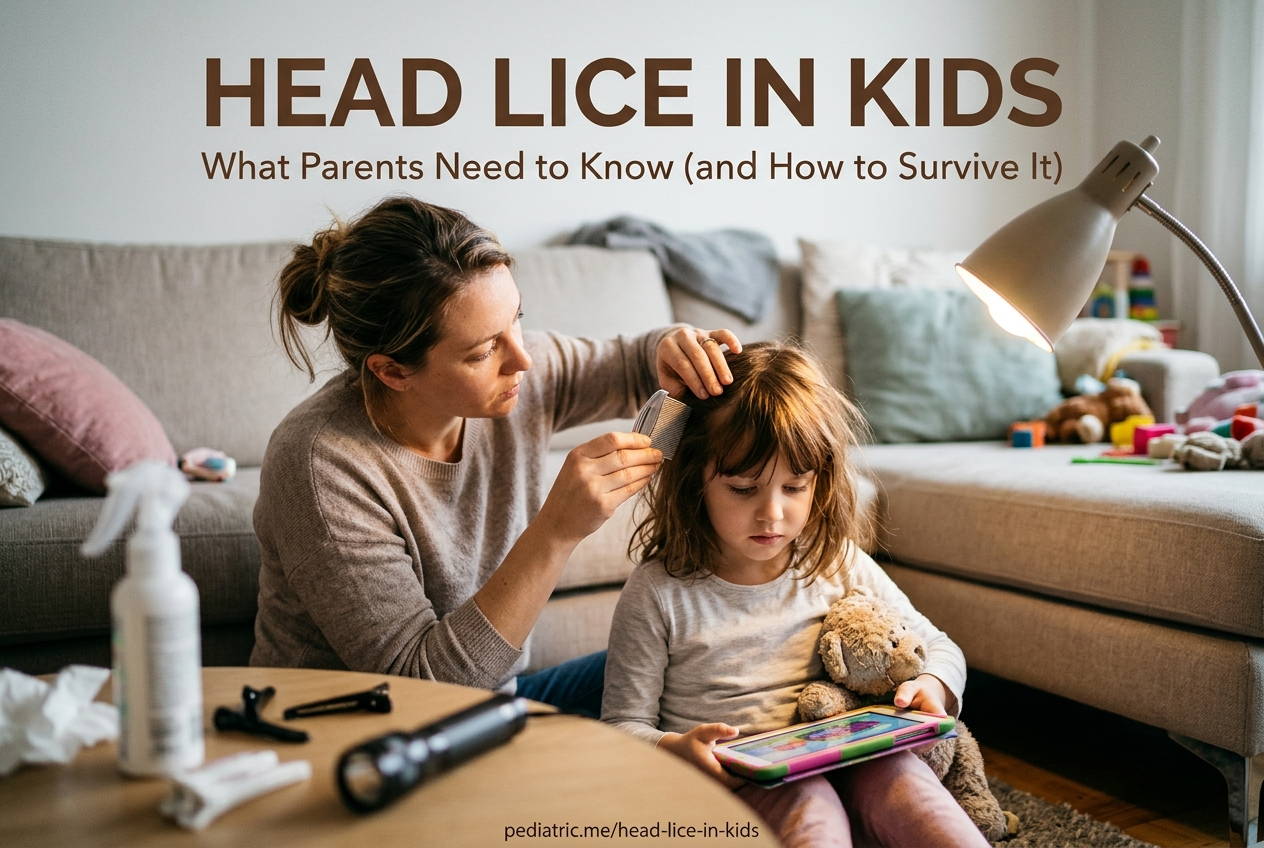
You need a fine-tooth nit comb (available at pharmacies), good lighting, and a little patience. Here is how to do it:
- Have your child sit in a bright room or take them outside in daylight.
- Part the hair into small sections, one at a time.
- Slowly comb through each section from scalp to ends.
- After each stroke, wipe the comb on a damp paper towel and examine it closely.
- Focus especially on behind the ears and the nape of the neck — this is where nits are most often found.
Nits found within about ¼ inch (6 mm) of the scalp are likely active and may hatch. Nits farther from the scalp are usually dead or already hatched and generally do not require treatment. If you are not sure whether what you are seeing is nits or dandruff, your child’s pediatrician can help.
Treatment options for head lice
Before using any lice treatment, call your child’s pediatrician. They can confirm the diagnosis and recommend the right product for your child’s age and health history. Only treat when you have confirmed living lice or fresh nits — unnecessary treatment won’t help and exposes your child to chemicals they don’t need.
Over-the-counter options
- Permethrin 1% lotion (Nix and others): Applied to shampooed, towel-dried hair and rinsed after 10 minutes. It kills live lice but not eggs, so a second treatment at 9 to 10 days is typically recommended if live lice are still found. Approved for children 2 months and older.
- Pyrethrin-based shampoo or mousse (RID, A-200, and others): Applied to dry hair and rinsed after 10 minutes. Like permethrin, they kill lice but not eggs, so retreatment at 9 to 10 days is usually needed. Not recommended for children with known allergies to ragweed or chrysanthemums, and not approved under age 2.
- Ivermectin 0.5% lotion (Sklice): Applied to dry hair and rinsed after 10 minutes. A single application kills lice and prevents newly hatched lice from surviving, so a second dose is not usually needed. Approved for ages 6 months and older.
Prescription options
If over-the-counter products have not worked after two treatment cycles, talk to your pediatrician about prescription options:
- Malathion 0.5% lotion (Ovide): Kills both lice and eggs. Applied to dry hair and left on 8 to 12 hours before rinsing. It has a strong odor and is flammable — keep the child away from open flames while it is in their hair. Not approved for children under 6.
- Spinosad 0.9% suspension (Natroba): Kills lice and eggs. Applied to dry hair, rinsed after 10 minutes. A second treatment 7 days later is recommended if live lice are still seen. Approved for ages 6 months and older.
- Oral ivermectin tablets: Reserved for cases where other treatments have failed. Requires a second dose at 9 to 10 days.
Important safety rules when treating
- Read and follow the package directions exactly every time.
- An adult should always apply the medicine — children should never apply it themselves.
- Rinse the medicine over a sink with warm water, not in the shower or bath where it can run over the whole body.
- Avoid regular shampoo for 24 to 48 hours after treatment.
- Never use gasoline, kerosene, or pet lice products on children — these can be dangerous.
- Home remedies such as mayonnaise, olive oil, essential oils, and petroleum jelly have no proven effectiveness against lice.
Nit removal and home care after treatment
Lice medicine kills live lice, but nit combing helps remove eggs and dead lice from the hair. After treatment, comb through the hair section by section with a fine-tooth nit comb. Repeat this every 2 to 3 days for 2 to 3 weeks.
For the household, focus on items your child wore or used in the two days before treatment began:
- Wash clothes, towels, hats, and bedding in hot water (at least 130°F) and dry on high heat.
- Soak combs and brushes in water at 130°F or hotter for 5 to 10 minutes.
- Items that cannot be washed — such as stuffed animals — can be sealed in a plastic bag for two weeks.
- Vacuum floors and upholstered furniture where your child rested their head.
- Do not use pesticide sprays or fogs in your home — they are not needed and can be harmful.
Also check all household members who had close contact with your child and treat anyone who has live lice or fresh nits within ¼ inch of the scalp.
Can my child go to school with lice?
Yes. The AAP and the National Association of School Nurses both oppose “no-nit” policies that keep children out of school. The AAP’s position is that children with head lice should not be sent home early from school, and they should not miss the next school day once treatment has started. The CDC agrees: students do not need to leave school early because of lice and can return to class after beginning treatment.
Remind your child to avoid head-to-head contact with friends until the infestation is fully cleared, and let the school nurse know so other families can be alerted.
When to call the doctor
- You are not sure whether your child has head lice
- Your child is under 2 years old — many OTC treatments are not approved for young infants
- After completing two full rounds of treatment, you are still finding live lice
- The scalp looks infected from scratching — with spreading redness, crusting, pus, or oozing
- The itching is severe enough to significantly disrupt sleep or daily life
- You have questions about which product to use or how to apply it correctly
When to go to the ER or call 911
Head lice themselves are never a medical emergency. However, if a scalp wound from scratching has become severely infected, seek same-day care or go to urgent care if you see:
- Significant swelling, pus, or a wound that is growing larger
- Red streaks spreading down the neck
- Fever along with an infected scalp
These can be signs of a bacterial skin infection (impetigo or cellulitis) that needs antibiotic treatment. Call 911 or go to the ER only if your child appears very ill, has trouble breathing, or is not responding normally.
Frequently Asked Questions
Can head lice jump from person to person?
No. Head lice cannot jump or fly. They spread mainly through direct head-to-head contact and, far less often, through shared items such as combs, hats, or pillowcases.
How do I know if it’s lice or dandruff?
Nits are glued firmly to individual hair shafts close to the scalp — they do not shake or brush off. Dandruff, dry skin, and styling product residue will come off easily. If you are unsure, your child’s pediatrician can confirm whether what you’re seeing is actually lice.
How long does it take to get rid of head lice?
With the right treatment applied correctly, live lice are usually killed within hours. Because most over-the-counter treatments do not kill eggs, a second treatment 9 to 10 days later is usually needed. Continue nit combing every 2 to 3 days for 2 to 3 weeks to clear the infestation.
Do I need to deep-clean my whole house?
No. Focus only on items your child wore or used in the two days before treatment began — wash them in hot water and dry on high heat. Lice die within two days off a human scalp, so you do not need to clean everything in your home.
Can my baby get head lice?
Yes, though lice are most common in school-age children. If you suspect lice in a baby under 2, call your pediatrician before using any treatment — many OTC products are not approved for young infants.
Do head lice spread disease?
No. Head lice are not known to transmit any disease. They are a nuisance but are not a public health hazard.
How can I help prevent my child from getting lice again?
Teach your child to avoid head-to-head contact with others during play and not to share hats, combs, helmets, or hair accessories. Regular checks during peak season — fall through spring — can catch a new infestation early, before it spreads through the household.
Related guides
- Sick Child Guide: When to Call the Doctor
- Pinkeye in Kids: Symptoms, Treatment and When to Call the Doctor
- Strep Throat vs. Sore Throat in Kids: Symptoms, Testing and When to Call
- Fifth Disease in Kids: Slapped Cheek Rash, Symptoms and What to Do
Sources
- American Academy of Pediatrics (HealthyChildren.org): Head Lice — What Parents Need to Know
- CDC: Head Lice — About
- AAP Clinical Report: Head Lice (Pediatrics, 2022)
This article is for general information and is not a substitute for advice from your child’s doctor.