

Fifth Disease in Kids: Slapped Cheek Rash, Symptoms and What to Do
Quick answer: Fifth disease is a mild viral illness caused by parvovirus B19. It usually starts with cold-like symptoms, then produces a distinctive bright-red “slapped cheek” rash on the face followed by a lacy rash on the body. By the time the rash appears, your child is no longer contagious. Most children recover fully within 1–3 weeks with rest and fluids.
What Is Fifth Disease?
Fifth disease — formally called erythema infectiosum — is one of the most common childhood rash illnesses. It earned its number because it was once fifth on a classic list of six childhood rash diseases. The virus that causes it, parvovirus B19, belongs to the Parvoviridae family and infects only humans (not pets).
Fifth disease is very common: by adulthood, about 60–70% of people have been infected. Most infections happen in school-age children between 5 and 15 years old, with peak seasons in late winter and spring. Outbreaks often run through schools and daycare centers.
What Causes Fifth Disease?
Parvovirus B19 spreads the same way as cold and flu viruses — through respiratory droplets from an infected person’s nose or mouth. When a sick child coughs, sneezes or talks near your child, the droplets can be inhaled or land on surfaces that your child then touches before touching their face.
The virus can also spread through blood or blood products, and from a pregnant person to their unborn baby, which is why fifth disease deserves extra attention during pregnancy (see below).
Symptoms of Fifth Disease
Fifth disease typically unfolds in two stages:
Stage 1: Prodrome (days 4–14 after exposure)
During the week or two after exposure, your child may have mild, cold-like symptoms that you might not even notice:


- Low-grade fever (usually below 101°F / 38.3°C)
- Runny nose
- Slight headache
- Mild fatigue
This is actually the contagious stage — your child can spread the virus before you even know they have fifth disease. Many children have no symptoms at all during this phase.
Stage 2: Rash (days 14–21 after exposure)
The rash appears in a recognizable sequence:
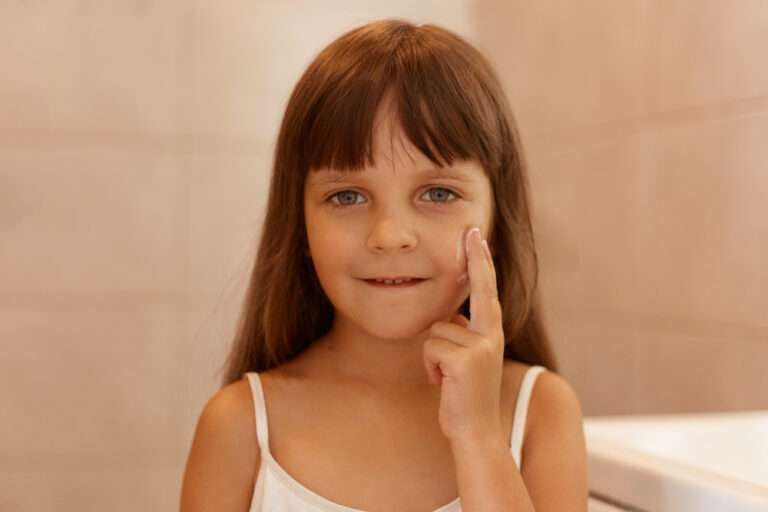
- “Slapped cheek” rash — A bright red, warm flush on both cheeks, often with a pale ring around the mouth. This fades within 1–4 days.
- Body rash — A lacy, net-like pink rash spreads to the trunk, arms and legs. This can come and go for 1–3 weeks, temporarily flaring with heat (a bath, sun exposure, exercise or crying).
By the time the rash shows up, your child is no longer contagious and can return to school or daycare.
Some older children and adults also develop joint pain and swelling (usually in the hands, wrists, knees or ankles), which can last weeks to months. This is uncommon in young children.
Is Fifth Disease Contagious?
Yes — but the timing trips most parents up. Children with fifth disease are contagious before the rash appears, during the prodrome phase. Once the rash blooms, the virus is no longer active in their respiratory secretions and they cannot spread the infection.
The contagious window is roughly 7–10 days before the rash. This is why school outbreaks are hard to prevent — by the time you see the slapped cheek, the illness has already circulated.
When to Call the Doctor
Most cases of fifth disease in healthy children are mild and self-limiting. Contact your pediatrician if your child:
- Has a fever above 104°F (40°C) or a fever lasting more than 3 days
- Seems unusually pale, lethargic or hard to wake
- Has significant joint pain or swelling
- Has a weakened immune system (such as from chemotherapy, sickle cell disease, or HIV)
- Has a chronic red blood cell disorder (like sickle cell anemia or thalassemia) — parvovirus B19 can temporarily stop red blood cell production, causing an aplastic crisis
- Has a rash that looks very different from the slapped cheek pattern or spreads rapidly
If you are pregnant and you’ve been exposed to fifth disease, call your OB or midwife right away. While most pregnancies are unaffected, parvovirus B19 can rarely cause complications, including fetal anemia, in certain cases — especially in the first half of pregnancy. See our fever guide for general guidance on reading your child’s temperature accurately.
Home Care and Treatment
There is no specific antiviral treatment for fifth disease. Parvovirus B19 does not respond to antibiotics. Treatment is focused on comfort:
- Rest as needed — most children feel well enough to play normally once the rash appears.
- Fluids — offer plenty of water, diluted juice or electrolyte solution if your child had a fever.
- Fever and discomfort — acetaminophen (Tylenol) or ibuprofen (Motrin/Advil, for children 6 months and older) can relieve low-grade fever, headache or achy joints. Never give aspirin to children.
- Itching — if the rash is itchy, a cool cloth or age-appropriate antihistamine (ask your pharmacist) can help. Cool baths may ease discomfort but can temporarily make the lacy rash look more intense.
- Sun and heat — minimize sun exposure and vigorous outdoor play when the body rash is active, as heat makes it temporarily look worse.
Read our sick child guide for a full overview of caring for a feverish child at home.
Complications
For healthy children, serious complications are very rare. However, certain groups face higher risk:
- Children with hemolytic anemia (sickle cell disease, thalassemia, hereditary spherocytosis) — parvovirus B19 briefly stops red blood cell production. These children can develop a sudden, severe anemia (aplastic crisis) requiring hospitalization and sometimes transfusion.
- Immunocompromised individuals — the infection can persist and cause chronic anemia.
- Pregnant women (especially before 20 weeks) — the virus can cross the placenta and in rare cases cause hydrops fetalis. Most exposed pregnant women who lack immunity are monitored closely with ultrasound.
Can My Child Go Back to School?
Yes. Once the slapped cheek rash appears, your child is no longer contagious and does not need to stay home, according to the American Academy of Pediatrics. The rash alone is not a reason to exclude a child from school or childcare.
If your child had a fever, wait until they have been fever-free for at least 24 hours without fever-reducing medication before returning.
Related Rash Illnesses in Kids
Not all childhood rashes are fifth disease. Compare with these common look-alikes:
- Roseola — high fever first, then a pink rash that appears as the fever breaks; most common under age 3
- Hand, foot and mouth disease — painful sores in the mouth plus blisters on the palms and soles
- Measles — a spreading red blotchy rash with high fever, cough, runny nose and red eyes; vaccine-preventable
Frequently Asked Questions
- Is fifth disease the same as scarlet fever?
- No. Fifth disease is caused by parvovirus B19 and produces a lacy body rash. Scarlet fever is caused by group A Streptococcus bacteria, produces a sandpaper-like rash, usually includes strep throat, and is treated with antibiotics. If you’re unsure, your doctor can test for strep.
- Can adults get fifth disease?
- Yes. Adults who were never infected as children can get fifth disease. Adults are more likely to have joint pain and swelling as the main symptom rather than the slapped cheek rash. About 20–30% of adult infections are completely symptom-free.
- Can you get fifth disease twice?
- Unlikely. After infection, the immune system builds lasting antibodies against parvovirus B19. Most people are immune for life after one infection.
- Is there a vaccine for fifth disease?
- No. As of 2026, there is no licensed vaccine for parvovirus B19 in the United States.
- How long does the lacy rash last?
- The lacy, net-like body rash typically lasts 1–3 weeks. It can flare and fade repeatedly — especially with heat, sunlight, exercise or crying — until the skin fully clears.
Sources
- American Academy of Pediatrics. Fifth Disease (Parvovirus B19). HealthyChildren.org. Updated September 2024.
- Young NS, Brown KE. Parvovirus B19. StatPearls [Internet]. Bethesda (MD): National Library of Medicine; 2024. PMID NBK513309.
- MedlinePlus (U.S. National Library of Medicine). Fifth disease. Last reviewed 2024.
This article is for general informational purposes and does not substitute for professional medical advice, diagnosis or treatment. Always consult your child’s pediatrician or a qualified healthcare provider with questions about your child’s health.