

Best Baby Bottles of 2026: A Pediatrician-Informed Buying Guide
Quick answer:
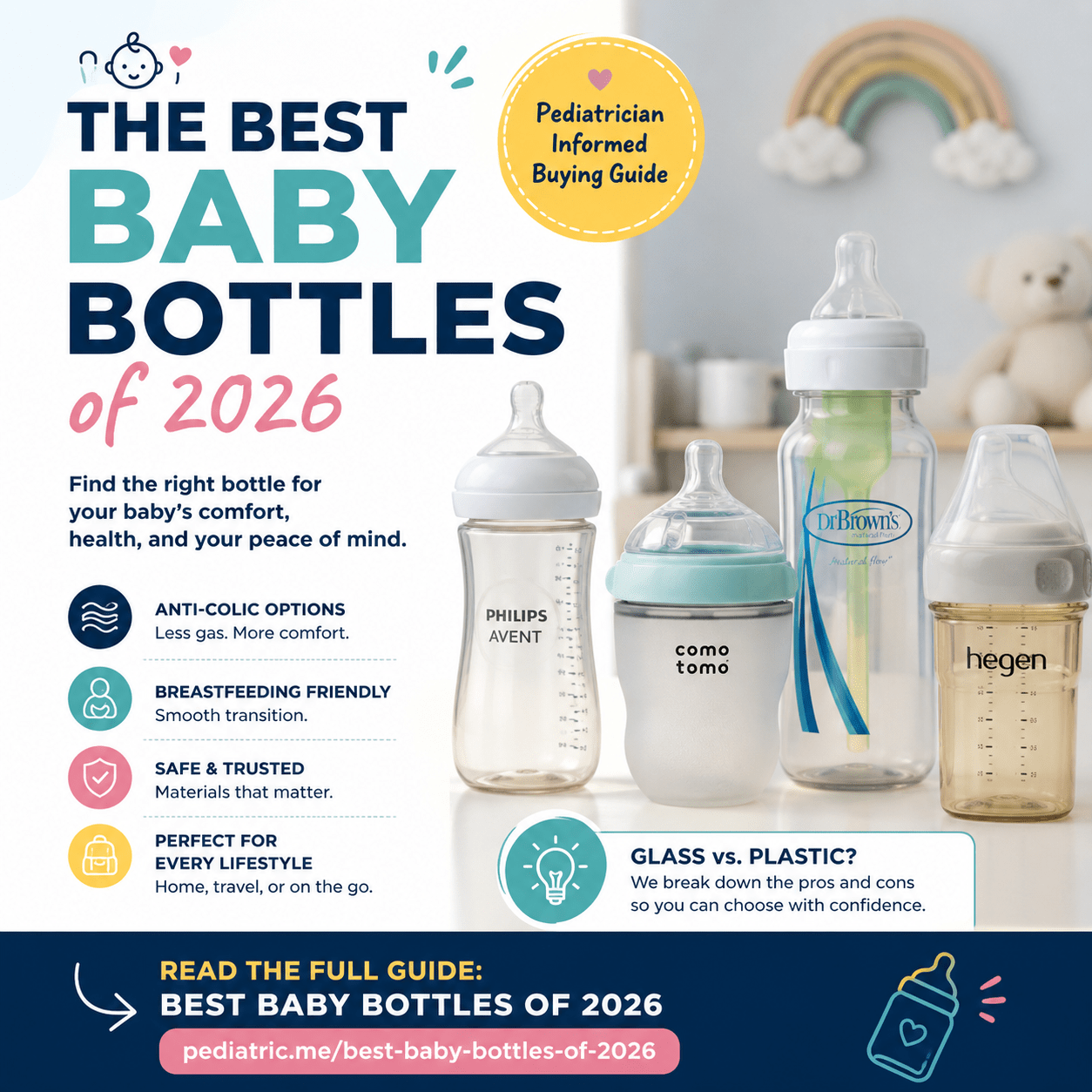
For most families, a wide-neck, anti-colic bottle with a slow-flow newborn nipple is the safest place to start. Below, our team breaks down the best baby bottles of 2026 by category — anti-colic, glass, budget, travel, and breastfed-baby-friendly — plus exactly how to pick a nipple flow, when to switch sizes, and how to sterilize safely.
Choosing a baby bottle sounds simple until you’re standing in the aisle facing fifteen brands, three neck widths, six nipple flow rates, and a dozen claims about “reducing colic.” The right bottle depends on your baby’s age, whether they’re also breastfeeding, and how sensitive their little belly is to swallowed air. Here’s what actually matters, based on what pediatric and lactation teams recommend most often.
Top Baby Bottle Picks by Category
| Category | Best For | Key Feature |
|---|---|---|
| Best Overall | Most families | Wide-neck, anti-colic venting, easy to clean |
| Best for Breastfed Babies | Combo feeding without nipple confusion | Slow-flow, breast-shaped nipple |
| Best Anti-Colic | Gassy or fussy babies | Internal vent system reduces air intake |
| Best Glass Bottle | Parents avoiding plastic | Borosilicate glass, silicone sleeve |
| Best Budget Pick | Stocking up on multiples | Low per-bottle cost, widely available parts |
| Best for Travel & Daycare | On-the-go feeding | Leak-proof seal, compatible with standard nipples |
1. Best Overall: Wide-Neck Anti-Colic Bottle
A wide-neck bottle with a built-in venting system is the safest default recommendation because it’s easy to clean thoroughly (a real infection-control concern with narrow-neck designs), and the vent reduces the amount of air your baby swallows — which means less spit-up and fewer gas-related crying spells. Look for a nipple shape that’s rounded rather than flat, since it more closely mimics breastfeeding.
🛒 See wide-neck anti-colic bottles on Amazon
2. Best for Breastfed Babies: Slow-Flow, Breast-Shaped Nipple
If you’re combination feeding, nipple confusion is a real thing. Bottles designed to mimic the latch, flex, and flow of breastfeeding help babies move back and forth between breast and bottle more smoothly. Always start with the slowest flow available, regardless of your baby’s age, and only size up if feeds are taking longer than about 20 minutes.
🛒 See breastfeeding-friendly bottles on Amazon
3. Best Anti-Colic: Internal Vent System
For babies who arch, fuss, or spit up frequently during or after feeds, a bottle with a dedicated internal venting straw (rather than just valve slits in the nipple) tends to make the biggest difference. These systems pull air away from the milk path entirely instead of just letting it escape through the nipple.
🛒 See anti-colic bottles on Amazon
4. Best Glass Bottle: Borosilicate with Silicone Sleeve
Glass bottles don’t scratch or cloud the way plastic can over time, don’t retain odors, and sidestep any concern about plastic leaching with repeated heating. The tradeoff is weight and breakage risk, which is why a silicone protective sleeve is worth treating as mandatory rather than optional.
🛒 See glass baby bottles on Amazon
5. Best Budget Pick: Multi-Pack Standard Bottles
You’ll go through a lot of bottles between newborn days and toddlerhood — between feeds, backups, and pumped-milk storage, most families end up needing 6–10 bottles in rotation. A reliable multi-pack with parts that are easy to replace individually saves real money over the first year.
🛒 See budget-friendly bottle multi-packs on Amazon
6. Best for Travel & Daycare: Leak-Proof, Universal Fit
For daycare drop-off and diaper-bag duty, prioritize a genuinely leak-proof seal and a nipple size that’s compatible with widely available replacement parts — daycare staff lose lids, and you don’t want to be hunting for a discontinued proprietary piece at 7 a.m.
🛒 See leak-proof travel bottles on Amazon
How to Choose the Right Baby Bottle
- Neck width: Wide-neck bottles are easier to clean and fill, and many are designed to better mimic a breast latch.
- Material: Plastic (lighter, shatterproof) vs. glass (doesn’t scratch, no plastic-leaching concerns, but heavier and breakable) vs. silicone (soft, unbreakable, but pricier).
- Venting system: Look for anti-colic venting if your baby spits up often, seems gassy, or fusses mid-feed.
- Nipple flow rate: Start with the slowest flow (“newborn” or “stage 1”) regardless of your baby’s age. Size up only if your baby seems to be working too hard or feeds are taking unusually long.
- Cleaning: Fewer parts generally means easier, more thorough cleaning — an important factor for reducing bacterial buildup.
Bottle Safety Basics
Sterilize new bottles before first use, and regularly wash all parts in hot, soapy water or a dishwasher’s top rack (check manufacturer guidance). Replace nipples every 1–2 months or sooner if you notice cracking, discoloration, or stickiness. Never microwave a bottle with milk or formula inside — it heats unevenly and can create dangerous hot spots. Always check the temperature on your wrist before feeding.
Frequently Asked Questions
What is the best baby bottle for a newborn?
A wide-neck, slow-flow bottle with anti-colic venting is generally the best starting point for newborns. It supports easier cleaning, reduces swallowed air, and the slow flow matches a newborn’s still-developing suck-swallow-breathe coordination.
How many baby bottles do I need?
Most families do well with 6–10 bottles in rotation, factoring in feeds, backups, and any pumped milk storage. Exclusively formula-fed babies on a strict wash-between-feeds routine may want closer to 8–10; combination-fed babies who breastfeed most sessions can often get by with fewer.
Are glass or plastic baby bottles better?
Both are safe options when BPA-free. Glass doesn’t scratch, cloud, or retain odors over time and avoids any concern about plastic leaching with repeated heating, but it’s heavier and can break — a silicone sleeve largely solves that. Plastic is lighter and shatterproof, which some parents prefer for daycare and travel.
Do anti-colic bottles actually work?
For many babies, yes — anti-colic venting systems reduce the amount of air swallowed during feeding, which can meaningfully cut down on spit-up, gas, and fussiness. They aren’t a guaranteed fix for colic itself, which can have other causes, but they’re a reasonable first step to try.
When should I switch nipple flow sizes?
Switch to the next flow level if your baby is working hard to get milk out, seems frustrated mid-feed, or feeds are consistently taking much longer than 20–30 minutes. Downsize if your baby is gulping, choking, or milk is leaking from the corners of their mouth.
How often should I replace baby bottle nipples?
Every 1–2 months, or immediately if you notice cracking, tackiness, discoloration, or thinning — these are signs the silicone or latex is breaking down and could pose a choking risk.
Related Reading
- Formula Feeding Guide: Everything New Parents Need to Know
- Breastfeeding Essentials: The Complete New Mom Checklist
- Best Breast Pump 2026: The Complete Buying Guide
- Newborn Essentials: The Ultimate Baby Registry Checklist
- Baby Registry Checklist: Everything You Need Before Baby Arrives
This guide is for general informational purposes and reflects common pediatric and feeding guidance. Always check with your child’s pediatrician about feeding questions specific to your baby.