

Teething in Babies: Signs, Timeline, Safe Relief and What to Avoid
Quick answer: Teething in babies usually starts around 6 months, though first teeth can show up anywhere from before 4 months to after 12 months and still be normal. Common signs are drooling, chewing on everything, sore or swollen gums, and extra fussiness. The safest relief is simple: a firm rubber teether, a chilled (not frozen) damp washcloth, and gently rubbing your baby’s gums with a clean finger. Avoid numbing gels with benzocaine or lidocaine, homeopathic teething tablets, and amber or other teething necklaces. Teething does not cause high fever or diarrhea, so call your pediatrician if you see those.
When does teething start? A typical timeline
Babies are born with all 20 baby teeth already forming under the gums. Most babies get their first tooth between about 6 and 10 months, and some feel gum discomfort as early as 3 months. A few babies are even born with a tooth. Every baby is different, and an early or late first tooth is usually nothing to worry about.
Teeth tend to come in roughly in this order, with bottom teeth usually arriving before the matching top teeth:
- Front teeth (central incisors): around 6 months
- Teeth on either side (lateral incisors): around 8 months
- First back teeth (first molars): around 12 months
- Pointed teeth (canines): around 18 months
- Second molars: around 24 months
Most children have all 20 baby teeth by age 2 to 3.
Signs of teething in babies
Some babies cut teeth with no fuss at all. Others have a few uncomfortable days each time a tooth comes through. Common signs include:
- Drooling more than usual
- Chewing or gnawing on fingers, toys and anything else in reach
- Red, sore or swollen gums where the tooth is coming in
- Fussiness and crankiness, sometimes with poorer sleep
- A rash around the mouth or chin from drool irritating the skin, or one flushed cheek
- Rubbing an ear on the same side as the tooth
What teething does NOT cause
Many parents are told that teething causes fever, diarrhea or colds. According to the American Academy of Pediatrics (AAP), large studies show it doesn’t:
- Fever: The AAP says fever is not a symptom of teething. The UK’s NHS notes a baby may run a slightly raised temperature (below 100.4°F / 38°C) while teething. Either way, a true fever of 100.4°F or higher means something else is going on, usually an infection.
- Diarrhea: Teething doesn’t change how the gut works. Diarrhea is more likely a stomach bug.
- Lots of crying: Teething can make babies fussy, but frequent, hard-to-soothe crying points to illness rather than teeth.
- Colds: Teething doesn’t weaken the immune system, though babies who put everything in their mouths may pick up more germs.
Blaming these symptoms on teething can delay care for a real illness, such as an ear infection. If you’re unsure, check with your pediatrician.
Safe teething relief at home
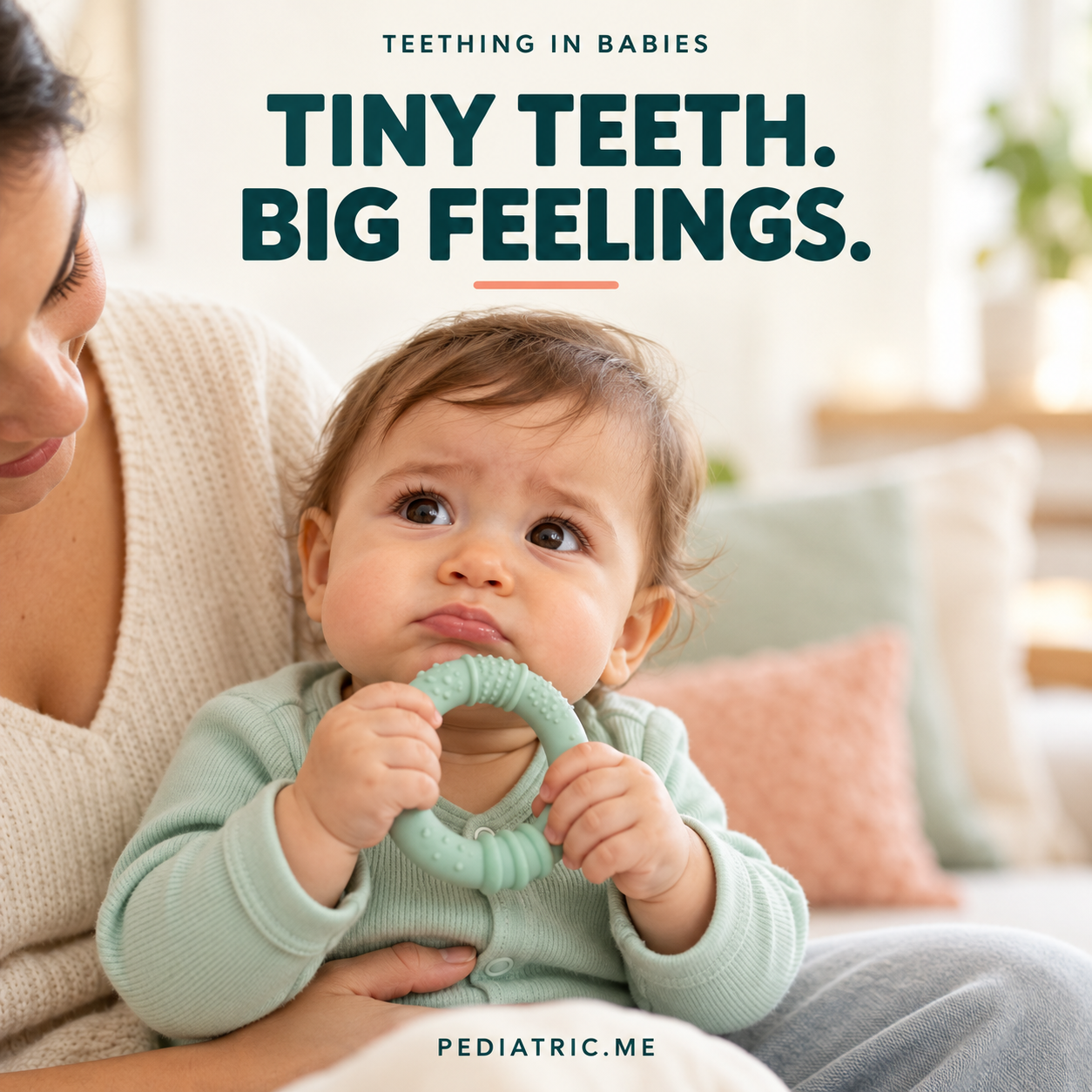
- Offer a firm teether. Solid rubber or silicone teething toys give your baby something safe to bite. You can chill one in the fridge, but don’t freeze it. A rock-hard frozen teether can hurt tender gums.
- Try a cold, damp washcloth. Knot a clean washcloth, wet it, and chill it in the fridge for your baby to gnaw on.
- Rub the gums. Gently massage your baby’s gums with a clean finger. This can be especially soothing before naps and bedtime.
- Cool water or food for older babies. Babies over 6 months can have cool water in a cup. If your baby has started solids, cool soft foods may help. Always stay with your baby while they eat because of choking risk, and skip sugary teething biscuits and rusks.
- Keep the chin dry. Wipe drool often to help prevent a rash around the mouth.
- Comfort and distraction. Cuddles, play, a warm bath and a calm bedtime routine all help.
- Ask before giving pain medicine. If your baby is very uncomfortable, ask your pediatrician whether a pain reliever is right for your baby’s age, and follow the package directions or your doctor’s instructions for the dose. Never give aspirin to babies or children.
Teething products to avoid
Several popular teething products carry real risks. The U.S. Food and Drug Administration (FDA) and the AAP advise against all of the following:
- Benzocaine gels and liquids (found in some over-the-counter oral pain products). The FDA says these should not be used for teething. Benzocaine can cause methemoglobinemia, a rare but serious and sometimes fatal condition that sharply reduces how much oxygen the blood can carry. Numbing gels also wash away quickly with drool, so they offer little benefit anyway.
- Lidocaine (prescription viscous lidocaine). The FDA says it should not be used for teething pain. Too much, or swallowing it, can cause seizures, heart problems, severe brain injury and death.
- Homeopathic teething tablets and gels, especially those containing belladonna. The FDA warns these can be dangerous for children and offer little to no benefit.
- Amber teething necklaces and other teething jewelry, including bracelets and anklets made of amber, wood, marble or silicone. The FDA has received reports of death and serious injury from strangulation and choking. Never tie a teether or pacifier around your baby’s neck.
- Liquid-filled teething rings, which can crack and leak.
- Rubbing alcohol on the gums, an old home remedy that can be absorbed and cause seizures.
Caring for new baby teeth
Start brushing as soon as the first tooth comes through. Use a soft baby toothbrush and fluoride toothpaste, and ask your pediatrician or dentist how much toothpaste to use and when to schedule your baby’s first dental visit. Our guide to cleaning your baby’s teeth walks through it step by step, and these tips can help prevent cavities early.
When to call the doctor
- Your baby has a fever of 100.4°F (38°C) or higher, which is not caused by teething
- Diarrhea lasts more than a day, or your baby is vomiting
- Your baby is crying much more than usual or can’t be comforted
- Your baby is pulling at an ear and also has a fever or seems sick
- Your baby refuses to drink or has fewer wet diapers
- Gums look very swollen, bleed a lot, or have pus
- You have questions about when or how your baby’s teeth are coming in (see our guide to tooth eruption problems)
- You’re not sure whether a pain reliever is safe for your baby
When to go to the ER or call 911
- Your baby has trouble breathing, or their lips or skin look blue or gray
- Your baby is choking on a teether, necklace or piece of food and can’t cry, cough or breathe
- Your baby has a seizure, is very hard to wake, or is limp
- Your baby swallowed a numbing gel, lidocaine, or a teething tablet and seems unwell
For more warning signs that need a doctor’s attention, see when to call the pediatrician about a fever.
Frequently Asked Questions
When do babies start teething?
Most babies start teething around 6 months, with the first tooth usually coming in between 6 and 10 months. Some feel gum discomfort as early as 3 months, and some don’t get a first tooth until after 12 months. Both can be normal.
How long does teething last?
Each tooth may cause a few uncomfortable days as it comes through, and many babies have no symptoms at all. Teething happens in stages from about 6 months until most children have all 20 baby teeth by age 2 to 3.
Does teething cause fever?
The AAP says teething does not cause fever. The NHS says a baby may have a slightly raised temperature below 100.4°F (38°C). A temperature of 100.4°F or higher is a true fever and usually means an infection, so call your pediatrician.
Are teething gels safe for babies?
No. The FDA says benzocaine and lidocaine products should not be used for teething because they can cause serious, sometimes fatal side effects. They also wash away quickly with drool. A chilled rubber teether or gum massage is a safer choice.
Are amber teething necklaces safe?
No. The FDA and AAP warn against amber and other teething necklaces and bracelets because of reported deaths and serious injuries from strangulation and choking. Use a solid teether you hold for your baby instead.
Can I freeze a teether?
Chill teethers in the refrigerator instead. Frozen teethers can get too hard and hurt your baby’s gums. Choose solid teethers rather than liquid-filled ones, which can crack and leak.
Can teething cause diarrhea?
No. Teething doesn’t affect digestion. Diarrhea in a teething baby is more likely a stomach bug. Call your pediatrician if it lasts more than a day or your baby shows signs of dehydration.
Related guides
- How to Clean Your Baby’s Teeth
- How to Prevent Cavities in Your Child’s Teeth
- Tooth Eruption Problems in Children
- When to Start Solid Foods
- When to Call the Pediatrician About a Fever
Sources
- AAP (HealthyChildren.org): Teething Pain
- FDA: Topical Drugs and Teething Jewelry Used for Teething Have Risks
- NHS: Baby Teething Symptoms
- NHS: Tips for Helping Your Teething Baby
This article is for general information and is not a substitute for advice from your child’s doctor.