

First Pediatrician Visit: What to Expect, When to Schedule It & What to Bring (2026 Guide)
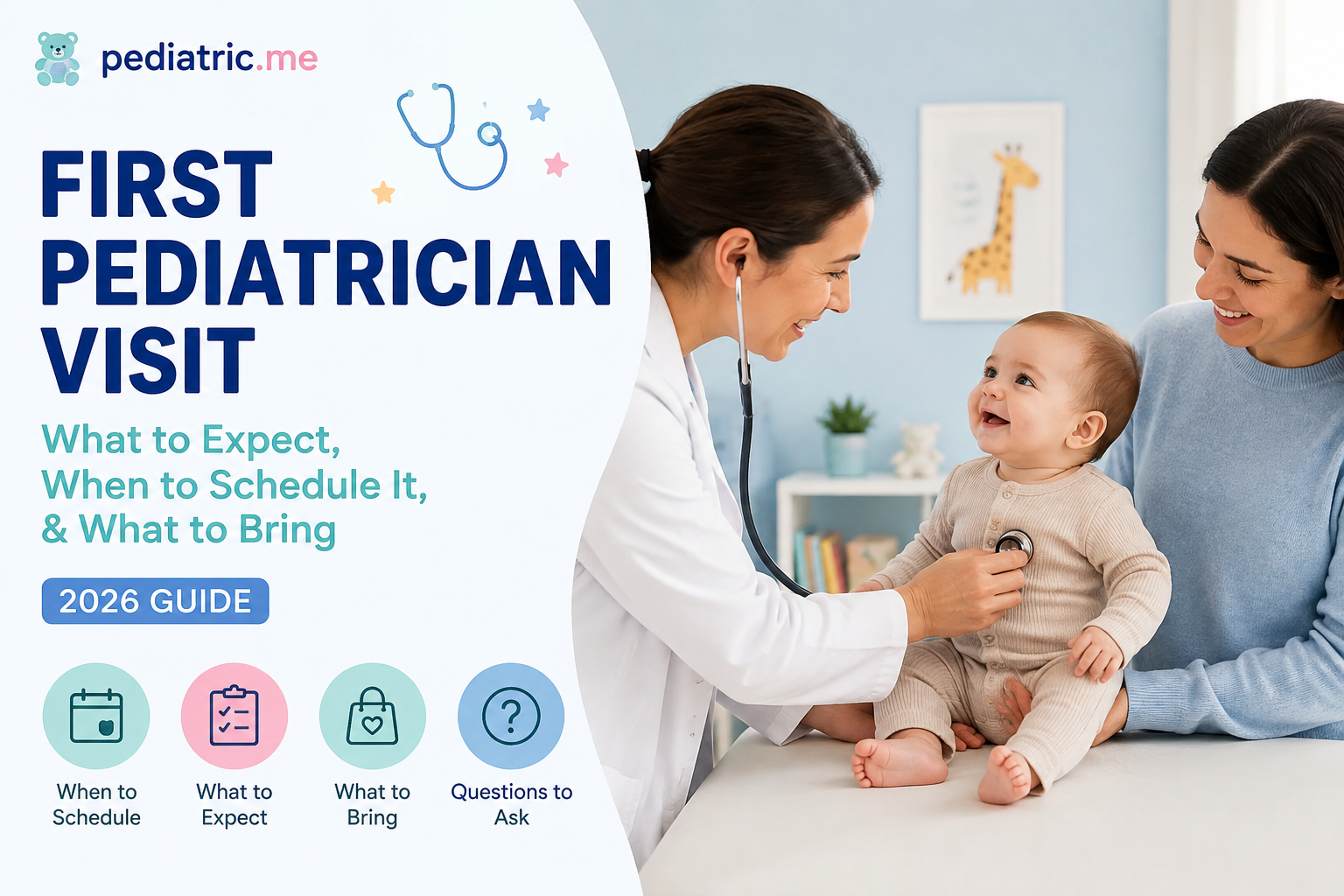
The first pediatrician visit is one of the biggest milestones in your baby’s early days — and one of the most nerve-wracking for new parents. Between sleep deprivation and a million new questions, it helps to know exactly what to expect before you walk in the door. This guide covers when to schedule it, what the doctor will check, what to bring, and the questions worth asking.
🍼 Haven’t finished your baby registry yet?
Before your first appointment, make sure you’re set up with the essentials pediatricians recommend for the first few months — from feeding gear to a reliable thermometer.
When Is Baby’s First Pediatrician Visit?
Most pediatricians want to see a newborn within 3 to 5 days of birth, and often sooner — sometimes 24 to 48 hours after hospital discharge — especially for breastfed babies, babies with jaundice, or first-time parents who could use extra support. If you deliver at a hospital or birthing center, a pediatrician or hospital pediatric team typically examines your baby before you’re even discharged; the “first visit” most parents mean is the first appointment at the pediatrician’s own office.
After that initial newborn check, well-baby visits generally follow this schedule:
- 3–5 days old (first office visit)
- 2–3 weeks old
- 1 month
- 2 months
- 4 months
- 6 months
Your pediatrician’s office will confirm the exact schedule, since it can vary slightly by practice and by your baby’s individual needs.
What Happens at the First Pediatrician Visit
The first visit is thorough — it’s the baseline your pediatrician will compare every future visit against. Expect the visit to include:
- Weight, length, and head circumference — plotted on a growth chart to track how baby is trending against their birth weight
- Jaundice check — a visual and sometimes bilirubin check, since newborn jaundice usually peaks around days 3–5
- Feeding assessment — how often baby is eating, latch quality if breastfeeding, and wet/dirty diaper counts
- Umbilical cord and circumcision check (if applicable), to make sure healing is on track
- Full physical exam — heart and lung sounds, hips (checking for developmental dysplasia), reflexes, soft spots (fontanelles), and skin
- Newborn screening follow-up — reviewing results from the hospital’s metabolic and hearing screens
- Vaccine review — confirming the Hepatitis B dose given at birth, and discussing the upcoming immunization schedule
- Time for your questions — this is your chance to ask about anything that’s worrying you
What to Bring to the First Appointment
Pack light, but bring these essentials:
- Insurance card and ID
- Hospital discharge paperwork and newborn screening results, if you have them
- A feeding log or notes on wet/dirty diapers if you’ve been tracking them
- A list of your questions, written down (you will forget them otherwise)
- A diaper bag stocked with diapers, wipes, a change of clothes, and a burp cloth
- A car seat, correctly installed, for the ride there and back
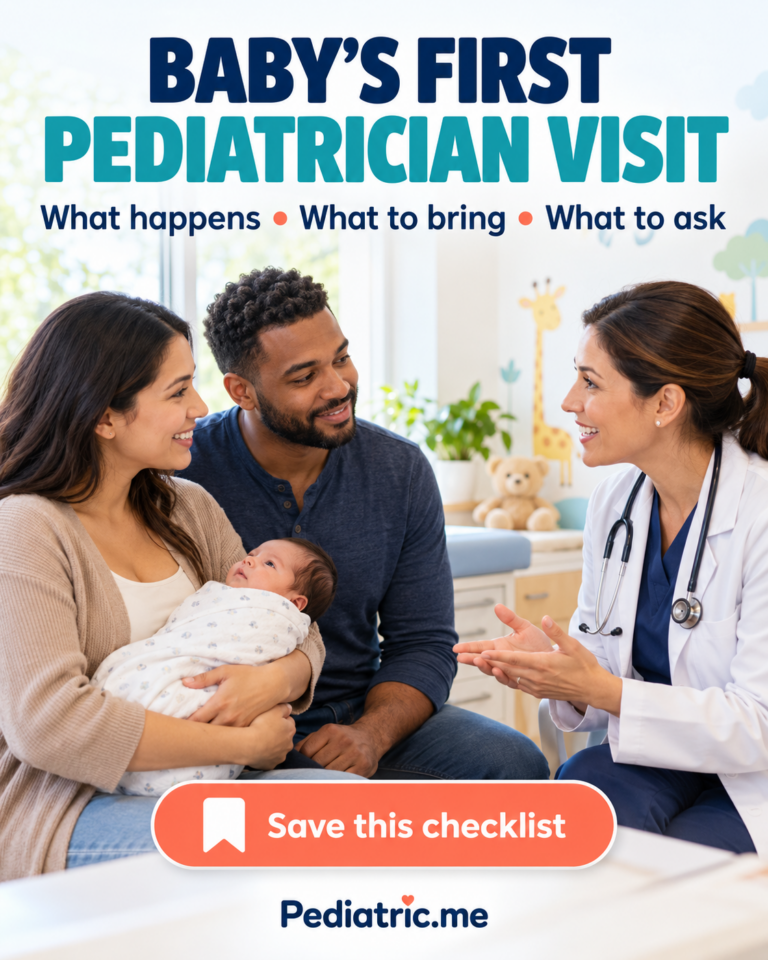
Want a printable-style list you can tick off? Use our First Pediatrician Visit Checklist, with everything to bring and the questions to ask.
If you’re still finishing up your go-bag for outings, our Hospital Bag Checklist doubles as a solid packing list for early pediatrician visits too.
Questions Worth Asking at the First Visit
- Is my baby feeding often enough, and gaining weight appropriately?
- What’s considered a normal amount of spit-up, crying, or sleep at this age?
- When should I call the office versus go to the ER?
- What’s the vaccine schedule going forward, and can we discuss it at each visit?
- How do I care for the umbilical cord stump / circumcision site?
- What’s the best way to reach the office after hours if something comes up?
Warning Signs to Mention Right Away
Most newborns are perfectly healthy at their first visit, but it’s worth flagging certain symptoms proactively rather than waiting for the doctor to ask. Fever, poor feeding, unusual lethargy, and changes in skin color are all things pediatricians want to hear about immediately, not just at scheduled checkups. We cover the subtler ones — the ones parents most often miss — in The 7 Early Signs of Illness Parents Always Miss.
Handy Products for the First Few Pediatrician Visits
A few things tend to make these early appointments (and the weeks around them) noticeably easier:
- Digital rectal/underarm thermometer — the type most pediatricians recommend for accurate newborn readings: see options on Amazon
- Baby health record book or app-linked tracker — for logging feeds, diapers, and growth between visits: see options on Amazon
- Compact diaper bag with a changing pad — makes exam-room diaper changes much less chaotic: see options on Amazon
- Infant car seat with easy click-in base — required for every appointment drive, and worth getting right the first time: see options on Amazon
For the fuller list of what to have on hand before baby arrives, see our Newborn Essentials Registry Checklist.
FAQ: First Pediatrician Visit
How soon after birth is the first pediatrician visit?
Most pediatricians see newborns 3 to 5 days after birth, sometimes as early as 24–48 hours post-discharge, particularly for breastfed babies or babies who had jaundice at the hospital.
Do I need to choose a pediatrician before my baby is born?
Yes — most hospitals ask for your pediatrician’s name before discharge, since that office needs to receive your baby’s records and screening results. It’s worth choosing and calling a practice during your third trimester.
What if my baby hasn’t gained back their birth weight yet?
It’s common for newborns to lose up to about 10% of their birth weight in the first few days and regain it by around 2 weeks. Your pediatrician will track this closely at the first visit and adjust feeding guidance if needed.
Will my baby get shots at the first visit?
Usually not at the 3–5 day visit, beyond confirming the Hepatitis B dose given at the hospital. The regular vaccine schedule typically begins at the 2-month visit.
What should I do if I don’t have a pediatrician picked out yet?
Call your insurance provider for in-network options, ask your OB or midwife for recommendations, or check with other parents in your area. Most practices offer a quick prenatal “meet and greet” so you can find the right fit before baby arrives.
Can I bring a list of questions to the appointment?
Absolutely — pediatricians expect it, and it’s the best way to make sure you leave with real answers instead of trying to remember everything you meant to ask.
🍼 Getting ready for baby’s first weeks?
Build out your registry with the items pediatricians actually recommend — feeding, diapering, sleep, and health essentials in one place.
Related Reading
- First Pediatrician Visit Checklist: What Happens, What to Bring & Questions to Ask
- Newborn Essentials: The Ultimate Baby Registry Checklist
- Baby Registry Checklist: Everything You Need Before Baby Arrives
- First Week Home With Baby: The Real Survival Guide
- Hospital Bag Checklist: What to Pack for Labor, Delivery & Baby’s First Days
- The 7 Early Signs of Illness Parents Always Miss