


Holiday Toy Safety for Kids: Choking Hazards, Age Labels and What to Avoid
Quick Answer: Check the age label before buying any toy, especially for children under 3. Avoid toys with small parts, button batteries, strong magnets, or long strings for young children. Before shopping, search the CPSC recall database at recalls.gov — and if a button battery is swallowed, call 911 immediately.
The holiday shopping season brings excitement for kids and stress for parents. Shelves fill up with colorful toys that look fun and educational — but not every toy on the shelf is safe for every child. The good news: toy safety checks take just a few minutes and can prevent serious injuries.
This guide covers what pediatricians and pediatric safety experts want every parent to know before they buy.
Start Here: Reading the Age Label on a Toy
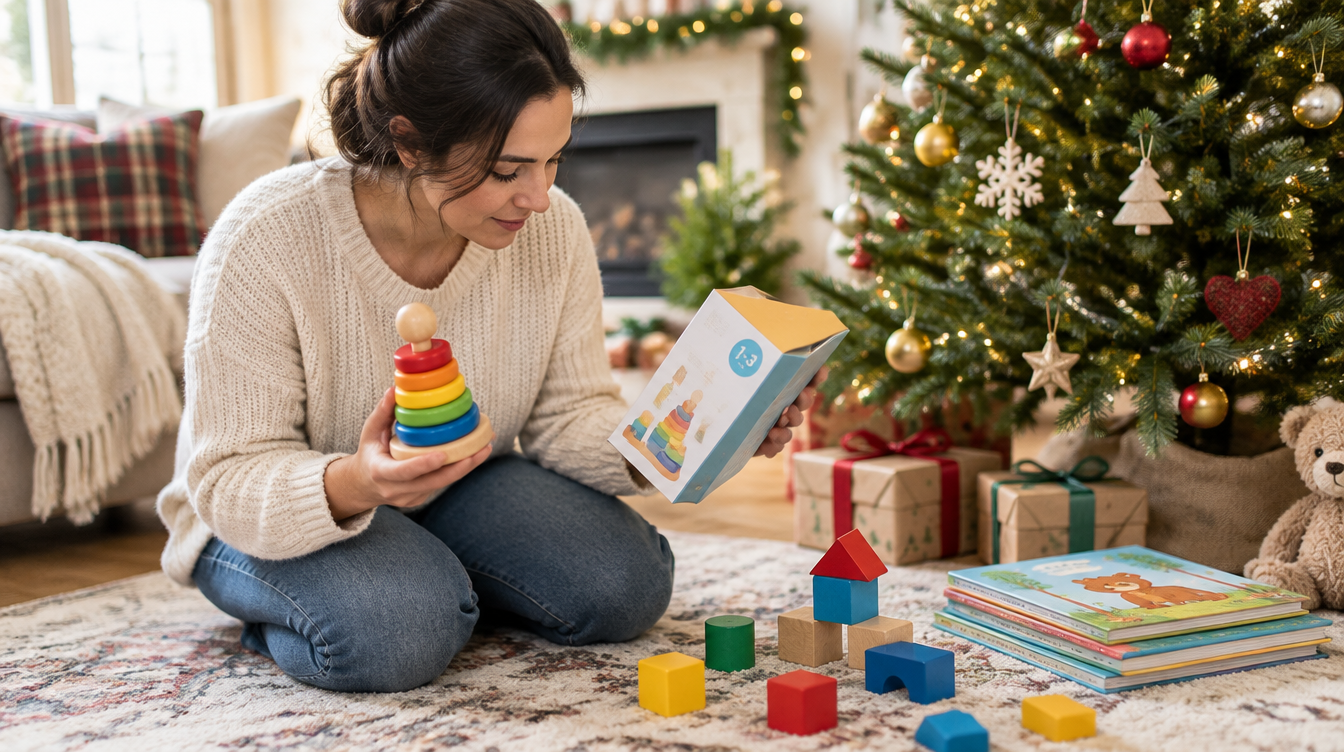
That “Ages 3+” sticker on the box isn’t just a marketing suggestion — it reflects safety testing required by federal law. The American Academy of Pediatrics (AAP) recommends taking age labels seriously, especially for children under age 3.
Here’s what the age label tells you:
- Under 3 years: No small parts that could be swallowed. No long strings or cords. No sharp edges. This category gets the most rigorous CPSC testing because children in this age group explore with their mouths.
- Ages 3–5: May include small parts, so keep these out of reach of younger siblings.
- Ages 6+: Can include more complex parts, magnets, or small components — but still check for recalls and battery types.
If you’re buying for a household with multiple kids of different ages, buy to the age of the youngest child in the home who might access the toy.
Choking Hazards: The Small Parts Rule
Toys or toy parts small enough to fit entirely inside a small child’s mouth are choking hazards. The CPSC uses a standard “small parts cylinder” to test this — if a toy or piece fits inside a cylinder 1.25 inches in diameter and 2.25 inches long, it’s not safe for children under 3.
At home, use the toilet paper roll test: if an item fits through an empty toilet paper tube, it’s a choking hazard for children under 3.
Common holiday toy choking hazards include:
- Marbles and small balls
- Building set pieces (even many branded sets)
- Toy jewelry beads
- Figurine accessories (weapons, hats, tiny tools)
- Jacks and similar game pieces
- Broken or degraded foam pieces
When a toy is intended for older children, store it in a room or container the youngest children cannot access. Toy organizers with lids or latching bins help keep multi-child households safer.
Button Battery Safety: The Hidden Holiday Danger
Button batteries — the small, shiny, coin-shaped batteries found in musical greeting cards, remote controls, flashing jewelry, LED decorations, and many electronic toys — are one of the most serious household hazards for young children.
When a button battery is swallowed, it can cause severe internal burns within two hours. The injuries are silent — your child may not appear to be in distress at first — and they can be fatal. This is a 911 emergency, not a “wait and see” situation.
Our full guide to swallowed button battery emergencies covers exactly what to do, what not to do, and how to childproof your home.
When shopping, check:
- Does the toy contain a button battery? (Check the bottom of musical or flashing toys.)
- Is the battery compartment secured with a screw? (Unsecured compartments are a hazard.)
- Can older siblings access the toy’s batteries and leave them where younger children can find them?
The AAP recommends that parents keep all button batteries — including those in devices not traditionally considered toys (key fobs, thermometers, hearing aids, remotes) — stored and secured out of children’s reach.
Toy Recalls: Check Before You Wrap
Toy recalls happen year-round, and recalled toys still appear at gift exchanges, resale shops, and even some online marketplaces. The Consumer Product Safety Commission (CPSC) maintains a free, searchable recall database.
Before wrapping any toy:
- Visit recalls.gov and search the toy’s name or brand.
- Register new toys with the manufacturer so you receive recall notices.
- If you receive a used toy as a hand-me-down or gift, check its recall status before giving it to a child.
Common reasons toys get recalled include small part hazards, strangulation risks, toxic coatings, and magnets that can be swallowed and attract each other internally — causing serious injuries that require surgery.
What to Avoid by Age Group
Under 12 months
- Soft toys larger than the infant’s head (suffocation risk if placed in the sleep area)
- Toys with cords, strings, or ribbons over 7 inches long
- Any toy with button batteries or coin cells
- Ride-on toys (not developmentally appropriate)
Ages 1–2
- Toys with any small parts
- Balloons — un-inflated or broken balloons are a leading choking cause in young children
- Toys with small magnets
- Art supplies not specifically labeled non-toxic for toddlers
Ages 3–5
- Toys intended for school-age children (may have small or sharp parts)
- High-powered magnet sets (require close adult supervision)
- BB guns, dart guns, or any hard-projectile toy
Ages 6–12
- Chemistry sets without direct adult supervision
- Toy guns with hard projectiles around younger siblings
- High-powered laser pointers
Noise and Eye Safety
Two toy safety areas that often get overlooked:
Noise: Toys that produce sounds at or above 85 decibels — measured at arm’s length — can cause hearing damage with repeated exposure. This includes some squeeze toys, musical toys, and electronic games. If a toy sounds loud to your ears, it’s likely too loud for your child’s hearing. Place tape over the speaker or remove batteries from excessively loud toys.
Eye safety: Toys that shoot projectiles — foam darts, water beads, gel balls, rubber-tipped arrows — can cause serious eye injuries. The AAP recommends protective eyewear for children using these toys. Avoid any toy that fires objects at high velocity for children under 6.
When to Call the Doctor
Call your pediatrician or nurse line if your child:
- Swallows a toy part or small object and you’re unsure if it passed safely
- Has a cut or puncture wound from a sharp toy edge
- Develops a rash, redness, or skin irritation after contact with a toy (possible material sensitivity or latex allergy)
- Shows signs of eye irritation after a projectile came near their face
You can also call Poison Control at 1-800-222-1222 (free, 24/7) if your child ingests paint, art supplies, toy stuffing, or any toy material.
When to Call 911 or Go to the ER
- Swallowed button battery: Always a 911 emergency. Do not wait for symptoms. Go to the ER immediately — do not give food, water, or honey unless specifically instructed by Poison Control.
- Choking: If your child is choking and you cannot clear the airway, call 911.
- Difficulty breathing after playing with a toy
- Eye injury from a projectile toy — do not rub the eye; cover it gently and go to the ER
- Swallowed multiple magnets — these can attract each other through intestinal walls and cause intestinal perforation
Frequently Asked Questions
How do I know if a toy has button batteries?
Check the bottom or battery compartment of any toy that plays music, flashes lights, or makes sounds. The batteries in these toys are often small, round, and silver — like a coin. Musical greeting cards, flashing jewelry, small electronic toys, and LED ornaments frequently use button batteries. When in doubt, open the battery compartment to check the battery type.
Is a toy safe if it passes the toilet paper roll test?
The toilet paper roll test — if the item fits through the tube, it’s a choking hazard — is a quick check for children under 3. However, it doesn’t cover all hazards. Always also check for sharp edges, toxic materials, long strings, button batteries, and toy recalls. The age label and recalls.gov check are equally important.
Can I buy a toy labeled “ages 6+” for my 4-year-old if they seem mature?
Age labels reflect safety testing, not just developmental readiness. A 4-year-old may handle complex tasks well but still occasionally put small parts in their mouth. The American Academy of Pediatrics recommends following age labels for safety reasons, not as a measure of a child’s abilities.
What if my child received a used toy as a gift and I’m not sure it’s safe?
Check recalls.gov for the specific toy by name and brand. Inspect for small parts, button batteries, long strings, sharp edges, or wear damage. If you can’t verify its safety, store the toy until the child is older, or replace it with something you can verify.
Are water beads safe for kids?
Water beads (also called orbeez or hydrogel beads) are a serious hazard for children under 3. They look small but expand dramatically when wet, and can cause dangerous intestinal blockages if swallowed. The CPSC has issued multiple warnings about water bead toys. Keep them away from young children entirely.
How do I stay updated on toy recalls?
Visit recalls.gov and search by toy name or brand. Sign up for CPSC email alerts at cpsc.gov, and register new toys directly with the manufacturer so they can reach you in case of a recall. Many manufacturers also post recall notices on their websites and social media.
Related Guides
- Swallowed Button Battery: What to Do Right Now
- Thanksgiving Food Safety for Toddlers
- Halloween Safety Tips for Kids
Sources
- American Academy of Pediatrics: How to Buy Safe Toys
- American Academy of Pediatrics: Button Battery Safety at Home
- U.S. Consumer Product Safety Commission: Toy Safety
- recalls.gov — Free CPSC Recall Database
Medical Disclaimer: This article is for general informational purposes only and does not constitute medical advice. Always consult your child’s pediatrician for questions specific to your child’s health and safety. In an emergency, call 911.