
Common Cold in Babies and Kids: Symptoms, Home Care and When to Call the Doctor
Quick answer: The common cold is the most frequent illness in childhood. Most babies and toddlers catch 6 to 10 colds a year, and there is no cure — but most colds clear up on their own in 7 to 14 days with rest and plenty of fluids. For babies 3 months and younger, call your pediatrician at the very first sign of a cold. For older babies and kids, watch for signs of a complication like an ear infection or breathing trouble. Over-the-counter cold medicines should not be given to children under 4, and antibiotics don’t work because colds are caused by viruses, not bacteria.
What causes a cold — and why do kids get so many?
Colds are caused by viruses, most often rhinoviruses, though more than 200 different viruses can trigger the same sneezy, drippy illness. Children’s immune systems are still learning to recognize these viruses, which is why kids get sick so often. Most children have about 8 to 10 colds during their first two years of life. Children in childcare settings often catch even more, because they are in close contact with other children who are also meeting these viruses for the first time.
Colds are most common in fall and spring, but can happen any time of year. The virus spreads easily — through the air when an infected person coughs, sneezes, or even talks, and through surfaces and hands. Cold viruses can survive on surfaces for two hours or longer, so a child who touches a toy and then rubs their nose or eyes can easily pick up the virus.
Symptoms of a cold in babies and kids
Symptoms usually start 2 to 3 days after a child is exposed. They typically include:
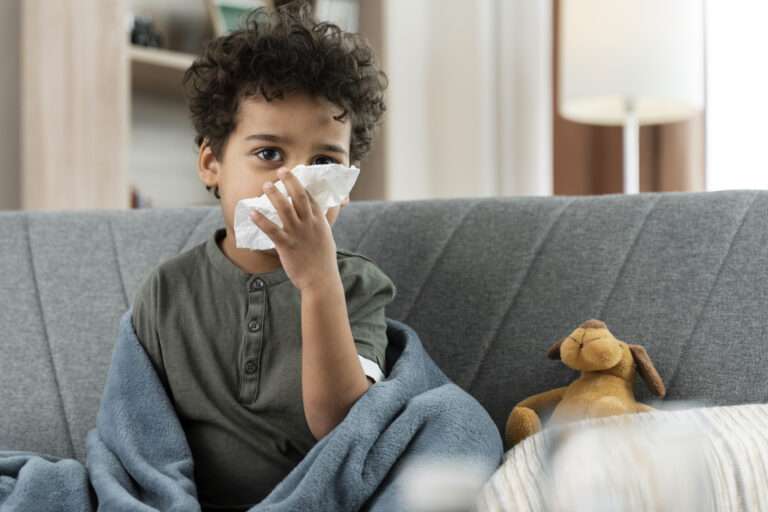
- Runny nose that starts clear and watery, then thickens and may turn yellow, green, or grayish. This change in color is a normal part of recovery, not a sign of a bacterial infection that requires antibiotics.
- Nasal congestion and sneezing
- Mild fever, often between 101°F and 102°F (38.3°C to 38.9°C). Fever can run a bit higher in young babies.
- Cough, which may worsen over the first few days
- Sore throat, sometimes with trouble swallowing
- Fussiness, trouble sleeping, and reduced appetite
- Trouble nursing or taking a bottle in babies, because a stuffy nose makes breathing and feeding at the same time difficult
Symptoms usually peak around day 3 or 4 and then gradually improve. A typical cold lasts 7 to 10 days in older children, though some linger up to 14 days.
Caring for your child’s cold at home
There is no medicine that cures a cold. The goal is to keep your child comfortable while their immune system does the work. Here is what actually helps:
- Push fluids. Keeping children well-hydrated helps loosen mucus and prevents dehydration, especially with fever. For babies under 6 months, that means breast milk or formula. For older babies and toddlers, water and diluted juice are fine in addition to milk.
- Saline nasal drops or spray. A few drops of saline in each nostril can loosen thick mucus in babies. Use a rubber bulb syringe to gently suction afterward if the baby can’t blow their own nose. This works best before feedings and bedtime.
- A cool-mist humidifier. Adding moisture to the air can help ease congestion. Clean the humidifier regularly according to the manufacturer’s instructions to prevent mold.
- Elevate the head slightly for older toddlers. Propping the head of an older child’s mattress can ease nighttime congestion. Do not put pillows or positioning wedges in a baby’s crib — this is a sleep safety risk.
- Honey for cough — but only for children over 12 months. A small amount (about half a teaspoon) of honey can help soothe a cough in toddlers and older children. Never give honey to a baby under 1 year because of the risk of infant botulism.
- Fever management. If fever is making your child uncomfortable, ask your pediatrician about whether and how to use acetaminophen (Tylenol) or ibuprofen (Motrin/Advil for children 6 months and older). Follow the package instructions for dosing by weight. Never give aspirin to children, as it carries a rare but serious risk of Reye’s syndrome.
- Rest. Most children naturally want to rest when they’re sick. Let them take the lead.
What not to give your child for a cold
Some treatments that seem helpful can actually cause harm in young children. The American Academy of Pediatrics (AAP) advises the following:


- No over-the-counter cough and cold medicines under age 4. The AAP recommends against using these products in children younger than 4 years. The FDA warns that they can cause serious, even life-threatening side effects in children under 2. These products don’t cure colds and are not worth the risk in young children. See our guide on cough and cold medicine for kids for what’s safe by age.
- No antibiotics. Antibiotics fight bacteria, not viruses. They won’t shorten a cold, won’t help your child feel better, and using them unnecessarily contributes to antibiotic resistance. If your pediatrician prescribes one, it’s for a secondary bacterial complication like an ear infection — not for the cold itself.
- No aspirin. Aspirin is not safe for children or teenagers with viral illnesses because of the risk of Reye’s syndrome, a rare but serious condition.
- No honey for babies under 12 months. Honey can carry spores of Clostridium botulinum, which can cause infant botulism in babies under 1 year.
Complications to watch for
Most colds are uncomplicated and go away on their own. But sometimes a cold can lead to something more serious. The most common complication is an ear infection — the same congestion and mucus that fill the nose can back up into the middle ear, allowing bacteria to grow. Watch for ear pain, increased fussiness (especially if your child tugs at an ear), or a new fever after a few days of improvement.
Colds can also lead to sinus infections, croup (a harsh barking cough), bronchiolitis (a chest cold that affects the small airways), or pneumonia. In babies under 3 months, a cold can progress to any of these quickly. For more on telling a cold apart from these other illnesses, see our guide on RSV in babies and bronchiolitis vs. wheezing.
When to call the doctor
Babies 3 months and younger: Call your pediatrician at the very first sign of any cold symptoms. Even a runny nose or mild fever in a newborn needs prompt evaluation. Cold viruses that cause only mild illness in older children can cause serious respiratory infections in very young infants.
Babies 3 to 6 months with any fever over 100.4°F (38°C): Call the same day.
All ages: Call the pediatrician if your child has:
- Fever over 102°F (38.9°C), or any fever lasting more than 3 days
- Ear pain, persistent fussiness, or a new fever after they seemed to be getting better (possible ear infection)
- Red eyes or yellow or green discharge from the eyes
- Mucus lasting longer than 10 to 14 days (possible sinus infection)
- A cough that is not improving after 10 days, or gets worse
- Symptoms that don’t improve day by day, or any symptom that is getting worse rather than better
- Fewer wet diapers or other signs of dehydration in babies
- Signs of an ear infection or if your child is unusually sleepy or cranky for their age
For more on reading a fever, see our guide on fever in babies and kids by age.
When to go to the ER or call 911
Go to the emergency room or call 911 right away if your child:
- Has trouble breathing — breathing very fast, nostrils flaring with each breath, or skin pulling in between or below the ribs with every breath
- Has lips, nails, or skin around the mouth that looks blue or grayish
- Has a cough so severe it causes vomiting or a change in skin color
- Coughs up bloody mucus
- Refuses to drink fluids or nurse, putting them at risk of dehydration
- Is unusually limp or unresponsive, hard to wake, or has very low energy beyond what you’d expect from a typical illness
How to prevent a cold from spreading
There’s no vaccine for the common cold. Prevention comes down to hygiene and limiting exposure:
- Wash hands frequently with soap and water for at least 20 seconds — before feeding, after diaper changes, and after blowing noses. An alcohol-based hand sanitizer with at least 60% alcohol is a good backup when soap and water aren’t available.
- Teach children to cough or sneeze into the crook of their elbow, not their hands.
- Keep babies under 3 months away from anyone with cold symptoms, especially in winter.
- Clean and disinfect frequently touched surfaces and shared toys.
- Avoid sharing cups, utensils, and pacifiers.
Frequently Asked Questions
How long does a cold last in babies and toddlers?
Most colds in babies and toddlers last 7 to 10 days. Some can linger up to 14 days, particularly in young infants. Symptoms typically peak around day 3 or 4 and then slowly improve. If symptoms are getting worse after a week, or still present after 2 weeks, call your pediatrician.
How do I know if my baby’s cold is turning into something worse?
Call your doctor if your baby has a fever above 100.4°F (38°C) and is under 6 months, any fever in the first 3 months, ear pain or new fussiness after a few days, difficulty breathing, eyes that are red or draining discharge, or a cough that’s worsening after 7 to 10 days. These can be signs of an ear infection, bronchiolitis, or another complication.
Can I give my toddler cold medicine?
The AAP recommends against over-the-counter cough and cold medicines for children under 4. They haven’t been proven to work in young children and can cause serious side effects in children under 2. For children 4 and older, some products are considered safe when used exactly as directed. Always read the label and ask your pediatrician if you’re unsure. See our full guide on cough and cold medicine for kids.
What’s the difference between a cold and the flu in kids?
The flu (influenza) tends to come on suddenly and hit harder, with high fever, body aches, chills, and extreme fatigue. A cold usually starts gradually with a runny nose and mild symptoms. Children with the flu often look sicker and feel sicker, faster. See our guide on flu in kids for more details on telling the two apart.
Should I keep my child home from school or daycare with a cold?
If your child has a fever, keep them home until they’ve been fever-free for at least 24 hours without fever-reducing medicine. If they’re well enough to participate in activities and their symptoms are mild, most schools and childcare centers allow children with colds (without fever) to attend. Check your center’s policy.
Can a cold turn into an ear infection?
Yes. Ear infections are the most common complication of a cold in young children. When the ear’s drainage tubes (Eustachian tubes) become blocked by swelling and mucus, bacteria can grow in the middle ear. Watch for ear pain, tugging at the ear, increased crying or fussiness, trouble sleeping, or a fever that returns after your child seemed to be improving. See our guide on ear infections in kids.
How is a cold different from RSV?
RSV (respiratory syncytial virus) is one of many viruses that can cause cold-like symptoms — but in babies under 1 year, it can cause bronchiolitis, a more serious chest infection with wheezing and breathing difficulty. If your baby has a cold with significant wheezing, rapid breathing, or labored breathing, it may be RSV and warrants a call to your pediatrician. Learn more in our RSV in babies guide.
Related guides
- Cough and Cold Medicine for Kids: What’s Safe by Age
- Fever in Babies and Kids: When to Worry, by Age
- Ear Infections in Kids: Symptoms, Antibiotics vs. Watchful Waiting
- RSV in Babies: Symptoms, Home Care and Immunization Options
- Flu in Kids: Symptoms, Tamiflu and When to Worry
Sources
- AAP / HealthyChildren.org: Children and Colds
- AAP / HealthyChildren.org: Rhinovirus Infections
- Mayo Clinic: Common Cold in Babies — Symptoms and Causes
This article is for general information and is not a substitute for advice from your child’s doctor.