


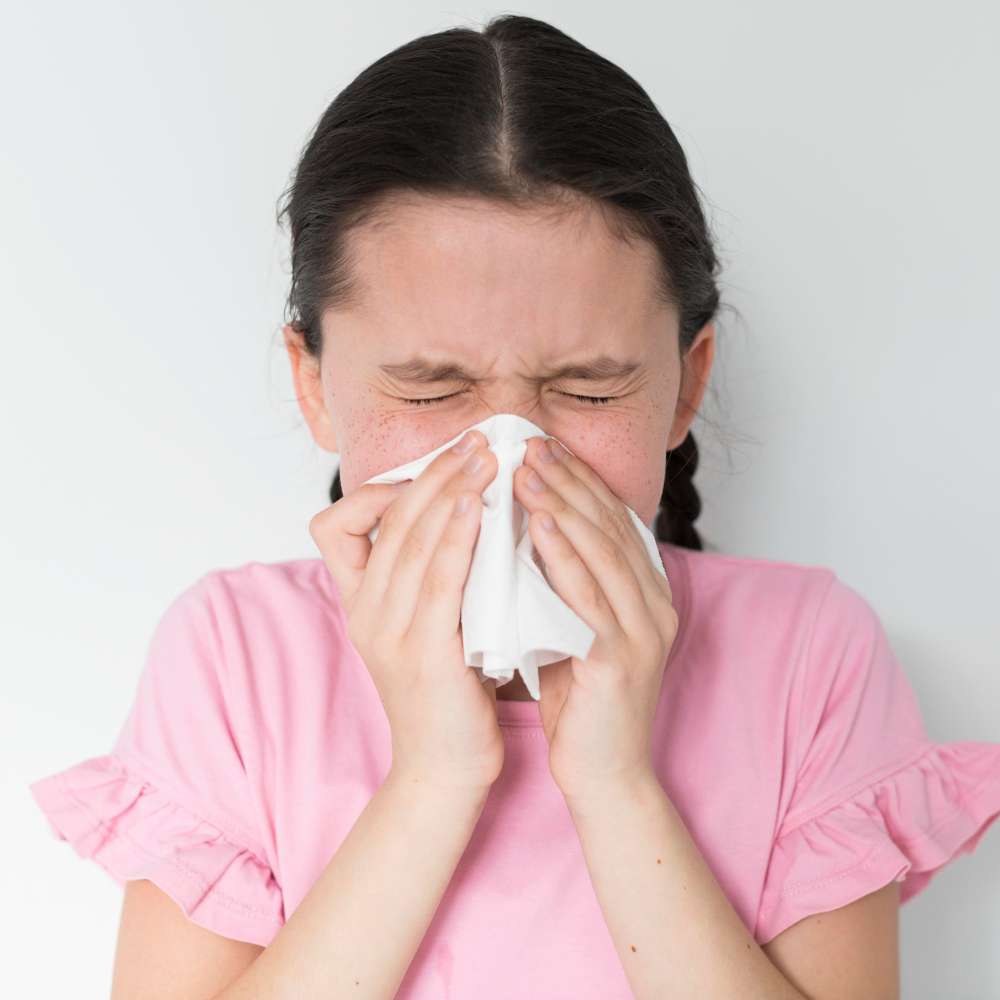
Mold allergy
Mold allergy is a common condition where an individual’s immune system reacts to inhaling mold spores, treating them as harmful invaders. Molds are fungi that thrive both outdoors and indoors, particularly in damp environments.
Symptoms of Mold Allergy:
- Sneezing
- Runny or stuffy nose
- Itchy or watery eyes
- Skin rashes or hives
- Cough and postnasal drip
- Wheezing
- Shortness of breath (particularly in asthmatic individuals)
- Sinusitis (inflammation or swelling of the sinuses)
Sources of Mold Exposure:
- Outdoors: Rotting logs, piles of leaves, and grasses.
- Indoors: Basements, bathrooms, leaky roofs, humidifiers, houseplants, refrigerators, and garbage cans. They can also be found in carpets, upholstery, and HVAC systems.
Diagnosis: To determine a mold allergy, an allergist can perform:
- A detailed medical history review.
- Physical examination.
- Allergy skin tests.
- Blood tests.
Management and Treatment:
- Environmental Control:
- Avoidance: This is the most effective way to manage mold allergy. When mold counts are high, stay indoors, keep windows and doors closed, and use air conditioning.
- Reduce Humidity: Keep indoor humidity below 50% with the help of dehumidifiers.
- Ventilation: Use exhaust fans in bathrooms and kitchens.
- Cleaning: Regularly clean damp areas in the bathroom, kitchen, and around the house to prevent mold growth.
- Reduce Mold Growth: Fix leaks promptly, and avoid using carpets in bathrooms or basements.
- Medications:
- Antihistamines: These help relieve allergy symptoms by blocking the action of histamine, a chemical released by the immune system during an allergic reaction.
- Nasal corticosteroids: These are anti-inflammatory sprays that help relieve nasal congestion, sneezing, and a runny nose.
- Decongestants: These help relieve nasal congestion associated with allergies.
- Montelukast (Singulair): This is a tablet taken to block leukotrienes, chemicals that cause symptoms of an allergic reaction.
- Immunotherapy (Allergy Shots): This involves gradually increasing doses of the allergen to which a person is allergic. Over time, this may increase tolerance to the substance and reduce symptoms.
Conclusion: Mold allergies can be distressing, but a combination of environmental control, medications, and immunotherapy can help manage the symptoms. If one suspects they have a mold allergy, it’s essential to consult with an allergist or immunologist for a definitive diagnosis and treatment plan.