

Can AI Predict Spinal Cord Injury Before It Happens During Pediatric Surgery?
Shriners Children’s and Georgia Tech are building a predictive AI model that analyzes intraoperative data to flag spinal cord risk before it becomes injury. Here’s what pediatric neurosurgeons need to know.
The Problem: A Rare but Devastating Complication
Complex pediatric spinal deformity surgery — spinal fusion for scoliosis, vertebral column resection, osteotomy for severe kyphosis — carries a small but real risk of intraoperative spinal cord injury. Large single-institution series put the rate of intraoperative neuromonitoring (IONM) events at roughly 1 in every 42 monitored cases, with permanent neurologic deficit occurring in about 1 in 573 cases. In a 23-year review of 3,436 pediatric spinal procedures, 74 cases (2.2%) had a potential neurologic deficit identified intraoperatively, and combined electrophysiologic monitoring detected permanent neurologic status accurately in 99.6% of the population, reducing permanent deficits to just six patients. In higher-risk populations, the numbers climb further: reported rates of iatrogenic intraoperative neurological damage in deformity correction range from 1.5% to 9%.
Those are low absolute numbers — but for the surgeon at the table, the stakes could not be higher. A missed or delayed IONM signal can mean the difference between a reversible cord insult and a lifelong deficit. That’s the gap a new predictive AI collaboration between Shriners Children’s and Georgia Tech is trying to close.
What Shriners Children’s and Georgia Tech Are Building
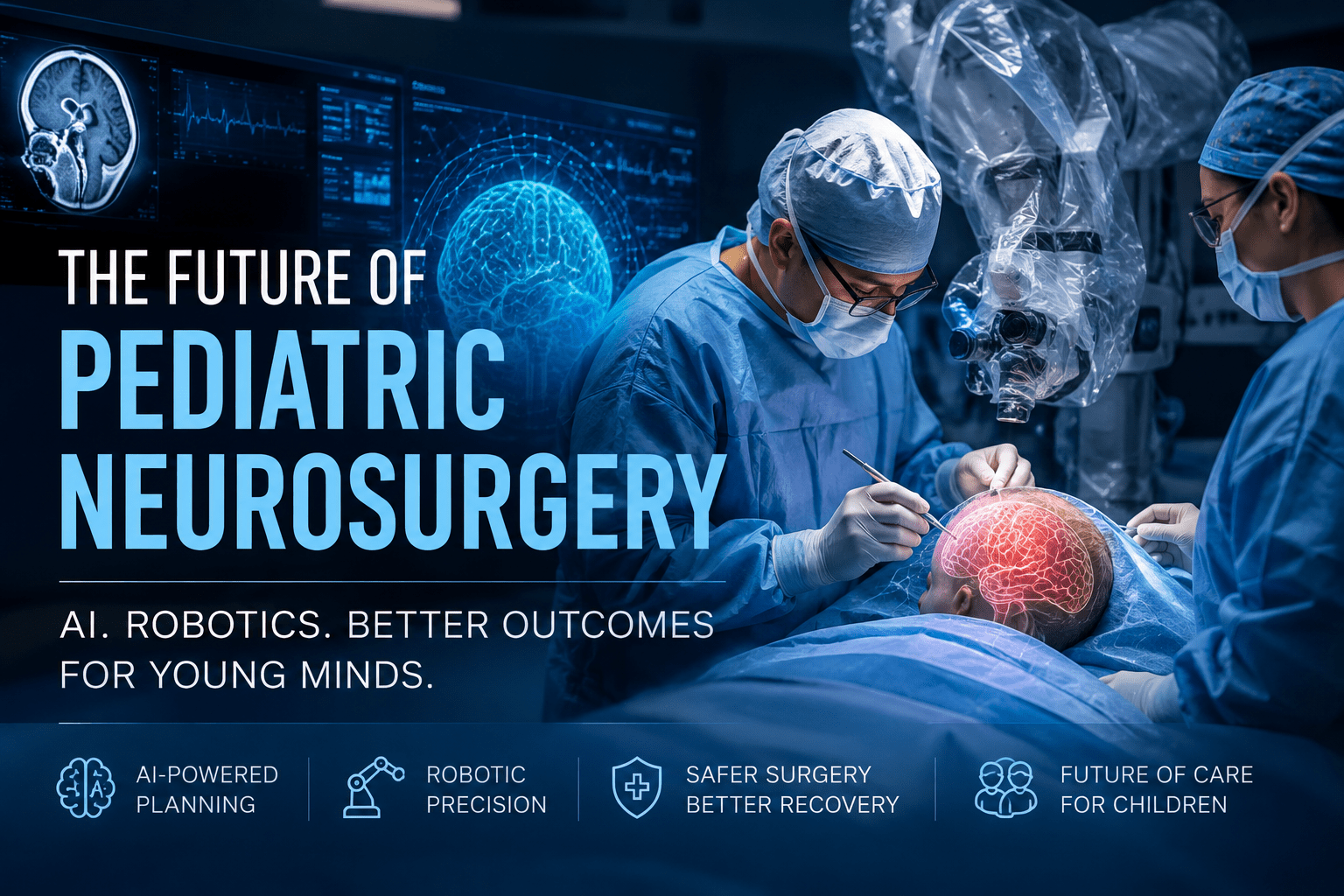
Drawing on thousands of data points from surgical procedures, clinical notes, X-rays, and patient histories, the new AI model is designed to help predict potentially dangerous changes occurring within the spinal cord during surgery. According to the organizations, once complete, it will be the first predictive AI model of its kind for this purpose.
The project is being led by Dr. Bruce Brenn, chief of anesthesiology at Shriners Children’s Philadelphia, in partnership with Leanne West, Georgia Tech’s chief engineer of pediatric technology and Shriners’ chief research and innovation officer. In describing the tool’s purpose, West characterized it as predictive in nature — meant to help the surgical team understand what might happen during surgery so that adverse events can be prevented before they occur. Brenn described the underlying philosophy more plainly: the goal is to build something like an early-warning system that helps the team avoid dangerous events rather than simply react to them.
Technically, Georgia Tech is helping train the model using natural language processing and machine learning applied to real-world clinical data. That combination matters clinically — it means the system isn’t limited to structured waveform data from intraoperative neuromonitoring, but is also being trained on unstructured inputs like free-text operative notes, anesthesia records, and imaging, which is where a great deal of clinically meaningful context typically lives and is usually inaccessible to conventional monitoring algorithms.
Clinically, the ambition goes beyond flagging a signal drop. Brenn has said the tool could help lower the risk of injury during surgery and support decisions such as when to raise or lower blood pressure, or whether a procedure should be staged across separate days rather than completed in one sitting. He has also framed the project’s core rationale as a shift away from relying on the experience of a single surgeon or a small group of surgeons, toward pooling data across many patients to generate more generalizable predictive signal.
This effort builds on prior work: a related Shriners-Georgia Tech study, FUSION, led by Dr. Brenn, is using AI algorithms to examine data across a large spinal fusion population in order to develop a risk score for spinal cord distress, drawing on operative notes and the substantial volume of data collected ahead of surgery. Steve Hwang, M.D., a pediatric spine surgeon and neurosurgeon at Shriners Children’s Philadelphia involved in related scoliosis-genetics research, has framed the broader ambition succinctly: can complications be anticipated ahead of time using machine learning? In a parallel Georgia Tech effort, researcher Yishan Zhong is working with spine surgeon Selena Poon, M.D., to develop an AI clinical tool for automated Cobb angle measurement — a reminder that this predictive-monitoring work sits inside a broader institutional push to apply AI across the pediatric spine care pathway, from preoperative deformity assessment to intraoperative safety.
The work is also tied to a new Shriners Children’s research institute being built in Atlanta in partnership with Georgia Tech, positioning Atlanta as a growing hub for applied clinical AI research at the intersection of pediatric orthopedics, neurosurgery, and biomedical engineering.
Why This Matters to the OR: The Clinical Context
To understand why a predictive layer is valuable, it helps to understand the limits of current intraoperative neuromonitoring.
IONM today is reactive, not predictive. Multimodal monitoring — combining transcranial motor evoked potentials (TcMEPs), somatosensory evoked potentials (SSEPs), and EMG — is the current standard for detecting spinal cord compromise in real time during deformity correction. SSEPs detect sensory pathway compromise with sensitivity up to 92% and specificity up to 100%, while TcMEPs monitoring motor pathways can reach sensitivity and specificity up to 100%, though they require avoiding halogenated anesthetics and neuromuscular blockade. But an IONM “alert” is, by definition, a signal that damage may already be underway. The literature notes that prompt reaction within a reversible phase — reducing compressive or distractive forces — can usually restore spinal cord function, but if those forces persist, a permanent deficit can result. The window for effective intervention is narrow, and the quality of the response depends heavily on how quickly the team recognizes and correctly interprets the signal.
Interpretation still varies by team and setting. An IONM alert should prompt the surgeon to assess for possible mechanical injury and the anesthetist to optimize mean arterial pressure as first-line therapies, and effective response depends on close communication between the anesthetist, neurophysiologist, surgeon, and nursing staff. That coordination requirement — and the availability of a trained neurophysiologist — is not uniform across institutions. Where trained neurophysiologists are not consistently available, surgeon-directed neuromonitoring has been shown to be a safe and reliable alternative for detecting neurological injury. A predictive layer that standardizes and augments signal interpretation, rather than relying solely on real-time human pattern recognition, could reduce this variability — which is precisely the gap machine learning models trained on large monitoring datasets are being built to address.
Prior ML work on IONM data shows the concept is viable. This isn’t the first attempt to apply machine learning to intraoperative neuromonitoring data. A multicenter study evaluated a machine learning algorithm designed to identify subtle changes in motor evoked potentials that may precede neurological injury, analyzing IONM data from 84 pediatric spine surgeries at a single high-volume academic center. The Shriners-Georgia Tech collaboration extends this line of work considerably by pulling in a far broader dataset — operative records, clinical notes, imaging, and patient histories — rather than waveform data alone, and by pooling across multiple Shriners locations rather than a single center.
What a Predictive Model Could Add for Pediatric Neurosurgeons
For a pediatric spine surgeon or neurosurgeon evaluating where this technology might fit into practice, the practical value proposition breaks down into a few areas:
- Earlier risk stratification, before the incision. Rather than waiting for an intraoperative signal change, a model trained on preoperative imaging, deformity severity, curve etiology, and comorbidity data could flag which patients — and which stages of a procedure — carry elevated cord-injury risk, informing case planning, staging decisions, and consent conversations.
- Support during high-uncertainty intervals. Correction maneuvers and three-column osteotomies are consistently identified as high-risk points in the procedure. In one series, IOM alerts occurred in 37% of procedures involving three-column osteotomy, with osteotomy and correction maneuvers as the most common triggering events, and patients with IOM alerts had significantly greater maximum kyphosis than those without. A predictive tool could help direct heightened attention to these specific windows rather than treating the whole case as uniform risk.
- A second layer beneath a still-imperfect gold standard. Even multimodal IONM is not infallible. In one large series, seven patients had false-negative monitoring outcomes — they awoke with neurologic deficits that intraoperative monitoring failed to detect. A model trained on richer, multimodal data inputs is a plausible way to close some of that residual detection gap, though it will need rigorous prospective validation against exactly these false-negative cases before it can be trusted to do so.
- Standardizing decision support across centers. Because the model is being trained on data pooled across Shriners’ national system rather than one surgeon’s case log, it is aimed at generalizing beyond any single institution’s experience or a single physician’s pattern recognition — directly addressing the variability that surgeon-directed and neurophysiologist-led monitoring can otherwise introduce.
The Open Questions Any Clinician Should Ask
No predictive model should be adopted uncritically in the OR, and the developers themselves have been candid that this remains early-stage work. Before this — or any similar system — reaches routine clinical use, pediatric neurosurgeons and anesthesiologists will reasonably want clarity on:
- Validation cohort and generalizability. Was the model trained and validated across the full range of pediatric spinal pathology — idiopathic scoliosis, neuromuscular scoliosis, congenital deformity, syndromic cases — or a narrower subset? Neuromuscular and syndromic patients carry different baseline neurologic risk profiles than adolescent idiopathic scoliosis patients, and a model that performs well in one population may not transfer to another.
- False-negative and false-positive rates against current IONM. Any predictive layer will be judged against the very high sensitivity/specificity bar multimodal IONM already sets. The clinically relevant question is whether the model reduces false negatives without materially increasing false-positive alerts that could prompt unnecessary intervention.
- Explainability. As one industry analysis of this collaboration put it, surgeons cannot defend treatment decisions based solely on algorithmic output — they need visibility into the underlying reasoning, particularly when outcomes are contested. A “black box” risk score is a harder sell in the OR than one that surfaces which specific data points are driving a warning.
- Integration into existing workflow. Does an alert integrate with existing IONM displays and anesthesia records, or does it require an additional monitor and an additional cognitive load on a team already managing multiple data streams during a critical maneuver?
- Regulatory and medicolegal status. As with any AI clinical decision-support tool touching a high-stakes intraoperative decision, questions of regulatory clearance, liability, and documentation standards will need to be resolved before broad deployment — an area the developers have not yet detailed publicly.
Where This Fits in the Bigger Picture
This project doesn’t exist in isolation. It’s one piece of a broader Shriners Children’s–Georgia Tech research portfolio applying AI and engineering to pediatric spine and neuromuscular care — from automated Cobb angle measurement for scoliosis severity to genetic-marker research aimed at anticipating scoliosis progression in younger children, to robotics-based rehabilitation tools for children with spinal cord injury. Together, these efforts point toward a pediatric spine care pathway where AI contributes at multiple stages — diagnosis, surgical planning, and now, potentially, real-time intraoperative risk detection.
For pediatric neurosurgeons following this space, the practical takeaway right now is measured optimism: the tool is still in development, and neither Shriners Children’s nor Georgia Tech has indicated a timeline for clinical validation studies or deployment. But the underlying premise — that thousands of prior cases contain predictive signal current monitoring methods don’t fully exploit — is well supported by the existing neuromonitoring literature, and the institutional commitment behind it (including a dedicated Atlanta research institute) suggests this is a multi-year program rather than a one-off pilot.
Frequently Asked Questions
Can AI actually predict spinal cord injury before it happens in surgery?
Not yet in routine clinical use. Shriners Children’s and Georgia Tech are developing a predictive model designed to flag dangerous spinal cord changes before they become injury, but as of this collaboration’s announcement, the tool remains in development and has not been reported as clinically validated or deployed.
How is this different from existing intraoperative neuromonitoring (IONM)?
Standard IONM (TcMEPs, SSEPs, EMG) detects spinal cord compromise largely in real time, once a physiological change has already begun. The predictive AI model aims to use historical operative data, clinical notes, imaging, and patient history to anticipate risk earlier — potentially before or during specific high-risk maneuvers — rather than only reacting to a signal change as it occurs.
What data is the model trained on?
According to the announcement, the model draws on thousands of data points including surgical procedure records, clinical notes, X-rays, and patient histories, using natural language processing and machine learning developed with Georgia Tech.
Who is leading this research?
Dr. Bruce Brenn, chief of anesthesiology at Shriners Children’s Philadelphia, is the lead researcher, working with Leanne West, Georgia Tech’s chief engineer of pediatric technology and Shriners’ chief research and innovation officer.
What surgeries would this apply to?
The model is targeted at complex pediatric spinal procedures where spinal cord injury risk is a recognized concern — most notably spinal deformity correction (scoliosis and kyphosis fusion surgery), where multimodal neuromonitoring is already standard of care.
Sources: Shriners Children’s and Georgia Tech joint announcement; Dr. Bruce Brenn and Leanne West, Shriners Children’s/Georgia Tech; peer-reviewed literature on intraoperative neuromonitoring in pediatric spinal deformity surgery, including Spine Deformity, BJA Education, and PubMed-indexed clinical studies.