

Best Car Seats of 2026: A Complete Buying Guide by Age and Stage
Why Your Car Seat Choice Matters
Motor vehicle crashes remain one of the leading causes of injury for young children, and a correctly chosen, correctly installed car seat is the single biggest factor in reducing that risk. But with dozens of brands, three major seat categories, and constantly changing safety ratings, picking the right one can feel overwhelming.
This guide breaks car seats down by stage — infant, convertible, and booster — so you can find a seat that fits your child’s age and weight, your vehicle, and your budget, without guessing.
How to Choose: The Basics Before You Buy
- Match the seat to your child’s current size, not just their age. Weight and height limits matter more than birthdays.
- Check expiration dates. Car seats typically expire 6–10 years from manufacture; plastic degrades over time and safety standards evolve.
- Confirm vehicle fit before buying. A seat that’s a five-star performer in testing can still fit poorly in a compact back seat.
- Never buy a used seat unless you know its full crash history — a seat involved in even a minor accident should be replaced.
- Get it installed correctly. Misuse (not the seat itself) is the most common safety failure. Many fire departments and hospitals offer free installation checks.
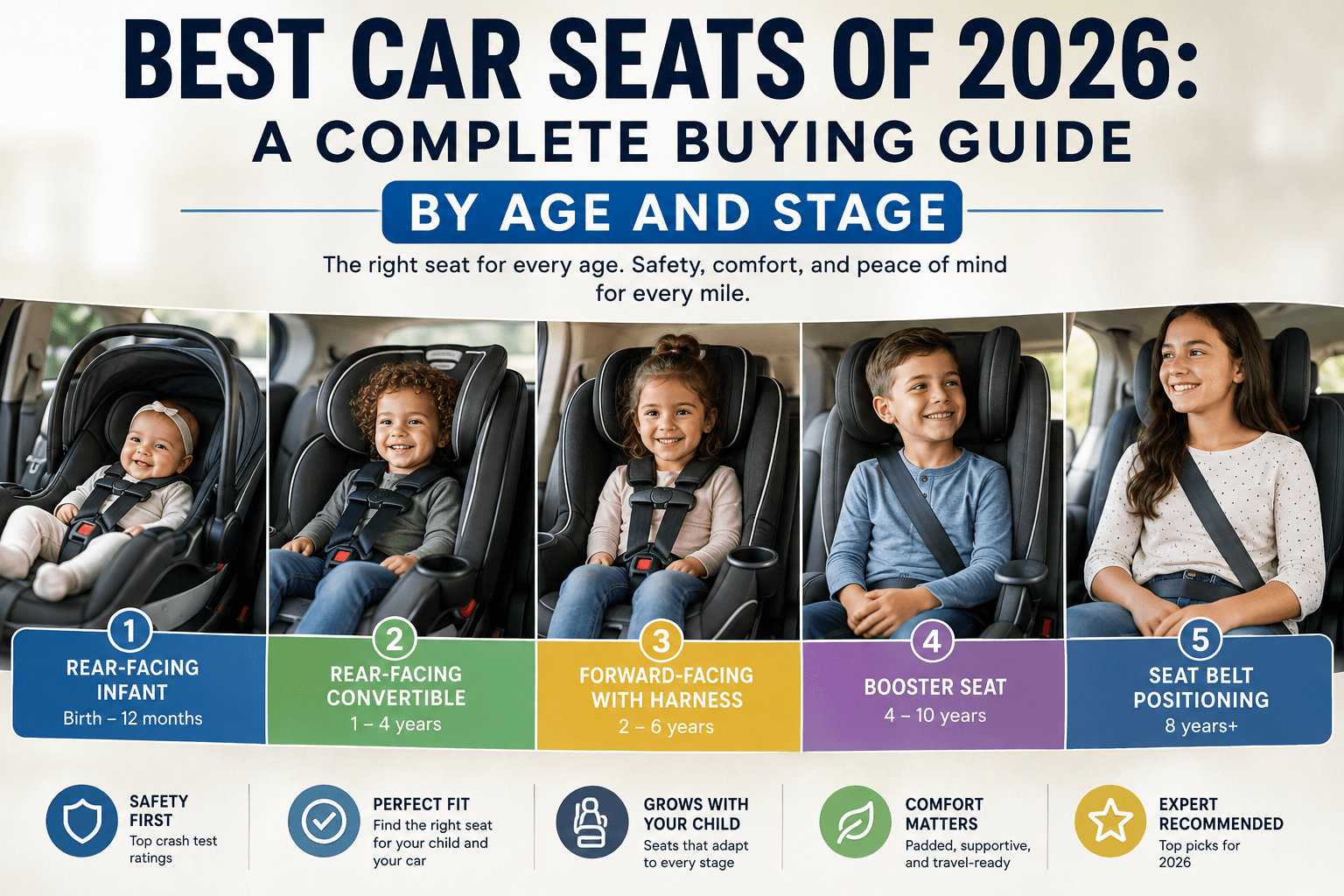
Best Infant Car Seats (Rear-Facing, Birth to ~35 lbs)
1. Graco SnugRide SnugFit 35
A reliable, budget-friendly pick that consistently earns strong safety marks. Easy one-hand carrier release and a straightforward base install make it a favorite for first-time parents.
✅ Shop the Graco SnugRide SnugFit 35 on Amazon →
2. Chicco KeyFit 35
Frequently rated the easiest infant seat to install correctly, thanks to a clear level indicator and simple base adjustments. A pediatrician and hospital-recommended staple.
✅ Shop the Chicco KeyFit 35 on Amazon →
3. Nuna PIPA RX
A premium option with a load-leg base that reduces crash-force transfer, plus machine-washable fabric. Ideal for parents who want top-tier safety engineering and don’t mind the higher price.
✅ Shop the Nuna PIPA RX on Amazon →
Best Convertible Car Seats (Rear- and Forward-Facing, ~4–65 lbs)
4. Graco Extend2Fit
Built to keep kids rear-facing longer (up to 50 lbs) with an extension panel that adds legroom — supporting the current pediatric guidance to delay forward-facing as long as possible.
✅ Shop the Graco Extend2Fit on Amazon →
5. Britax Boulevard ClickTight
Known for an installation system that makes achieving a tight, correct fit almost foolproof, plus side-impact protection that performs well in independent testing.
✅ Shop the Britax Boulevard ClickTight on Amazon →
Best Booster Seats (~40–120 lbs)
6. Graco TurboBooster 2.0
An affordable, no-frills backless-to-highback booster that positions the vehicle’s own seatbelt correctly across a child’s chest and hips.
✅ Shop the Graco TurboBooster 2.0 on Amazon →
7. Chicco KidFit ClearTex Plus
A highback booster made with certified low-chemical-emission materials, a nice-to-have for families prioritizing fewer VOCs in car interiors.
✅ Shop the Chicco KidFit ClearTex Plus on Amazon →
Car Seat Safety Checklist
- ☐ Register the seat with the manufacturer for recall notifications
- ☐ Confirm rear-facing minimums with your pediatrician before switching stages
- ☐ Check harness strap height and chest clip position at armpit level
- ☐ Have installation checked by a certified technician (CPST)
- ☐ Note the expiration date and set a calendar reminder
Frequently Asked Questions
When should I switch my baby from an infant seat to a convertible seat?
Switch once your child outgrows the infant seat’s height or weight limit — not at a specific age. Most babies transition somewhere between 9 months and 2 years, but sizing, not the calendar, should drive the decision.
How long should a child stay rear-facing?
Current guidance recommends keeping children rear-facing as long as possible, up to the seat’s maximum rear-facing height or weight limit, ideally until at least age 2 and often longer with an extended-rear-facing convertible seat.
Do more expensive car seats mean better safety?
Not necessarily. In the U.S., all car seats sold must meet the same federal safety standard (FMVSS 213). Higher-priced seats often add convenience features, easier installation, or premium materials rather than a fundamentally different safety floor.
Can I use a secondhand car seat?
Only if you’re certain of its full history — no prior crashes, it isn’t expired, it hasn’t been recalled, and it comes with the original manual. When in doubt, buy new.
How do I know if my car seat is installed correctly?
The seat shouldn’t move more than an inch side-to-side or front-to-back at the belt path. Many local fire departments, hospitals, and police stations offer free car seat inspections by certified technicians — take advantage of one after installing a new seat.
What’s the difference between a highback and backless booster?
A highback booster adds head and side-impact support and is generally recommended for smaller or younger booster-age kids and vehicles without headrests. A backless booster works once a child is bigger and the vehicle seat itself has adequate head support.
Related Reading
- Best Strollers for New Moms in 2026: The Complete Buying Guide
- Newborn Essentials: The Ultimate Baby Registry Checklist for New Parents (2026)
- Baby Registry Checklist: Everything You Need Before Your Baby Arrives (2026 Guide)
- Best Baby Monitors of 2026: Tested Picks for Every Type of Parent
- Nursery Checklist: The Complete Room-by-Room Setup Guide for New Parents (2026)
This guide is for general informational purposes and doesn’t replace individualized advice from your pediatrician or a certified child passenger safety technician.