


Constipation in Babies and Toddlers: Signs, Home Care and When to Call the Doctor
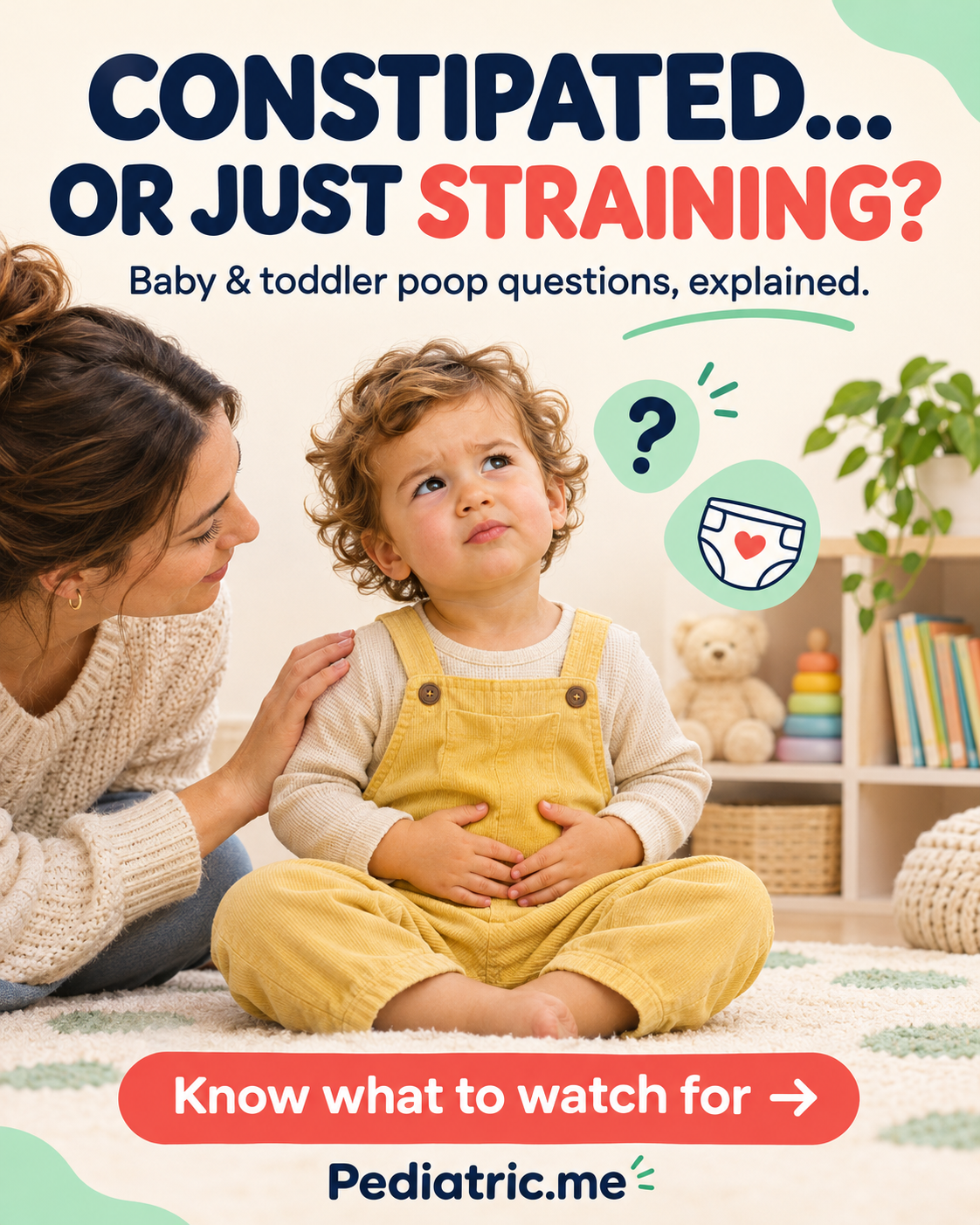
Quick answer: Constipation in babies and toddlers means hard, dry, or painful stools — not just infrequent ones. Breastfed babies can go up to a week between bowel movements and still be perfectly fine. Home care starts with age-appropriate diet changes (prune juice for infants, more fruits and fiber for toddlers). Call your pediatrician if an infant under 2 months hasn’t had a stool in 3+ days, if you see blood, or if home remedies aren’t working after a few days.
Constipation is one of the most common reasons parents call the pediatrician — and also one of the most misunderstood. Many parents worry when their baby skips a day without a bowel movement, but frequency alone rarely tells the whole story. Here’s what you actually need to know, by age.
What’s Normal? Bowel Habits by Age
Bowel habits vary enormously in healthy babies and toddlers. The key is not how often your child goes, but what the stool looks like and whether passing it causes pain.
Breastfed newborns (0–4 weeks): Expect frequent, seedy yellow stools — sometimes after every feeding. After the first month, some breastfed babies slow down dramatically and may go 5–7 days between stools. As long as the stool is soft when it arrives, this is normal and not constipation.
Formula-fed infants: Typically stool 1–2 times per day, though skipping 1–2 days is usually fine. Formula-fed stools tend to be firmer and more tan or yellow-green in color.
After starting solids (around 6 months): Introducing solid foods commonly changes bowel patterns. Stools often become firmer, darker, and less frequent. This transition period can trigger real constipation, especially if the new foods are low in fiber. Parents who are starting baby-led weaning should offer high-fiber options like cooked pear, prunes, and peas from the start.
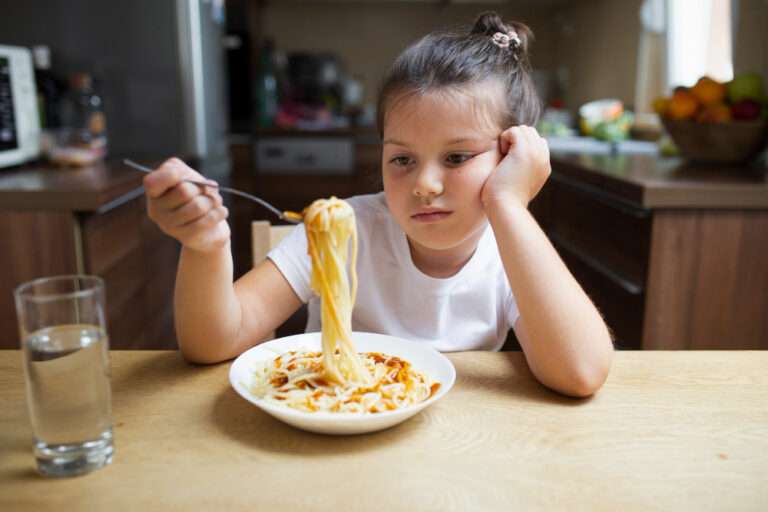
Toddlers (1–3 years): Most toddlers stool 1–2 times per day, but anywhere from 3 times a day to once every 3 days can be normal if the stool is soft and passes easily. Picky eating — a very common phase at this age — can reduce fiber intake and contribute to constipation. See our guide on picky eating in toddlers for strategies.
Signs of Constipation in Babies and Toddlers
The defining feature of constipation is hard or dry stools that are painful or difficult to pass — not simply infrequent stools. Watch for these signs:
In infants:
- Straining, grunting, or crying for more than 10 minutes without producing a stool
- Hard, pellet-like, or pebble-shaped stools
- Unusual fussiness or arching the back during or after feeding
- A firm, distended belly
- Blood on the stool or toilet paper (from a small anal fissure caused by straining)
In toddlers:
- Straining and crying on the toilet or potty
- Stool that looks like hard pellets or large, hard stools that hurt to pass
- Belly pain or cramping, especially before a bowel movement
- Decreased appetite or early fullness
- A child who stiffens their legs, crosses them, or stands on tiptoe — classic signs of withholding, where the child deliberately avoids going because it hurts
- Leaking of soft stool around a hard impaction (soiling)
Withholding is especially common in toddlers who have had one painful bowel movement. The fear of pain leads to holding it in, which makes stool harder, which makes the next bowel movement more painful — a cycle that’s important to break early.
Home Care for Infant Constipation
Always talk to your pediatrician before treating constipation in a baby under 6 months. For older infants:
Prune, pear, or apple juice (over 2 months): The American Academy of Pediatrics (AAP) recommends 1 ounce of juice per month of age, up to 4 ounces per day, for infants over 2 months. Prune, pear, or apple juice contain sorbitol, a natural sugar that draws water into the colon and softens stool. Avoid grape juice and other juices at this age.
Once solids are started (6+ months): Offer high-fiber foods at every meal. The “P fruits” — prunes, pears, peaches, and plums — are especially helpful. Peas and cooked broccoli are good vegetable options. Reduce or eliminate rice cereal, bananas, and cooked carrots, which can worsen constipation.
Water: Once your baby starts solids, small sips of water between feedings (2–4 oz/day) can help. Babies under 6 months should not have water.
Leg bicycling: Gently moving your baby’s legs in a bicycling motion can stimulate bowel movement. Tummy time and gentle belly massage (clockwise, following the direction of the colon) may also help.
What NOT to do with infants: Do not give laxatives, suppositories, or enemas without your doctor’s guidance. Do not add corn syrup, mineral oil, or any other substance to formula or breast milk without medical advice. Note that honey should never be given to infants under 12 months due to the risk of botulism, and this applies even to home remedies.
Home Care for Toddler Constipation
Increase fiber: Aim for the child’s age in years plus 5 grams of fiber per day (so a 2-year-old needs about 7 grams). Offer fruits, vegetables, whole grains, and legumes at every meal. Limit cheese, processed foods, and bananas.
Increase fluids: Water is best. Prune juice remains effective for toddlers. Limit cow’s milk to 16–24 oz per day — excessive milk intake is a common cause of constipation and can also reduce iron absorption.
Establish a routine: Encourage your toddler to sit on the toilet for 5–10 minutes after meals, when the gastrocolic reflex (a natural urge to stool after eating) is strongest. Use a step stool so their feet are supported — dangling feet make it harder to push.
PEG 3350 (MiraLax): Polyethylene glycol 3350 is the most studied and AAP-endorsed treatment for childhood constipation. It’s available over the counter and is tasteless and odorless when dissolved in liquid. However, parents should consult their pediatrician for the correct dose before starting. Do not use adult laxatives, stimulant laxatives, or enemas without medical guidance.
Positive reinforcement: Praise your toddler for sitting on the toilet, not just for going. Never scold or force. Making the bathroom feel safe reduces withholding behavior.
When to Call the Doctor
Contact your pediatrician if:
- Your baby is under 2 months old and hasn’t had a stool in more than 2–3 days
- A formula-fed or solid-fed infant goes 3+ days without stooling, especially with vomiting, irritability, or a swollen belly
- There is blood in or on the stool (a small streak from a fissure is usually benign, but always worth a call)
- Your toddler has gone more than 3 days without a stool and is in discomfort
- Home remedies (juice, diet changes) haven’t helped after 2–3 days
- Your child is withholding and the cycle has gone on for more than a week
- Your toddler has episodes of soiling or leaking stool into their underwear
- Constipation started suddenly after a new medication
When to Go to the Emergency Room
Go to the ER or call 911 if your child has:
- Severe, worsening abdominal distension (a visibly swollen, rigid belly) along with vomiting or inability to pass gas
- Signs of dehydration (no wet diapers in 8+ hours, dry mouth, no tears)
- Vomiting green or yellow-green fluid (bile-colored vomiting in a newborn is always an emergency)
- An infant who appears very ill, lethargic, or is not eating
- Large amounts of rectal bleeding
These symptoms can signal a serious intestinal blockage or another condition requiring immediate evaluation.
Frequently Asked Questions
Can breastfed babies get constipated?
Rarely. Because breast milk is almost completely absorbed, breastfed babies produce very little waste. It’s normal for a breastfed baby over 4–6 weeks old to go 5–7 days without a stool. As long as the stool is soft when it comes and your baby is gaining weight normally and not in distress, this is not constipation.
My baby strains and turns red — is that constipation?
Not necessarily. Babies haven’t learned how to coordinate their abdominal muscles and relax the anal sphincter at the same time — it’s a learned skill. Straining that produces a soft, yellow, seedy stool is normal infant behavior (sometimes called “grunting baby syndrome”), not constipation. It’s only constipation if the resulting stool is hard and dry.
Can switching formula cause constipation?
Yes. Changing formulas — especially switching to a hypoallergenic, iron-fortified, or soy-based formula — sometimes causes temporary constipation. If constipation persists for more than a week after switching, talk to your pediatrician. Do not stop iron-fortified formula without medical advice; iron is essential for brain development.
Can starting solid foods cause constipation?
Yes, and this is very common. The transition to solids at around 6 months changes stool consistency significantly. Rice cereal, bananas, and cooked carrots are binding foods. Starting with high-fiber options (prunes, pears, peas, broccoli) can help prevent constipation during this transition.
Is MiraLax safe for toddlers?
PEG 3350 (MiraLax) is the first-line medical treatment for constipation in children and is widely studied. It is safe for short- and long-term use in toddlers and children when used as directed. However, the dose must be calibrated to your child’s weight and the severity of constipation, so always consult your pediatrician before starting.
My toddler refuses to poop on the potty. What do I do?
Stool withholding during potty training is very common and can spiral into true constipation. If this is happening, back off potty training temporarily and treat the constipation medically first. Once stooling is comfortable and regular again, return to potty training with positive reinforcement. Forcing the issue makes withholding worse.
Can norovirus or stomach bugs cause constipation?
Stomach viruses like norovirus more commonly cause diarrhea, but after the illness resolves, temporary constipation sometimes follows as the gut recovers. See our guide on norovirus in kids for what to expect during and after stomach illnesses.
The Bottom Line
Constipation in babies and toddlers means hard, painful stools — not just infrequent ones. Breastfed babies can safely go a week between bowel movements. For infants starting solids and for toddlers, fiber-rich foods and adequate fluids are the first line of treatment. See your pediatrician if diet changes aren’t working, if you see blood, or if your infant is very young. And remember: withholding in toddlers is a behavioral response to pain — breaking that cycle early, with patience and sometimes medical help, makes a big difference.
Related: Baby-Led Weaning: How to Get Started Safely | Picky Eating in Toddlers | Vitamin D and Iron for Babies
Sources
- American Academy of Pediatrics (HealthyChildren.org) — Constipation in Children
- American Academy of Pediatrics (HealthyChildren.org) — Infant Constipation
- MedlinePlus / National Library of Medicine — Constipation in Infants and Children
Medical disclaimer: This article is for general informational purposes only and does not constitute medical advice. Always consult your child’s pediatrician or a qualified healthcare provider with any questions about your child’s health or before starting any treatment.