

Vitamin D and Iron for Babies: Who Needs Supplements and When
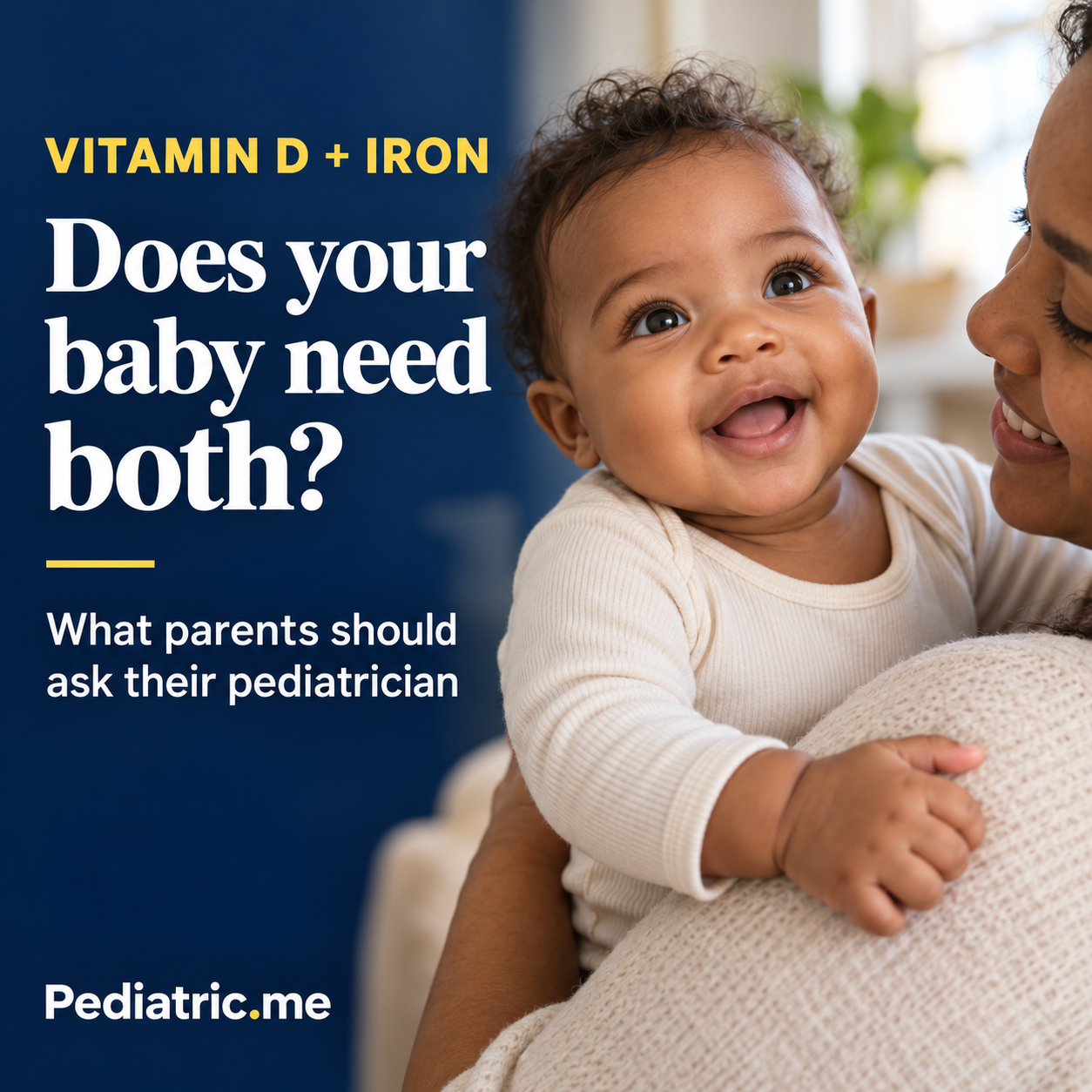
Quick answer: Vitamin D and iron for babies are the two nutrients pediatricians most often check on in the first year. The American Academy of Pediatrics (AAP) and CDC recommend 400 IU of vitamin D a day for babies under 12 months, starting shortly after birth, for every baby who gets any breast milk. Babies who drink only formula and enough of it each day usually don’t need extra vitamin D, because formula is fortified. For iron, babies fed iron-fortified formula usually get enough, while breastfed babies may need iron drops: the AAP’s 2026 update says exclusively breastfed babies should start an iron supplement by 6 months. Once solids begin around 6 months, offer iron-rich foods every day, and ask your pediatrician which product and amount fit your baby.
Why vitamin D and iron for babies matter
Vitamin D helps the body absorb calcium and build strong bones. Without enough of it, growing children can develop rickets, a condition in which bones become soft, weak and misshapen. Breast milk is the ideal food for babies, but it usually doesn’t contain all the vitamin D a baby needs, which is why a daily supplement is recommended for breastfed infants.
Iron helps red blood cells carry oxygen around the body and supports brain development, muscle growth and the immune system. Healthy full-term babies are born with iron stores that last a few months, but those stores run down as babies grow quickly. Low iron can lead to iron deficiency anemia, and the CDC notes that untreated iron deficiency may lead to learning difficulties. Because these effects can happen before a child looks sick, prevention matters.
Vitamin D for babies: who needs a supplement?
Here’s how the AAP, CDC and NIH guidance breaks down by feeding type:
- Breastfed or partly breastfed babies: Give a vitamin D supplement of 400 IU every day, starting shortly after birth and continuing through the first year. This applies even if your baby also gets some formula.
- Formula-only babies: Infant formula is fortified with vitamin D. The CDC says a baby who drinks only formula and 32 ounces or more a day doesn’t need a supplement. One AAP parent page uses a lower cutoff of about 27 ounces. Most young babies drink less than either amount, so ask your pediatrician whether your baby needs drops until intake goes up.
- Children 12 to 24 months: The recommended amount rises to 600 IU a day. Whole cow’s milk, which is fortified with vitamin D, becomes a source after the first birthday. The AAP suggests that toddlers who drink less than 32 ounces of milk a day may need to continue vitamin D drops, so check with your pediatrician.
Using vitamin D drops safely
- Choose a product made for infants and use only the dropper or measuring tool that comes with it, since products vary in strength.
- Follow the package directions or your pediatrician’s advice. Don’t double up on products (for example, a vitamin D drop plus a multivitamin that also contains vitamin D) without asking.
- More is not better. The NIH sets upper limits for babies, and too much vitamin D, almost always from supplements, can cause nausea, vomiting, weakness, dehydration and kidney problems.
- Don’t count on sunshine instead of drops. Sun helps the skin make vitamin D, but the AAP advises protecting children’s skin outdoors with hats, protective clothing and sunscreen when appropriate.
Iron for babies: breastfed vs. formula-fed
- Formula-fed babies: Choose an iron-fortified formula. The CDC says standard iron-fortified infant formulas meet a baby’s iron needs for the first 12 months.
- Exclusively breastfed babies: Breast milk contains only small amounts of iron. The AAP’s June 2026 clinical report recommends iron supplementation for exclusively breastfed infants by 6 months of age. Your pediatrician may suggest iron drops, and the CDC advises asking about iron before 6 months.
- Babies fed both breast milk and formula: Needs depend on how much of each your baby gets. Bring it up at your next checkup.
- Premature and higher-risk babies: Babies born early, with low birth weight, or with other risk factors often need iron much sooner, sometimes within the first weeks of life. Your baby’s care team will guide you.
Note on changing guidance: For years, the AAP advised starting iron drops at about 4 months for babies fed only breast milk, and some AAP parent pages still say so. The AAP’s 2026 update now frames this as “by 6 months,” which lines up with the usual time to start solids. Because the advice has shifted, ask your pediatrician what they recommend for your baby rather than guessing.
Never adjust iron doses on your own. Iron drops for babies are measured carefully, and the right amount depends on your child, so use the product and amount your pediatrician recommends.
Iron-rich first foods
Around 6 months, when your baby shows signs of being ready for solids, iron-rich foods become a key part of the diet. Our guide on when to start solid foods covers readiness signs. Good options include:


- Heme iron (absorbed best): beef, lamb, pork, dark-meat chicken and turkey, fish and eggs, cooked until soft and shredded or mashed
- Non-heme iron: iron-fortified infant cereals, beans, lentils, tofu, and dark leafy greens
- Boost absorption with vitamin C: pair plant-based iron with foods such as oranges, berries, tomatoes, broccoli, papaya or sweet potatoes
If you’re doing baby-led weaning, offer soft strips of meat, egg or tofu that your baby can grasp, and include an iron-rich food at most meals.
Cow’s milk and iron: why too much milk is a problem
Don’t give cow’s milk as a drink before 12 months. In young babies it can cause small amounts of blood loss in the stool and makes it harder to absorb iron. After the first birthday, milk is low in iron and very filling, so toddlers who drink a lot of it may eat fewer iron-rich foods. The AAP advises limiting milk to no more than 24 ounces a day after age 1, and its 2026 iron report stresses avoiding excessive milk intake in young children.
Signs of low iron and screening
Iron deficiency often has no obvious symptoms at first. When signs do appear, the AAP lists:
- Pale skin, or pale lips, nail beds, inner eyelids or cheeks
- Tiredness, more napping than usual, or mild weakness
- Irritability or low mood
- Pica, meaning cravings for nonfood items such as ice, dirt or paper
Because symptoms are easy to miss, babies are screened with a blood test. The CDC says testing usually happens around 12 months. A 2026 AAP parent page suggests screening at about 9 to 12 months for babies mostly fed breast milk and about 15 to 18 months for babies mostly fed iron-fortified formula. Your pediatrician will choose the timing for your child. Our pediatrician visit checklist is a good place to jot down questions about vitamins and screening.
Keep iron and vitamins locked away
The FDA requires iron-containing products to carry a warning that accidental iron overdose is a leading cause of fatal poisoning in children under 6. Store iron drops, prenatal vitamins and all supplements up high and out of sight, close caps tightly after each use, and never call vitamins “candy.” If you think your child swallowed iron or vitamins that weren’t meant for them, call Poison Control at 1-800-222-1222 right away, even if they seem fine.
When to call the doctor
Call your pediatrician if:
- You’re not sure whether your baby needs vitamin D or iron drops, or how much to give
- Your baby was born early or with low birth weight and you haven’t discussed iron
- Your baby seems unusually pale, tired or irritable, or isn’t eating well
- Your toddler drinks more than 24 ounces of milk a day or eats very few iron-rich foods
- Your child craves or eats nonfood items like ice, dirt or paper
- Your baby seems unwell or refuses feeds after starting a supplement
- You think you may have given too much of a supplement
When to go to the ER or call 911
Call 911 or go to the emergency room right away if your child:
- Swallowed iron pills, iron drops or adult vitamins not meant for them and has any symptoms, such as vomiting or unusual sleepiness
- Is hard to wake, limp or unresponsive, or has a seizure
- Is struggling to breathe or has blue or gray lips
For a possible poisoning without these symptoms, call Poison Control at 1-800-222-1222 for advice right away.
Frequently Asked Questions
Do breastfed babies need vitamin D drops?
Yes. The AAP and CDC recommend 400 IU of vitamin D a day for babies who get any breast milk, starting shortly after birth and continuing until 12 months, because breast milk usually doesn’t contain enough vitamin D on its own.
Do formula-fed babies need vitamin D?
Usually not once they drink enough formula, because infant formula is fortified with vitamin D. The CDC uses 32 ounces a day as the cutoff and one AAP page uses about 27 ounces. Babies who drink less may need drops, so ask your pediatrician.
When should breastfed babies start iron supplements?
The AAP’s 2026 guidance recommends iron supplementation for exclusively breastfed babies by 6 months of age. Older AAP advice said to start at about 4 months. Ask your pediatrician what timing and product they recommend for your baby.
Does my formula-fed baby need iron drops?
Most don’t. The CDC says standard iron-fortified infant formula meets a baby’s iron needs for the first 12 months. Premature babies and babies with certain health conditions may need more, so follow your pediatrician’s advice.
What are the best iron-rich first foods for babies?
Soft, well-cooked meats, poultry, fish and eggs provide iron that’s easiest to absorb. Iron-fortified infant cereal, beans, lentils, tofu and leafy greens also help, especially when served with a vitamin C food like berries, oranges or tomatoes.
How much vitamin D does a toddler need?
Children 12 to 24 months need 600 IU of vitamin D a day, according to the CDC and NIH. Fortified whole milk and some foods provide vitamin D, and toddlers who drink less than 32 ounces of milk a day may need drops, so check with your pediatrician.
Can my baby get too much vitamin D or iron?
Yes. Too much vitamin D, usually from supplements, can cause vomiting, weakness and kidney problems, and accidental iron overdose is a leading cause of fatal poisoning in young children. Give only the amount your pediatrician or the package recommends and store all supplements out of reach.
Related guides
- Baby-Led Weaning: First Foods and Gagging vs. Choking
- When to Start Solid Foods
- Formula Feeding Guide for New Parents
- Is My Baby Getting Enough Breast Milk or Formula?
- Baby & Child Feeding Guide
Sources
- AAP: Vitamin D & Iron Supplements for Babies (HealthyChildren.org)
- AAP: Updated Iron Deficiency Guidance, June 2026 (HealthyChildren.org) and Iron Deficiency and Anemia in Children
- AAP: Dietary Supplements for Toddlers (HealthyChildren.org)
- CDC: Vitamin D and CDC: Iron (Infant and Toddler Nutrition)
- NIH Office of Dietary Supplements: Vitamin D Fact Sheet
- FDA: Iron-Containing Supplements Label Warning
This article is for general information and is not a substitute for advice from your child’s doctor.