


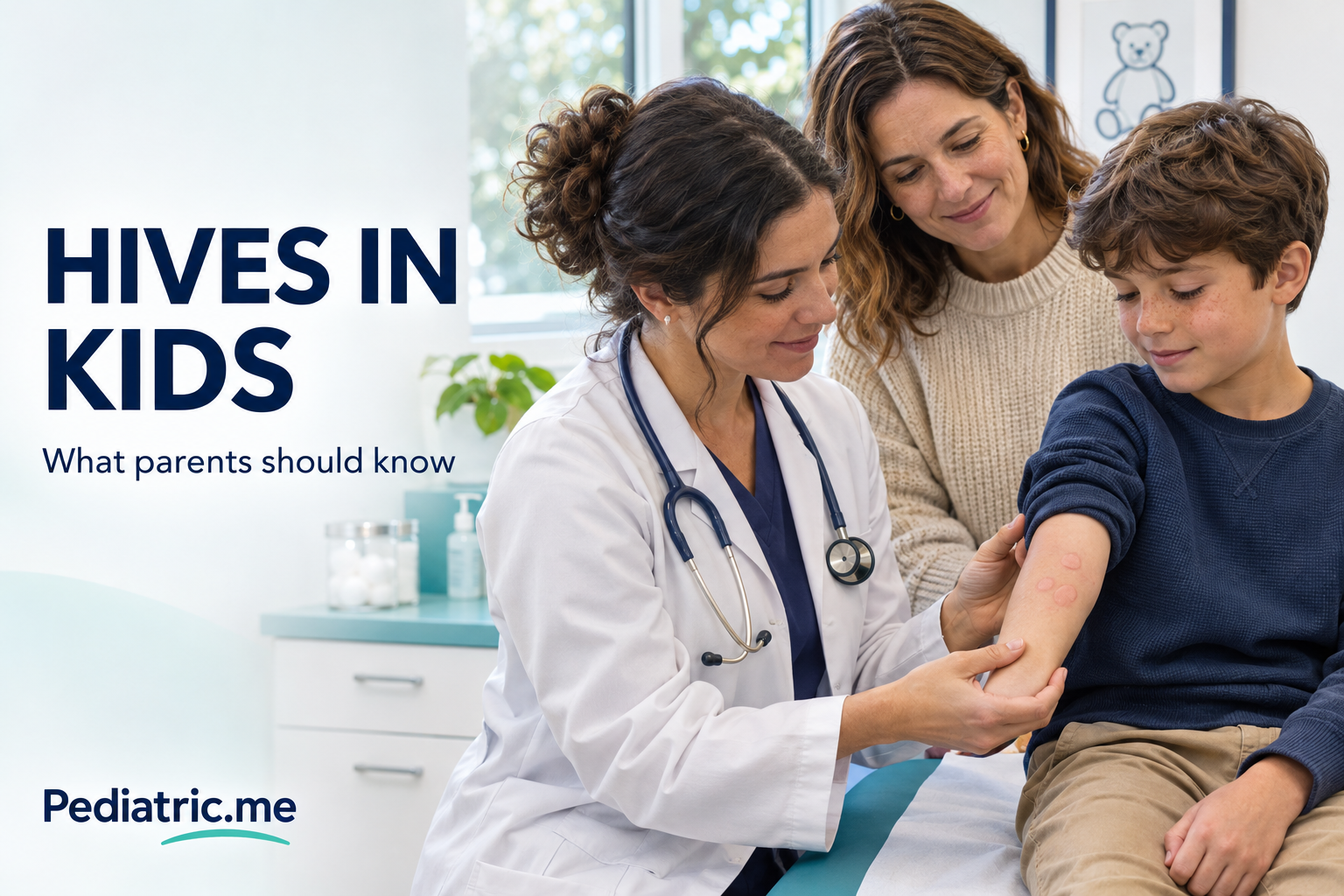
Hives in Kids: Causes, Home Care and When to Go to the ER
Quick answer: Hives (urticaria) are raised, itchy welts that can appear anywhere on a child’s body. They’re very common and usually harmless, fading within 24 hours. Viral infections are the number-one trigger in kids. Oral antihistamines ease the itch; most cases clear on their own within 1–2 weeks. Call 911 or go to the ER immediately if your child has trouble breathing, a swollen tongue, or feels faint.
What Do Hives Look Like?
Hives show up as raised, red or pink welts (also called wheals) with pale centers. They can be as small as a pencil eraser or as large as a dinner plate, and they often merge into large patches. The defining features that distinguish hives from other rashes:
- They move. Individual welts fade within 24 hours, but new ones may appear elsewhere on the body.
- They blanch. Press firmly on a hive — it turns white in the center.
- They itch intensely. Most children describe the itch as worse than a mosquito bite.
- No blisters or crusting. If the skin breaks open or forms scabs, it’s something else.
Hives can appear anywhere — trunk, arms, legs, face, even the scalp. When swelling extends deeper into the skin (lips, eyelids, hands, genitals), that’s called angioedema and deserves prompt medical attention.
What Causes Hives in Kids?
Hives occur when mast cells in the skin release histamine, causing blood vessels to leak fluid into the surrounding tissue. The most common triggers in children:
Viral Infections (Most Common)
Respiratory viruses — colds, influenza, COVID-19, and many others — are responsible for the majority of hive episodes in young children. The hives usually appear 1–2 days into the illness or as the child is starting to feel better, and they resolve as the virus clears. This is why hives peak in the fall and winter virus season.
Allergic Reactions
Foods (peanuts, tree nuts, shellfish, fish, milk, eggs, wheat, soy), insect stings, latex, and certain medications (especially penicillin and NSAIDs) can trigger hives within minutes to two hours of exposure. Food-triggered hives are more common in children under 5.
Other Triggers
- Bacterial infections: Strep throat, urinary tract infections
- Contact triggers: Animal dander, plants (poison ivy doesn’t cause classic hives, but other plants can), chemicals in soaps or sunscreen
- Physical triggers: Pressure, cold, heat, exercise, or even water (aquagenic urticaria)
- Medications: Aspirin, ibuprofen, some antibiotics
No Identifiable Cause
In roughly 50% of acute hive cases in children — and in most chronic cases — no specific cause is ever found. This is frustrating for parents but doesn’t change treatment: antihistamines still work regardless of the trigger.
Acute vs. Chronic Hives
Acute hives last fewer than 6 weeks. These are by far the most common type in children and are almost always triggered by an infection or allergen. They typically resolve on their own.
Chronic hives (chronic spontaneous urticaria) last longer than 6 weeks, often coming and going for months or years. They rarely signal a serious underlying condition in children, but a pediatric allergist or dermatologist can help identify patterns and optimize treatment.
Home Care: Easing the Itch
Most hive episodes can be managed safely at home with these steps:
- Give an oral antihistamine. Non-drowsy second-generation antihistamines like cetirizine (Zyrtec) or loratadine (Claritin) are the first-line treatment recommended by the American Academy of Pediatrics. They’re available over the counter and work for most kids. Follow dosing on the package for your child’s weight/age. First-generation antihistamines like diphenhydramine (Benadryl) also work but cause more drowsiness.
- Apply a cool compress. A cool, damp cloth over the hives for 10–15 minutes several times a day can soothe the itch without medication.
- Dress in loose, soft clothing. Tight elastic or rough fabric rubbing on hives makes them angrier.
- Keep fingernails trimmed. Scratching doesn’t help hives go away and can introduce bacteria into broken skin.
- Avoid known triggers. If you suspect a food or medication, stop it and note whether the hives improve (let your doctor know).
- Give cool baths or showers. Warm water can dilate blood vessels and worsen itching temporarily.
Topical antihistamine creams and cortisone creams are generally NOT helpful for hives — the histamine reaction is happening at the deeper dermal level, not on the surface.
When to Call the Doctor
Call your pediatrician (not the ER, unless your child is in distress) if:
- Hives are present for more than 2 weeks without improvement
- Hives keep coming back over days or weeks
- Your child has significant pain or joint swelling along with hives
- You suspect a drug reaction — especially if hives started after beginning a new medication
- Hives are accompanied by fever lasting more than 3–4 days
- The rash doesn’t blanch when pressed, doesn’t move, or is blistering (this may not be hives at all)
- Your child is very uncomfortable and antihistamines aren’t helping at standard doses
When to Call 911 or Go to the ER Immediately
Hives can be the first sign of anaphylaxis — a life-threatening allergic reaction. Call 911 or go to the emergency room immediately if your child has hives AND any of these symptoms:
- Difficulty breathing, wheezing, or stridor (high-pitched breathing sound)
- Swollen tongue, lips, or throat
- Hoarse voice or trouble swallowing
- Dizziness, fainting, or sudden paleness
- Vomiting or severe stomach cramping after a possible allergen exposure
- Rapid heartbeat combined with any of the above
If your child has a known severe allergy and carries an epinephrine auto-injector (EpiPen), use it first, then call 911 — do not wait to see if symptoms improve. Epinephrine buys time; it does not replace emergency care.
Frequently Asked Questions
- How long do hives last in children?
- Individual hive welts fade within 24 hours, but new ones can keep appearing. A typical viral-triggered episode lasts 1–2 weeks. If hives persist beyond 6 weeks, they’re classified as chronic and a doctor’s evaluation is recommended.
- Can I give my child Benadryl for hives?
- Yes — diphenhydramine (Benadryl) is effective for hives, but it causes significant drowsiness and requires dosing every 4–6 hours. Second-generation antihistamines like cetirizine (Zyrtec, ages 2+) or loratadine (Claritin, ages 2+) work just as well, last 24 hours, and cause much less sedation. The American Academy of Pediatrics recommends second-generation antihistamines as the first choice.
- My child got hives during a cold. Is that dangerous?
- Hives during a viral illness are extremely common and not dangerous on their own. They are caused by the immune system’s response to the virus, not by an allergen. They can look alarming but should resolve as your child recovers. Treat with antihistamines for comfort and watch for the emergency signs of anaphylaxis listed above.
- Should I take my child to the ER for hives?
- Hives alone — with no breathing symptoms, no swollen throat, and no signs of shock — do not require an ER visit. Treat at home with antihistamines and call your pediatrician if they don’t improve within 2 weeks. Go to the ER or call 911 immediately only if hives are accompanied by breathing difficulty, swollen tongue or throat, dizziness, or fainting — signs of anaphylaxis.
- Can stress cause hives in kids?
- Yes. Emotional stress and anxiety can trigger mast cell activation and hives in some children. Stress-induced hives are managed the same way as other hives: antihistamines for relief and addressing the underlying stressor over time.
- What foods cause hives in children?
- The eight most common food allergens — peanuts, tree nuts, fish, shellfish, cow’s milk, eggs, wheat, and soy — account for the majority of food-triggered hives. Food hives typically appear within 15–30 minutes of eating the trigger food. See a pediatric allergist for proper testing if you suspect a food allergy.
- Are hives contagious?
- No. Hives themselves are not contagious. The underlying virus causing them may be, but the hives are just a skin reaction.
Related Guides
- Eczema in Children: Managing Flares and Itchy Skin
- Food Allergies in Kids: What Parents Need to Know
- Anaphylaxis: Recognizing and Responding to Severe Allergic Reactions
Sources
- American Academy of Pediatrics — HealthyChildren.org: Hives
- Children’s Hospital of Philadelphia (CHOP): Hives (Urticaria)
- Stanford Medicine Children’s Health: Hives (Urticaria) in Children
Medical disclaimer: This article is for general informational purposes only and does not constitute medical advice. Always consult your child’s pediatrician or a qualified healthcare provider with questions about your child’s health.