


Measles in Kids: Symptoms, MMR Vaccine and What to Do If Exposed
Quick answer: Measles in kids usually starts 7 to 14 days after exposure with a high fever, cough, runny nose and red, watery eyes. A few days later a blotchy red rash appears at the hairline and spreads down the body. Measles is extremely contagious, from 4 days before the rash until 4 days after it, and it can lead to pneumonia, brain swelling and death, especially in children under 5. Two doses of the MMR vaccine, given at 12 to 15 months and 4 to 6 years, protect about 97 out of 100 children. If you think your child has been exposed, call your pediatrician right away: an MMR dose within 72 hours or immune globulin within 6 days can still help.
Why measles in kids is in the news right now
Measles is back in a big way. As of October 8, 2026, the CDC had counted 4,080 confirmed cases in the U.S. this year, the highest level in more than 30 years, and nearly 60% of them were in children and teens, according to the American Academy of Pediatrics (AAP). Most people who got sick were not vaccinated. Several unvaccinated children have died since outbreaks began in 2025. Case counts are changing week to week, so check your state or local health department for what’s happening near you.
If you’re a clinician looking for the professional view, see our companion piece on the 2026 measles resurgence. This guide is written for parents.
Measles symptoms: what to look for, day by day
Measles follows a fairly typical pattern, which can help you tell it apart from an ordinary cold:
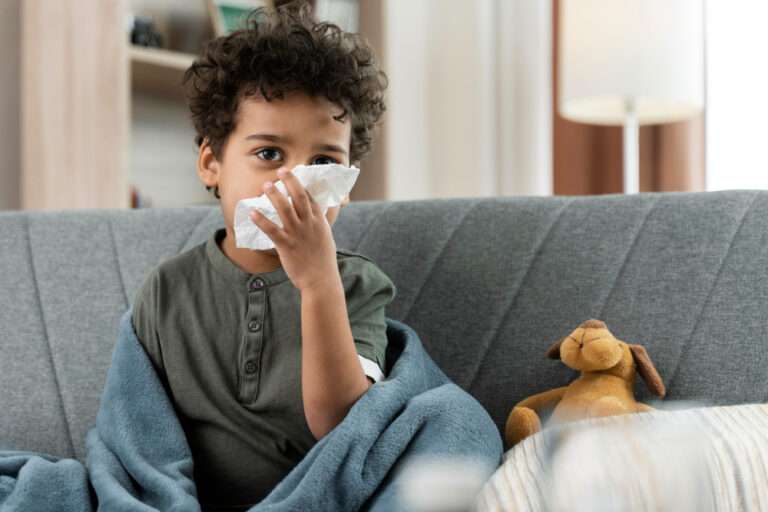
- Days 7 to 14 after exposure: High fever (it can climb above 104°F), cough, runny nose, and red, watery eyes (conjunctivitis). At this stage it can look like a bad cold or flu.
- 2 to 3 days after symptoms start: Tiny white spots, called Koplik spots, may show up inside the mouth on the inner cheeks.
- 3 to 5 days after symptoms start: The rash appears. It begins as flat red spots along the hairline and face, then spreads down the neck, chest, arms, legs and feet. Small raised bumps can form, and the spots often run together into blotches. On darker skin the rash may look brownish or darker rather than red. The fever often spikes again when the rash appears.
Children usually feel worst during the first few days of the rash. Because a child is contagious before the rash shows up, many families don’t realize it’s measles until others have already been exposed.
How measles spreads
Measles is one of the most contagious infections known. The virus lives in the nose and throat and spreads through coughs and sneezes. It can hang in the air of a room for up to 2 hours after an infected person has left, and it can spread when a child touches a contaminated surface and then their eyes, nose or mouth. Up to 9 out of 10 unprotected people who are close to someone with measles will catch it.
A person with measles can spread it from 4 days before the rash appears through 4 days after.
Measles complications in children
Many children recover, but measles is not a mild illness. According to the CDC:
- About 1 in 10 children with measles gets an ear infection.
- About 1 in 5 unvaccinated people who get measles in the U.S. are hospitalized.
- Up to 1 in 20 children develops pneumonia, the most common cause of measles deaths in young children.
- About 1 in 1,000 children develops encephalitis (swelling of the brain), which can cause seizures, deafness or lasting intellectual disability.
- Roughly 1 to 3 in 1,000 infected children die.
Measles can also weaken the immune system for months to a few years afterward, leaving a child more open to other infections. A very rare, fatal brain disease called SSPE can appear 7 to 10 years later; the risk seems higher when measles strikes before age 2.
Children younger than 5, babies too young to be vaccinated, pregnant people and anyone with a weakened immune system are at highest risk of severe illness.
The MMR vaccine: how it protects your child
The MMR vaccine protects against measles, mumps and rubella. The AAP recommends:
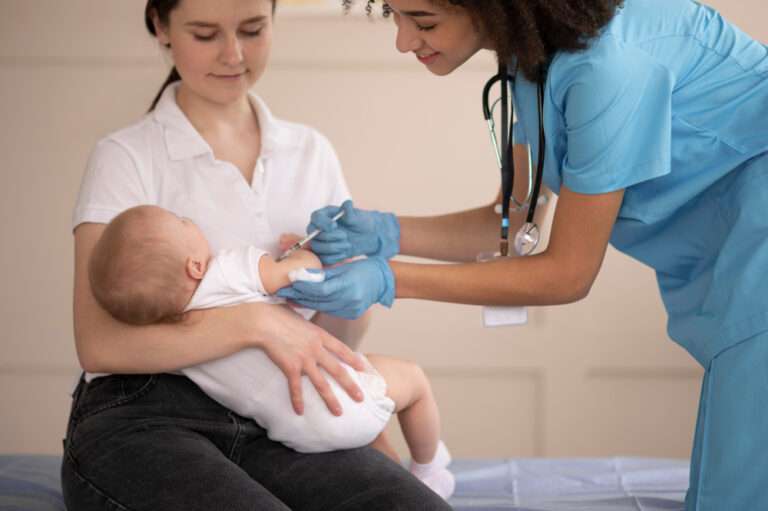
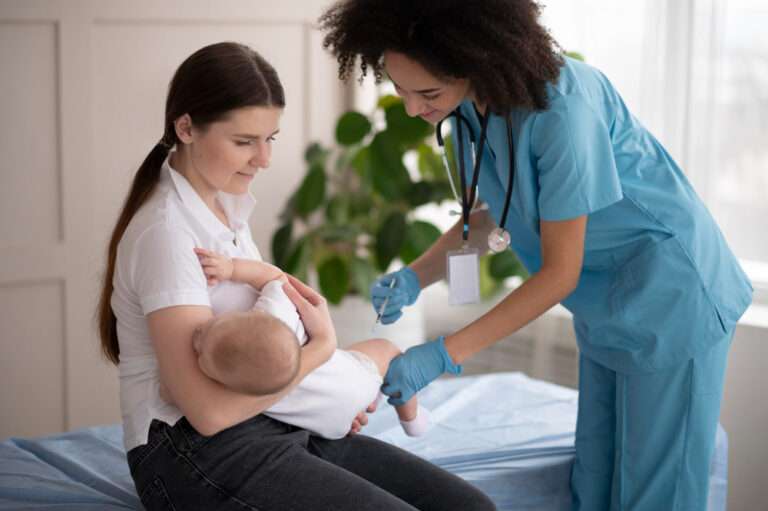
- First dose: 12 to 15 months old
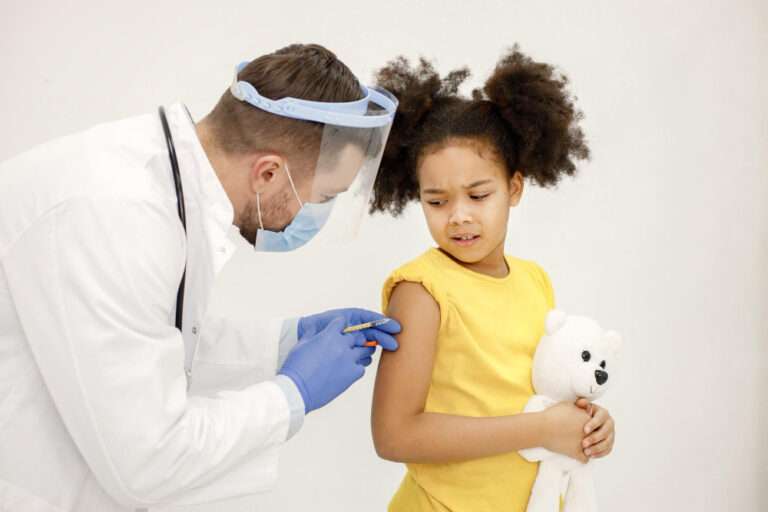
- Second dose: 4 to 6 years old. It can be given sooner, as long as it’s at least 28 days after the first dose.
One dose protects about 95 out of 100 children, and two doses protect about 97 to 99 out of 100. A combined vaccine that also covers chickenpox (MMRV) is an option for some children; your pediatrician can tell you which is the better fit for your child’s age.
During outbreaks or before travel, the schedule can change:
- Babies 6 to 11 months who live in or are traveling to an outbreak area may get an early dose. They will still need the usual two doses after their first birthday.
- Children 1 to 4 years who have had one dose may be advised to get their second dose early.
- Older children who have never had MMR usually need two doses, 28 days apart.
Recommendations differ by location, so check with your pediatrician or local health department. Side effects are usually mild, such as fever, a sore arm or a brief rash. MMR is a live vaccine, so children with weakened immune systems or on immune-suppressing medicines should not get it. That is one reason high vaccination rates matter: they protect the children who can’t be vaccinated. For a full overview, see what vaccines kids should have.
What to do if your child was exposed to measles
- Call your pediatrician or health department right away. Have your child’s vaccine record ready.
- Ask about post-exposure protection. An MMR dose given within 72 hours of exposure can help protect against measles, and children 6 months and older can receive it. Immune globulin, a shot of protective antibodies, can be given up to 6 days after exposure. It is usually the choice for babies under 6 months, pregnant people and people with weakened immune systems.
- Watch for symptoms for the next few weeks, and follow any quarantine instructions from your health department.
Home care if your child has measles
There is no medicine that cures measles. Care focuses on comfort and on keeping others safe:
- Keep your child home and away from other people, especially babies, pregnant people and anyone who isn’t vaccinated. Your doctor or health department will tell you when it’s safe to return to school or daycare.
- Offer plenty of fluids and let your child rest.
- Treat fever and discomfort with a fever reducer only as directed on the package or by your pediatrician for your child’s age and weight. Never give aspirin to children.
- Don’t give vitamin A on your own. The AAP says vitamin A does not prevent or cure measles. Doctors sometimes give it to sick children for a short time, but large doses can be toxic. Don’t give cod liver oil or high-dose supplements unless your pediatrician tells you to.
Watch closely for dehydration: fewer wet diapers or no urine in 8 hours, dry mouth, no tears when crying, or unusual sleepiness.
When to call the doctor
- Your child has been around someone with measles, or has fever, cough, red eyes and a rash
- Your child is younger than 12 months or has a weakened immune system and may have been exposed
- Your child shows signs of dehydration or isn’t drinking
- Your child has ear pain, a fever that isn’t improving, or seems to be getting worse
Call before you go. Don’t walk into a clinic or ER unannounced. Call ahead so staff can get ready and keep other patients, including babies, from being exposed.
When to go to the ER or call 911
Get emergency care right away, and call ahead if you can, if your child:
- Has trouble breathing, fast breathing or pain when breathing
- Has blue or gray color around the lips or mouth
- Is confused, very hard to wake or much less alert than usual
- Has a seizure, a severe headache or a stiff neck
- Is severely dehydrated or can’t keep fluids down
- Gets worse quickly
For more warning signs that apply to any illness, see our fever guide and the child symptom checker.
Frequently Asked Questions
What are the first signs of measles in a child?
The first signs of measles in a child are a high fever, cough, runny nose and red, watery eyes, usually 7 to 14 days after exposure. Tiny white spots may appear inside the mouth, and a blotchy red rash starting at the hairline follows 3 to 5 days after symptoms begin.
How long is measles contagious?
A person with measles is contagious from 4 days before the rash appears until 4 days after it appears. The virus can stay in the air of a room for up to 2 hours after an infected person leaves.
At what age do kids get the MMR vaccine?
Children routinely get the first MMR dose at 12 to 15 months and the second at 4 to 6 years. In outbreak areas or before international travel, babies 6 to 11 months may get an early dose, and young children may get their second dose early.
Can a vaccinated child still get measles?
It’s possible but uncommon. Two doses of MMR protect about 97 to 99 out of 100 people, and one dose protects about 95 out of 100. If you’re unsure whether your child is fully vaccinated, ask your pediatrician to check their record.
What should I do if my baby is too young for the MMR vaccine?
Babies under 12 months are at highest risk from measles. Make sure everyone around your baby is fully vaccinated, avoid known outbreak settings, and ask your pediatrician about an early dose at 6 to 11 months if you live in or are traveling to an outbreak area. If your baby is exposed, call your doctor right away about immune globulin.
Does vitamin A prevent or cure measles?
No. The AAP says vitamin A does not prevent or cure measles, and large doses can be toxic. Doctors may give short-term vitamin A to some children who are sick with measles. Don’t give it at home without your pediatrician’s advice.
Related guides
- Measles Resurgence in the US, 2026 (for clinicians)
- Cold vs. Flu vs. RSV vs. COVID in Kids
- Flu Shot for Kids 2026–27
- Sick Child Guide: When to Call the Doctor
Sources
- AAP (HealthyChildren.org): Measles Outbreaks: Common Questions & How to Protect Your Child
- CDC: Measles Symptoms and Complications
- CDC: How Measles Spreads
- CDC: Measles Post-Exposure Prophylaxis
- AAP (HealthyChildren.org): Can Vitamin A Prevent or Cure Measles?
- Phoenix Children’s: Measles Information for Families
This article is for general information and is not a substitute for advice from your child’s doctor. If your child seems seriously ill, call 911 or go to the nearest emergency department.