

Infant Botulism: Signs, Honey, Formula Recalls and When to Go to the ER
Quick answer: Infant botulism is a rare but serious illness that happens when a baby swallows spores of the bacteria Clostridium botulinum, which then grow in the gut and release a toxin that weakens the muscles. It mostly affects babies between 6 weeks and 6 months old, though any baby under 1 can get it. Constipation is often the first sign parents notice, followed by poor feeding, a weak cry, a flat-looking face, drooping eyelids, loss of head control and a floppy body. A baby with these signs needs emergency care right away. With quick hospital treatment, most babies recover fully. To lower the risk, never give honey to a baby under 12 months, and throw away any recalled infant formula.
What is infant botulism?
C. botulinum spores live naturally in soil and dust, and they can also contaminate honey. In older children and adults, a mature digestive system moves the spores through before they cause trouble. A young baby’s gut is different: the spores can settle in the large intestine, grow, and make botulinum toxin there. The toxin blocks the signals between nerves and muscles, which is why the illness shows up as weakness.
According to MedlinePlus (National Library of Medicine), most cases occur between 6 weeks and 6 months of age, but it has been seen as early as 6 days and as late as 1 year. Experts still don’t fully understand why some babies who are exposed get sick and others don’t.
Infant botulism symptoms
Signs tend to build over days. Weakness usually starts in the face and head and moves downward. Watch for:
- Constipation: often the first thing parents notice. Constipation is very common in babies and usually has nothing to do with botulism, so on its own it isn’t a reason to panic.
- Feeding problems: weak sucking, trouble swallowing, feeding taking much longer than usual, or extra drooling
- A weak or different-sounding cry
- A “flat” face: less facial expression than usual, drooping or partly closed eyelids
- Loss of head control in a baby who used to hold their head up
- Floppiness: weak arms, legs and neck, moving less, seeming unusually sleepy or “limp”
- Breathing problems: slow, shallow or labored breathing
The CDC notes that after exposure to a contaminated product, symptoms can take several weeks to appear.
What causes it: honey, soil and contaminated formula
Honey
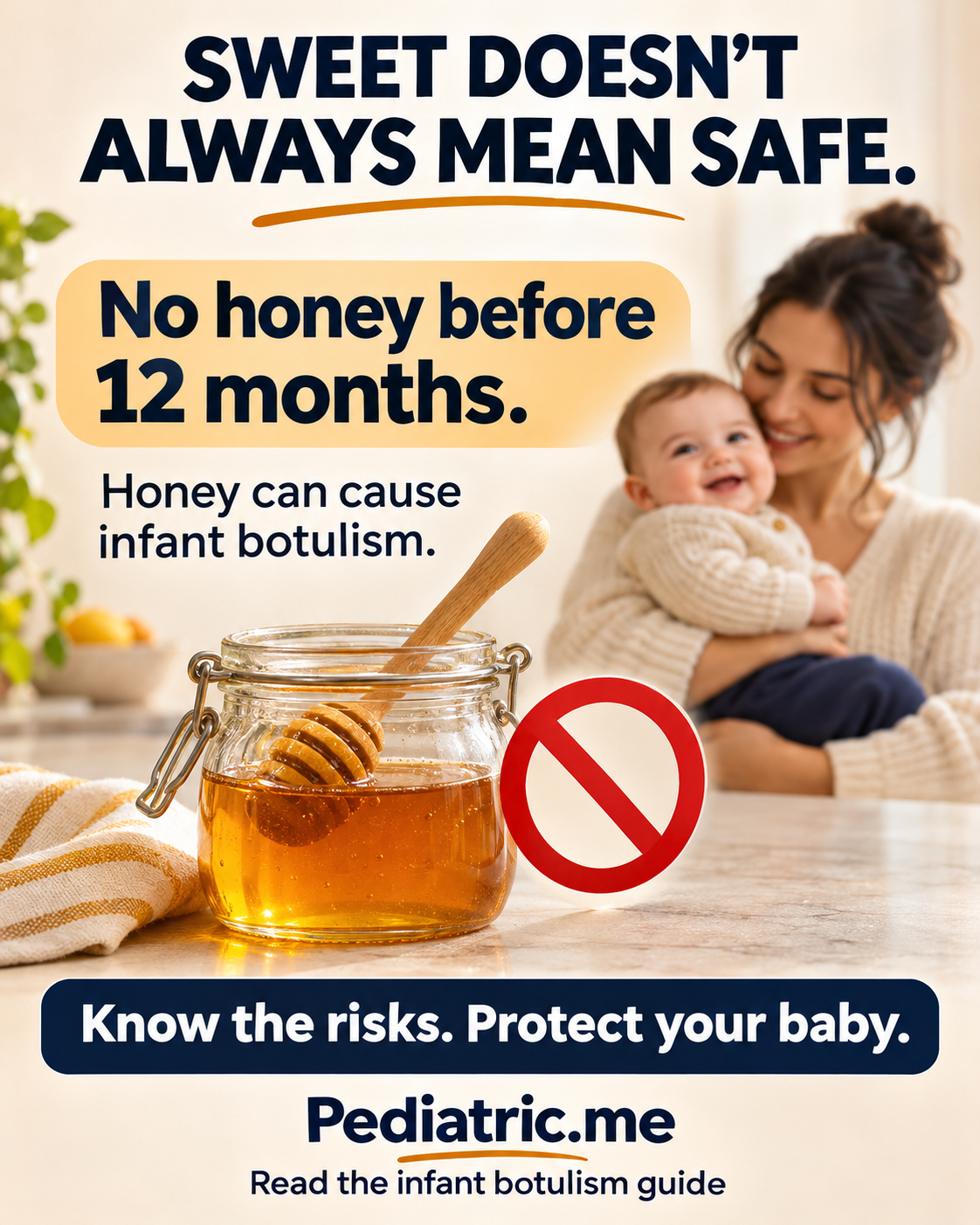
Honey is the best-known source of spores that parents can avoid. Don’t give honey to babies under 1 year, including processed foods made with honey, such as honey graham crackers. The California Department of Public Health’s Infant Botulism Treatment and Prevention Program points out that honey is not the cause of most cases today, and that a single taste usually isn’t considered high risk, since not every jar contains spores. Still, there’s no safe amount to plan on, so skip it until after the first birthday.
Corn syrup
Sources differ here. MedlinePlus lists corn syrup alongside honey as something not to feed babies under 1. KidsHealth (Nemours Children’s Health) says light and dark corn syrups might contain spores but that the link hasn’t been proven. Ask your pediatrician before giving any product with corn syrup to a baby.


Soil and dust
Because spores are in the environment, many babies who get infant botulism never ate honey. You can’t remove every spore from your home, which is why knowing the warning signs matters.
Recent infant formula outbreaks
Two U.S. outbreaks in the past year were linked to powdered infant formula, and both are now over, according to the CDC:
- ByHeart Whole Nutrition formula (November 2025): 48 babies in 17 states (28 confirmed and 20 probable cases). All were hospitalized and treated, and none died. ByHeart recalled all of its formula on November 11, 2025.
- Nara Organics Whole Milk Organic formula (June 2026): 4 babies in California, Pennsylvania and Washington, all hospitalized, with no deaths. Nara Organics recalled all of its formula on June 13, 2026. It had been sold at Target stores, Target.com and Nara.com.
The CDC reports that genetic testing tied the two outbreaks to a common source. Both brands used milk from the same supplier that was spray-dried at the same facility, and the FDA has not yet determined exactly where the contamination happened.
What to do now: Powdered formula has a long shelf life, so check your pantry, diaper bag and daycare supplies. If you find either recalled product, don’t use it. Throw it away, and wash bottles, scoops and surfaces it touched in hot soapy water or the dishwasher. If your baby drank a recalled formula, the CDC advises watching for symptoms for one month after the last feeding. If you’re unsure whether your formula is affected, check the CDC and FDA recall pages or ask your pediatrician.
How infant botulism is diagnosed and treated
Doctors make the diagnosis mainly from a baby’s symptoms and exam. They may test a stool sample for the toxin or bacteria, and some babies get a nerve and muscle test called electromyography (EMG). Because test results take time, the CDC tells doctors to start treatment as soon as they suspect botulism, without waiting for lab confirmation.
- Hospital care: babies are admitted, often to the intensive care unit, so their breathing and feeding can be watched closely.
- BabyBIG: an antitoxin made from human antibodies (botulism immune globulin) that is FDA-approved to treat infant botulism types A and B. Babies treated early tend to have a milder illness and a shorter hospital stay.
- Support while the body recovers: some babies need a breathing machine for a few weeks, and some need IV fluids or tube feeding if swallowing is weak.
- Antibiotics don’t appear to speed recovery and are used only if a baby develops a second infection, such as pneumonia.
Outlook: When infant botulism is caught and treated early, most babies make a full recovery. In rare, complicated cases it can cause permanent problems or death, which is why fast care matters.
How to lower your baby’s risk
- No honey before age 1, including foods made with honey. If your baby is starting solids, our guide to baby-led weaning and first foods lists other foods to hold off on.
- Watch holiday tables. Honey-glazed dishes and baked goods show up often this time of year. See our Thanksgiving food safety guide for toddlers.
- Don’t use honey as a home remedy for a baby’s cough. Our guide to cough and cold medicine for kids covers what’s safe by age.
- Check formula recalls and get rid of any recalled product, even unopened cans.
- Ask before giving corn syrup or any new product to a baby under 1.
When to call the doctor
Call your pediatrician the same day if your baby:
- Drank a recalled formula, even if they seem fine, so you can talk about what to watch for
- Ate honey or a honey product and you’re worried
- Has new constipation along with any change in feeding, crying or energy
- Is feeding more slowly or less than usual and you can’t tell why
- Has a fever (see when to call the pediatrician about a fever)
When to go to the ER or call 911
Go to the emergency room or call 911 right away if your baby has any of these:
- Trouble breathing, or breathing that seems slow, shallow or stops
- A floppy or limp body, or new loss of head control
- Drooping eyelids or a face that looks unusually “flat” or expressionless
- A weak cry, weak suck, or trouble swallowing with heavy drooling
- Unusual sleepiness, or is hard to wake
Tell the care team if your baby ate honey or drank a recalled formula. Don’t wait to see whether symptoms improve.
Frequently Asked Questions
Can one taste of honey give my baby botulism?
It’s possible but unlikely. The California infant botulism program says one honey exposure usually isn’t considered high risk, since not every jar has spores. Watch your baby for constipation, poor feeding, a weak cry or floppiness over the next few weeks, and call your pediatrician with any concerns.
When can babies have honey?
After their first birthday. Babies under 12 months shouldn’t have honey in any form, including baked goods and processed foods made with honey, such as honey graham crackers, because it can carry the spores that cause infant botulism.
Is constipation a sign of infant botulism?
Constipation is often the first sign of infant botulism, but it’s very common in babies for many other reasons. It’s more concerning when it comes with weak feeding, a weak cry, drooping eyelids or floppiness. Call your pediatrician if you’re unsure.
Is infant formula safe after the botulism recalls?
The CDC says both formula-linked outbreaks, tied to ByHeart (2025) and Nara Organics (2026), are over, and both companies recalled all of their formula. Don’t use either product if you still have it.
How is infant botulism treated?
Babies are treated in the hospital, often in intensive care. Doctors give an antitoxin called BabyBIG as soon as they suspect botulism, without waiting for test results. Some babies also need help breathing or feeding for a few weeks while the muscles recover.
Do babies recover from infant botulism?
Yes, most do. When infant botulism is diagnosed and treated early, most babies make a full recovery. Babies who get the antitoxin early usually have a milder illness and go home sooner.
Related guides
- Baby-Led Weaning: How to Start, First Foods and Gagging vs. Choking
- Vitamin D and Iron for Babies: Who Needs Supplements and When
- Thanksgiving Food Safety for Toddlers
- When to Call the Pediatrician About a Fever
- Sick Child Guide: When to Call the Doctor
Sources
- CDC: Infant Botulism Outbreak Linked to Powdered Infant Formula, June 2026
- CDC: Investigation Update, Infant Botulism Outbreak, November 2025
- CDC: Clinical Overview of Infant Botulism
- MedlinePlus (NIH): Infant Botulism
- KidsHealth (Nemours): Infant Botulism
- California Department of Public Health: When to Avoid Honey
This article is for general information and is not a substitute for advice from your child’s doctor.