

Roseola in Babies: Symptoms, Rash and When to Call the Doctor
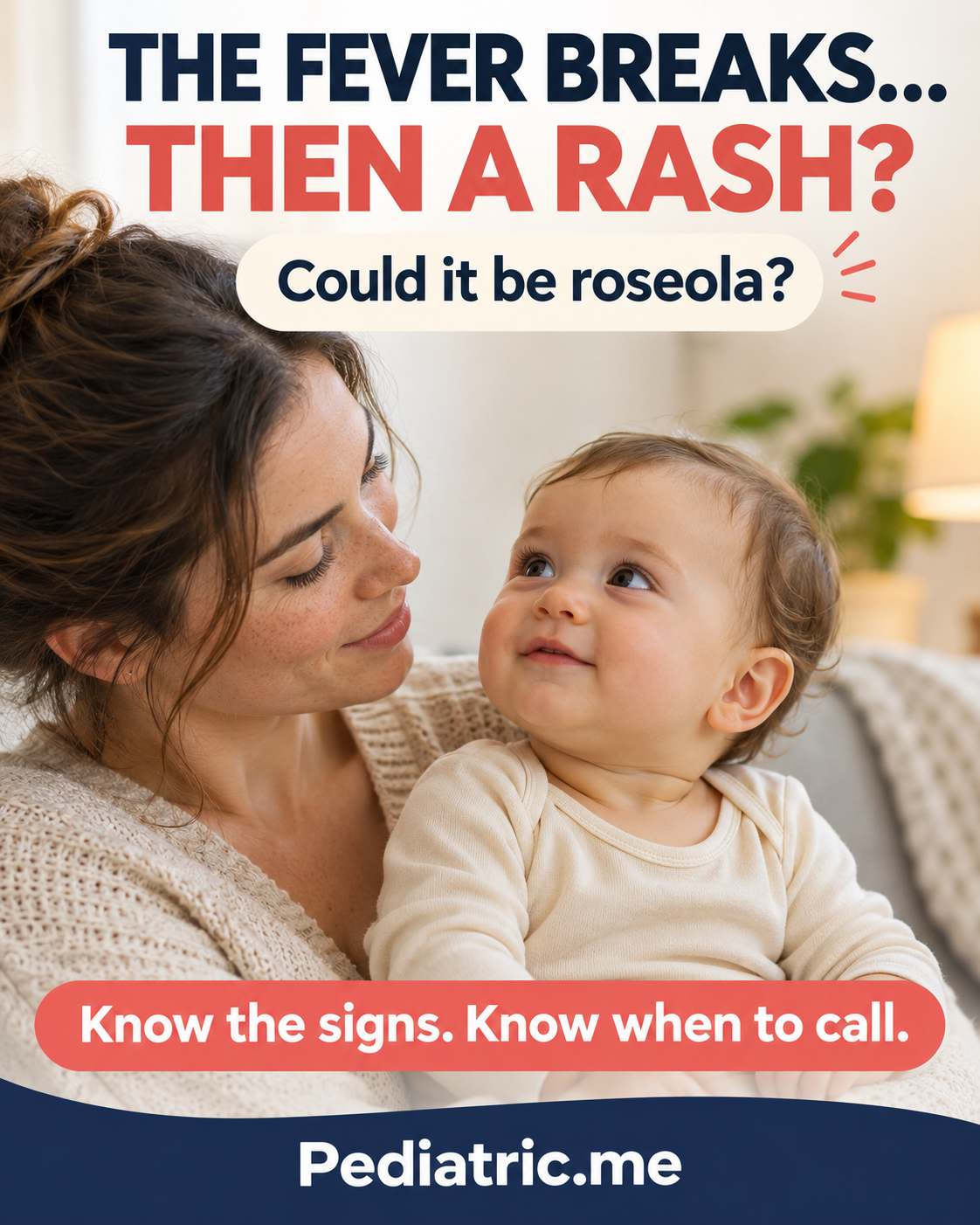
Quick answer: Roseola in babies is one of the most common illnesses in the first two years of life. It starts with 3 to 5 days of sudden, high fever — often 102–105°F (38.9–40.5°C) — with no obvious cause. When the fever breaks, a pink, non-itchy rash spreads from the torso outward and lasts 1 to 4 days. The rash is actually a reassuring sign that the illness is almost over. Most children need only fever management and plenty of fluids, but the high fever can sometimes trigger a febrile seizure, so it’s worth knowing what to watch for.
What is roseola?
Roseola is a common viral illness caused by human herpesvirus 6 (HHV-6). You may also hear it called roseola infantum, exanthem subitum (Latin for “sudden rash”), or sixth disease — because it was once the sixth in a historical list of childhood rash illnesses.
Nearly all children get roseola at some point, most before their second birthday. It is most common between 6 months and 2 years of age, when protective antibodies passed from the mother at birth have worn off but the child’s own immune system is still building up its defenses.
The virus spreads through respiratory droplets — coughing, sneezing, and saliva. After exposure, symptoms typically develop within 5 to 15 days. Adults and older children can carry HHV-6 without symptoms and pass it on without knowing they are sick.
Roseola symptoms: the two-stage pattern
The illness unfolds in two distinct stages. Knowing the pattern helps parents recognize roseola — and helps explain why the rash, when it finally appears, is good news rather than bad.
Stage 1: Sudden high fever (3–5 days)
Roseola typically begins with a sudden unexplained fever of 102–105°F (38.9–40.5°C). Early on, your baby may also have:
- Mild irritability or fussiness
- Runny nose, mild cough, or slightly red eyes
- Swollen lymph nodes at the back of the neck or scalp
- Decreased appetite
- Loose stools in some children
What surprises many parents is that despite such a high fever, children with roseola often look and act relatively well — playing, curious, reasonably cheerful between fever spikes. This doesn’t mean you should ignore the fever, but it is a hallmark of the illness.


Stage 2: The rash (1–4 days)
Once the fever breaks — usually around day 3 to 5 — a distinctive rash appears, often within hours of the temperature coming down. It typically starts on the chest, stomach, and back and then spreads to the neck, arms, and legs. The rash:
- Looks pink or rose-red on lighter skin; may appear faint red or purple on darker skin
- Consists of small, slightly raised spots, sometimes with a pale ring around each spot
- Does not itch
- Lasts 1 to 4 days, then fades on its own without peeling or blistering
When the rash appears, the illness is almost over. Parents who have spent three sleepless nights with a feverish baby and suddenly see a rash covering their child’s trunk often worry that something has gone wrong. In fact, the rash means the immune system did its job. No treatment is needed for the rash itself.
Home care for roseola
There is no specific antiviral treatment for roseola. Care focuses on keeping your child comfortable during the fever stage.
- Manage the fever. Give acetaminophen (for babies 2 months and older) or ibuprofen (for babies 6 months and older) as directed on the package or by your child’s doctor. These can help with comfort, but they don’t speed recovery. Never give aspirin to children.
- Keep fluids going. A high fever can dehydrate a baby quickly. Offer breast milk, formula, water, or diluted juice often throughout the day. The goal is regular wet diapers (at least one or two every 8 hours) and a moist mouth.
- Keep your child comfortable. Dress them in lightweight clothing — an overheated baby is more uncomfortable. A cool, wet washcloth on the forehead can offer brief relief.
- Leave the rash alone. The roseola rash does not itch and needs no cream or medicine. Avoid applying topical antihistamines or cortisone cream on a baby’s rash unless your doctor recommends it.
- Returning to daycare. Once your child has been fever-free for 24 hours, they can return to daycare or other group settings even if the rash is still visible. The rash is not contagious.
When to call the doctor
- The fever lasts more than 5 days or does not respond to acetaminophen or ibuprofen
- Your child is not drinking enough or has fewer wet diapers than usual
- Your child looks very ill, unusually sleepy, or is difficult to rouse
- The rash develops blisters or sores, or appears on the lips or inside the mouth
- You are not sure whether the illness is roseola and want your pediatrician to evaluate
- Your baby is under 3 months old with any fever — this always warrants a call
During the fever stage, before the rash appears, it can be hard to know what is causing your child’s temperature. Your doctor may want to examine your baby to rule out other causes such as an ear infection or urinary tract infection, especially in an infant under 1 year with a very high fever. For a full guide on fever in babies and kids by age, see our dedicated article.
When to go to the ER or call 911
- Your child has a seizure or convulsion, even a brief one
- Your child is very sleepy and very difficult or impossible to wake
- Their lips or fingernails look blue or grayish
- They are struggling to breathe
- They appear limp or unresponsive
Febrile seizures and roseola: The sudden, high fever of roseola is a known trigger for febrile seizures — brief, fever-related seizures that affect some young children between 6 months and 5 years. They look alarming but are almost always harmless and do not cause brain damage. Any child who has a seizure should be evaluated by a doctor, so go to the ER or call 911 if one occurs. See our guide to febrile seizures in kids for a step-by-step on what to do.
Does my baby need tests or antibiotics?
Usually not. Roseola is diagnosed clinically — by the pattern of sudden high fever in a young baby, followed by a rash when the fever breaks. No blood test reliably confirms it, and the result would not change treatment. Your doctor may check for other causes of fever, especially in a baby under 3 months or one who looks very ill.
Antibiotics do not help because roseola is caused by a virus. Avoid giving any cough or cold medicines to babies without asking your doctor first.
Frequently Asked Questions
How long does roseola last?
The fever usually lasts 3 to 5 days, followed by a rash that lasts 1 to 4 days. Most children are fully recovered within about a week from the start of symptoms.
Can roseola cause a febrile seizure?
Yes. The sudden, high fever of roseola can trigger a febrile seizure in children who are susceptible to them. These are most common in children aged 6 months to 5 years. They are frightening to witness but are almost always brief and harmless. Any child who has a seizure should be seen by a doctor.
Is roseola contagious when the rash appears?
The virus spreads mostly during the fever stage through respiratory droplets. By the time the rash appears, your child is likely past the most contagious period. Children can return to daycare or school once they have been fever-free for 24 hours, even if the rash is still visible.
How can I tell roseola rash from an allergic reaction?
A roseola rash appears only after the fever breaks, is pink and non-itchy, and fades on its own within a few days. An allergic rash often appears while the trigger is still active, usually comes with itching or hives, and may spread or worsen unless treated. If your baby has the classic pattern — fever for 3 to 5 days in a child under 2, then a rash when the fever breaks — roseola is the likely cause. If you are unsure, call your pediatrician.
Can a baby get roseola more than once?
Infection with HHV-6 usually provides lasting immunity, so most children won’t get classic roseola again. However, a related virus called HHV-7 can cause a nearly identical illness, so some children have a second roseola-like episode.
What should I do when the rash appears?
No special treatment is needed. The rash is a sign that the illness is almost over. Keep your child comfortable, make sure they are drinking well, and confirm the fever is gone before returning to daycare. Call your doctor if the rash has blisters, appears inside the mouth, or your child looks unwell despite the fever going down.
Related guides
- Fever in Babies and Kids: When to Worry, by Age
- Febrile Seizures in Kids: What to Do, When to Call 911 and What It Means
- Hand, Foot and Mouth Disease in Toddlers: Symptoms and Home Care
- Ear Infections in Kids: Symptoms, Antibiotics vs. Watchful Waiting and When to Call
- Cold vs. Flu vs. RSV vs. COVID in Kids: How to Tell the Difference
Sources
This article is for general information and is not a substitute for advice from your child’s doctor.